
1 One Sabbath, when he went to dine at the house of a ruler of the Pharisees, they were watching him carefully.
2 And behold, there was a man before him who had dropsy.
3 And Jesus responded to the lawyers and Pharisees, saying, “Is it lawful to heal on the Sabbath, or not?”
4 But they remained silent. Then he took him and healed him and sent him away.
5 And he said to them, “Which of you, having a son or an ox that has fallen into a well on a Sabbath day, will not immediately pull him out?”
6 And they could not reply to these things.
7 Now he told a parable to those who were invited, when he noticed how they chose the places of honor, saying to them,
8 “When you are invited by someone to a wedding feast, do not sit down in a place of honor, lest someone more distinguished than you be invited by him,”
9 and he who invited you both will come and say to you, ‘Give your place to this person,’ and then you will begin with shame to take the lowest place.
10 But when you are invited, go and sit in the lowest place, so that when your host comes he may say to you, ‘Friend, move up higher.’ Then you will be honored in the presence of all who sit at table with you.
11 For everyone who exalts himself will be humbled, and he who humbles himself will be exalted.
12 He said also to the man who had invited him, “When you give a dinner or a banquet, do not invite your friends or your brothers or your relatives or rich neighbors, lest they also invite you in return and you be repaid.
13 But when you give a feast, invite the poor, the crippled, the lame, the blind,
14 And you will be blessed, because they cannot repay you. For you will be repaid at the resurrection of the just.
15 When one of those who reclined at table with him heard these things, he said to him, “Blessed is everyone who will eat bread in the kingdom of God!”
16 But he said to him, “A man once gave a great banquet and invited many.”
17 And at the time for the banquet he sent his servant to say to those who had been invited, ‘Come, for everything is now ready.’
18 But they all alike began to make excuses. The first said to him, ‘I have bought a field, and I must go out and see it. Please have me excused.’
19 And another said, ‘I have bought five yoke of oxen, and I go to examine them. Please have me excused.’
20 And another said, ‘I have married a wife, and therefore I cannot come.’
21 So the servant came and reported these things to his master. Then the master of the house became angry and said to his servant, ‘Go out quickly to the streets and lanes of the city, and bring in the poor and crippled and blind and lame.’
22 And the servant said, ‘Sir, what you commanded has been done, and still there is room.’
23 And the master said to the servant, ‘Go out to the highways and hedges and compel people to come in, that my house may be filled.
24 For I tell you, none of those men who were invited shall taste my banquet.
25 Now great crowds accompanied him, and he turned and said to them,
26 “If anyone comes to me and does not hate his own father and mother and wife and children and brothers and sisters, yes, and even his own life, he cannot be my disciple.
27 Whoever does not bear his own cross and come after me cannot be my disciple.
28 For which of you, desiring to build a tower, does not first sit down and count the cost, whether he has enough to complete it?
29 Otherwise, when he has laid a foundation and is not able to finish, all who see it begin to mock him,
30 saying, ‘This man began to build and was not able to finish.’
31 Or what king, going out to encounter another king in war, will not sit down first and deliberate whether he is able with ten thousand to meet him who comes against him with twenty thousand?
32 Or what king, going out to encounter another king in war, will not sit down first and deliberate whether he is able with ten thousand to meet him who comes against him with twenty thousand?
33 So therefore, any one of you who does not renounce all that he has cannot be my disciple.
34 “Salt is good, but if salt has lost its taste, how shall its saltiness be restored?”
35 It is of no use either for the soil or for the manure pile. It is thrown away. He who has ears to hear, let him hear.”
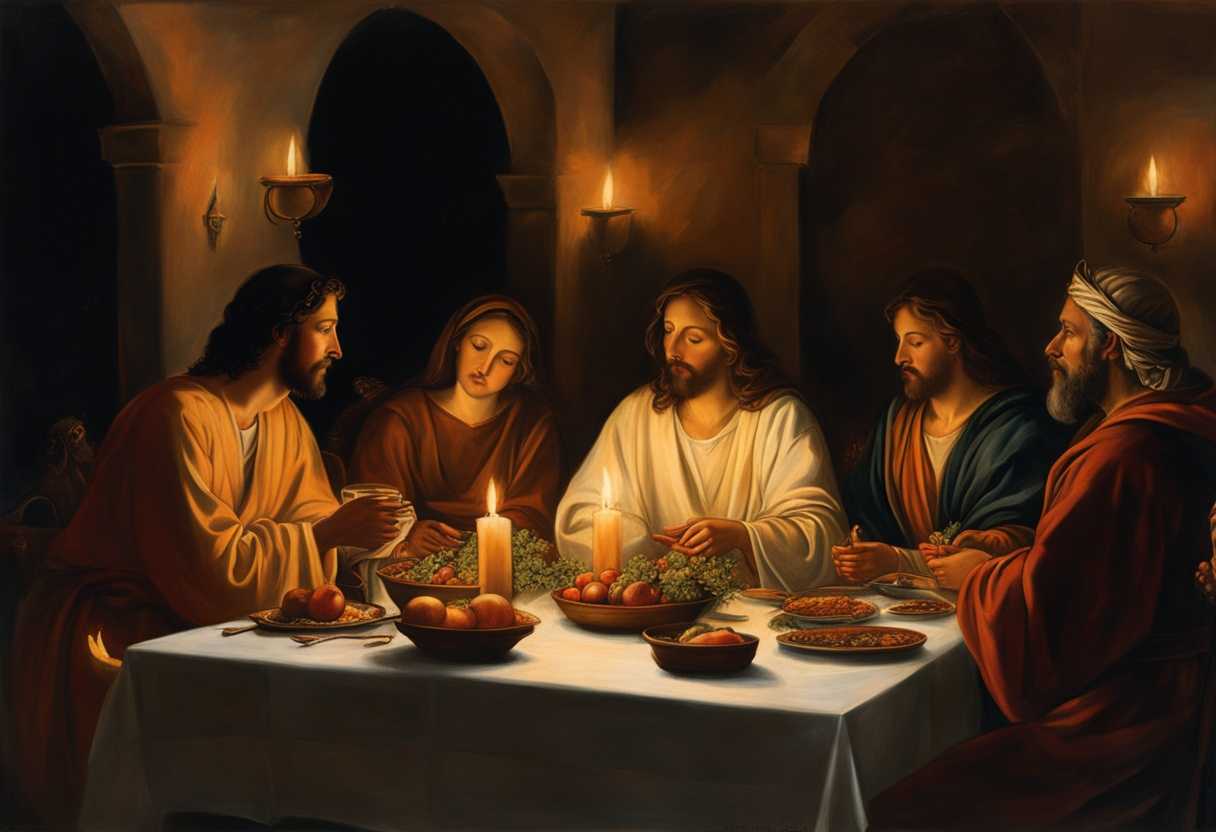
The True Meaning of Luke 14
The Gospel of Luke was written by Luke, a physician and companion of the Apostle Paul. Luke’s perspective as a Gentile convert to Christianity provides a unique insight into the life and teachings of Jesus Christ. Jesus challenges the rigid interpretations of the law held by the religious leaders of his time and calls them to a deeper understanding of God’s compassion. The events that unfold foreshadow the growing tensions between Jesus and the Pharisees, ultimately leading to the pivotal moments of his crucifixion and resurrection.
Throughout the chapter, Jesus emphasizes the importance of humility, hospitality, and prioritizing the needs of the marginalized. His parables and interactions with the Pharisees and the crowds reveal the heart of God’s kingdom, where the last shall be first and the humble shall be exalted. These teachings echo the words of the prophet Micah, who proclaimed, “He has shown you, O mortal, what is good. And what does the Lord require of you? To act justly and to love mercy and to walk humbly with your God” (Micah 6:8).
Luke 14:1-6
Jesus is invited to dine at the house of a prominent Pharisee on the Sabbath, beginning the passage in Luke 14:1-6. The Pharisees were known for their strict adherence to the Jewish laws and traditions. It is important to note that Jesus, throughout the Gospels, often found Himself at odds with the Pharisees due to their legalistic approach to religion. The Pharisees, in their desire to test or trap Jesus, were watching Him closely, particularly concerning His views on the observance of the Sabbath. Jesus entered the house and came across a man suffering from dropsy, which is a condition marked by swelling, commonly associated with an accumulation of fluid. This man’s presence at the dinner was likely not by chance but rather orchestrated by the Pharisees to see how Jesus would respond to a situation that involved healing on the Sabbath. The Pharisees wanted to see if Jesus would heal on the Sabbath, which they perceived as work and a violation of the law.
Jesus, aware of their thoughts and intentions, posed a question to them, asking if it was lawful to heal on the Sabbath or not. Instead of directly answering His question, the Pharisees remained silent, unwilling to engage in a debate that could potentially expose their hypocrisy. Jesus then proceeded to heal the man, showcasing His authority and compassion, and emphasizing that doing good and showing mercy should never be constrained by legalistic rules or traditions. This act of healing on the Sabbath was a direct challenge to the Pharisees’ rigid interpretation of the Law and their lack of understanding of the true purpose behind God’s commandments.
This passage underscores a central theme in the ministry of Jesus, which is the importance of compassion, mercy, and love over rigid adherence to rules and regulations. Jesus consistently challenged the religious authorities of His time, urging them to focus on the spirit of the law rather than being fixated on the letter of the law. Jesus reaffirms this principle in Matthew 12:11-12 when He asks, “Which of you who has a sheep, if it falls into a pit on the Sabbath, will not take hold of it and lift it out? Of how much more value is a man than a sheep! So it is lawful to do good on the Sabbath.” Jesus’s actions and teachings serve as a reminder for all believers to prioritize acts of kindness and compassion towards others, even if it challenges conventional norms or expectations.
Luke 14:7-14
Jesus tells a parable to those who were invited to a wedding feast in Luke 14:7-14. The passage can be broken down into several important sections:
-
The Parable: Jesus notices how the guests at the feast were picking places of honor, and He uses this scenario to teach a valuable lesson on humility. He advises the guests not to take the highest seats at the table, for they may be embarrassed when someone more distinguished arrives. Instead, He suggests they take a lower seat so that the host can then honor them by moving them to a higher position. Jesus explains that those who exalt themselves will be humbled, and those who humble themselves will be exalted.
This parable highlights the importance of humility and the dangers of pride. It teaches that true greatness is not found in seeking recognition or the approval of others but rather in serving with humility and putting others first. This message is consistent with other teachings of Jesus throughout the Gospels, such as when He washed the feet of His disciples in John 13:1-17, demonstrating the ultimate act of humility and servanthood.
-
Inviting the Poor and Vulnerable: Jesus goes on to advise the host of the feast to not only invite friends, relatives, and wealthy neighbors who can repay him, but also to invite the poor, the crippled, the lame, and the blind. He explains that by doing so, the host will be blessed, for these individuals cannot repay him, and he will be repaid at the resurrection of the righteous.
This section emphasizes the importance of showing kindness and hospitality to those who cannot offer anything in return. It reflects the value of generosity, compassion, and inclusivity in the Kingdom of God. Jesus frequently demonstrated this principle through His interactions with society’s outcasts and marginalized individuals, showing that everyone is precious in the eyes of God. Jesus emphasizes in Matthew 25:31-46 the importance of caring for the least of these, stating that whatever we do for the least of His brothers and sisters, we do for Him. Luke 14:7-14 teaches us valuable lessons about humility, servanthood, and genuine hospitality. It challenges us to examine our motives and actions, reminding us that true greatness lies in serving others with a humble heart. We reflect the love of God and store up treasures in heaven by showing kindness and generosity to those in need. May we strive to emulate the example of Jesus, who exemplified these principles in His life and ministry.
Luke 14:15-24
Jesus tells the parable of the great banquet in Luke 14:15-24. This section can be broken down into a few key parts that each hold significant meaning and lessons for us as followers of Christ.
First, the parable begins with a man who hosts a great banquet and sends out invitations to many guests. The initial guests, however, all make excuses for why they cannot attend the feast. Their excuses range from trivial matters to seemingly important obligations. This reflects the rejection Jesus faced from many individuals, particularly the religious leaders of the time, who were too caught up in their own worldly concerns to accept the invitation to partake in the kingdom of God.
Next, the host, representing God, becomes frustrated that his invited guests have declined to attend the banquet. He sends his servant out to bring in the poor, crippled, blind, and lame to fill his banquet hall in response. This switch in guests symbolizes the inclusion of the Gentiles and all those who were considered outcasts or marginalized in society. It highlights God’s inclusive nature and His desire for all people to come to Him, regardless of their social status or background.
Furthermore, the parable emphasizes the importance of responding to God’s invitation and being ready to accept His call. The initial guests who declined the invitation missed out on a great feast because of their preoccupations with worldly matters. This serves as a warning to us all not to let anything impede our relationship with God or prevent us from experiencing the blessings of His kingdom.
The parable also underscores the urgency of accepting God’s invitation, as the host insists that his house be filled with guests. This echoes the message found in other parts of the Bible, such as Matthew 22:14, where Jesus warns that many are called, but few are chosen. It emphasizes the need for us to respond to God’s invitation without delay, for the opportunity to enter His kingdom may not always be available. The parable of the great banquet in Luke 14:15-24 challenges us to examine our own hearts and priorities. Are we making excuses and prioritizing worldly matters over our relationship with God? Are we reaching out to others and sharing the invitation to God’s kingdom with those who may be considered outcasts or overlooked by society? God’s grace and love are extended to all who are willing to come to Him, so let us heed the call to accept His invitation eagerly.
Luke 14:25-33
Luke 14:25-33 outlines several important sections that teach about the cost of discipleship and the commitment required to follow Jesus. The passage begins with Jesus addressing a large crowd that had been following Him, emphasizing the importance of understanding the true cost of being His disciple. This sets the stage for a challenging message about the dedication and sacrifices that discipleship demands. Jesus states in the first section of the passage (Luke 14:26) that if anyone comes to him and does not hate father and mother, wife and children, brothers and sisters—yes, even their own life—such a person cannot be his disciple.” This statement may seem shocking at first glance, as it appears to go against the commandment to honor one’s parents. However, Jesus is using hyperbole to emphasize that our love and commitment to Him should be so strong that in comparison, our other relationships may seem like hatred. This highlights the supreme importance of prioritizing our relationship with God above all else, even our closest family ties.
Following this, Jesus uses two illustrations in verses 28-32 to illustrate the importance of counting the cost before committing to follow Him. He talks about a builder who calculates the cost of a tower before beginning construction and a king who considers the strength of his army before going to war. These examples emphasize the need for careful consideration and preparation before making a commitment to discipleship. It is a call to understand the potential challenges and sacrifices that may come with following Jesus and to be willing to endure them with unwavering faith and dedication. Jesus concludes in the final section of the passage (Luke 14:33) by stating, “In the same way, those of you who do not give up everything you have cannot be my disciples.”” This reiterates the theme of surrendering all to follow Christ. It is a call to wholehearted devotion and a reminder that discipleship requires letting go of any competing priorities or attachments that may hinder our relationship with Him. This is not a call to literal poverty, but rather a willingness to hold all things with open hands, recognizing that nothing should take precedence over our commitment to Jesus.
The significance of this passage in Luke 14 lies in its timeless message about the radical nature of discipleship and the unequivocal commitment required to follow Jesus. It challenges believers to examine their own hearts and priorities, asking themselves if they are truly willing to surrender all for the sake of Christ. This passage echoes other teachings of Jesus throughout the Gospels, such as in Matthew 16:24 where Jesus says, “If anyone would come after me, let him deny himself and take up his cross and follow me.” The call to discipleship is not one to be taken lightly, but rather as a profound commitment that demands our whole being and devotion. Luke 14:25-33 serves as a poignant reminder of the high cost of discipleship and the sacrificial love that Jesus calls His followers to embody. It challenges us to reexamine our priorities, relationships, and possessions in light of our commitment to Christ, reminding us that true discipleship requires nothing less than our total surrender to Him.
Luke 14:34-35
Jesus is using a common daily activity, seasoning food, to illustrate a spiritual truth in Luke 14:34-35. He says, “Salt is good, but if it loses its saltiness, how can it be made salty again? It is fit neither for the soil nor for the manure pile; it is thrown out.” This analogy of salt losing its flavor carries a powerful message about the followers of Christ.
First, let’s focus on the significance of salt in biblical times. Salt was not only used to season food but also as a preservative to prevent decay. Jesus, who often used common aspects of daily life to convey deeper spiritual truths, was emphasizing the importance of His disciples maintaining their distinctiveness and preserving influence in the world in this context. Just like salt that loses its flavor becomes useless, believers who lose their spiritual fervor and fail to live out their faith effectively become ineffective in sharing the Gospel and making a positive impact on those around them.
This passage serves as a stark warning to Christians about the consequences of becoming complacent or worldly, which can lead to a loss of effectiveness in fulfilling their call to be the light of the world (Matthew 5:13-16). It echoes the sentiment expressed in Revelation 3:16 where Jesus warns against being lukewarm in faith, stating that He will spit out those who are neither hot nor cold.
The metaphor of salt losing its saltiness also brings to mind the parable of the sower in Luke 8:4-15, where Jesus speaks about different types of soil representing the hearts of people receiving the word of God. Just as good soil produces a bountiful harvest, salty salt makes a difference by preserving and flavoring, while salt that loses its saltiness is worthless. This reinforces the idea that Christians are called to be agents of change and hope in the world, actively living out their faith and spreading the message of salvation to all. Believers are urged by Luke 14:34-35 to remain steadfast in their faith, guard against spiritual decay, and be intentional about preserving their witness and distinctive Christian character in a world that desperately needs the preserving and flavoring influence of genuine followers of Christ. This passage underscores the timeless message of the importance of genuine faith, consistency in Christian living, and the transformative power of being the salt of the earth.
After Luke 14
Jesus teaches us the importance of humility and selflessness in Luke 14. He reminds us to put others before ourselves and to always be willing to serve one another. Let us remember His words as we strive to live a life of love and compassion towards our neighbors. We should reflect on the lessons from this chapter, carry them in our hearts, and continue to walk in the ways of the Lord. We will now turn our attention to the next chapter, eager to learn more about the teachings of Jesus and how we can apply them in our daily lives.

Reverend Michael Johnson is an experienced Church Minister with a profound expertise in spirituality and guidance. With a serene presence and a compassionate heart, he has faithfully served his congregation for over 20 years, leading them on a spiritual journey towards inner peace and enlightenment. Reverend Johnson’s extensive knowledge of religious philosophies and profound understanding of human nature have made him a trusted confidant and mentor to many, as he seamlessly weaves his profound wisdom into life teachings. Reverend Johnson’s calming demeanor and empathetic nature continue to uplift and heal souls, nurturing a sense of unity and tranquility within his community.