
Isaiah 1:13-15 is about God rejecting empty rituals and sacrifices done without genuine repentance and righteous living, emphasizing the importance of true worship and justice.
13 Bring no more vain offerings; incense is an abomination to me.
14 Your new moons and your appointed feasts my soul hates; they have become a burden to me; I am weary of bearing them.
15 When you spread out your hands,
I will hide my eyes from you;
even though you make many prayers,
I will not listen;
your hands are full of blood.
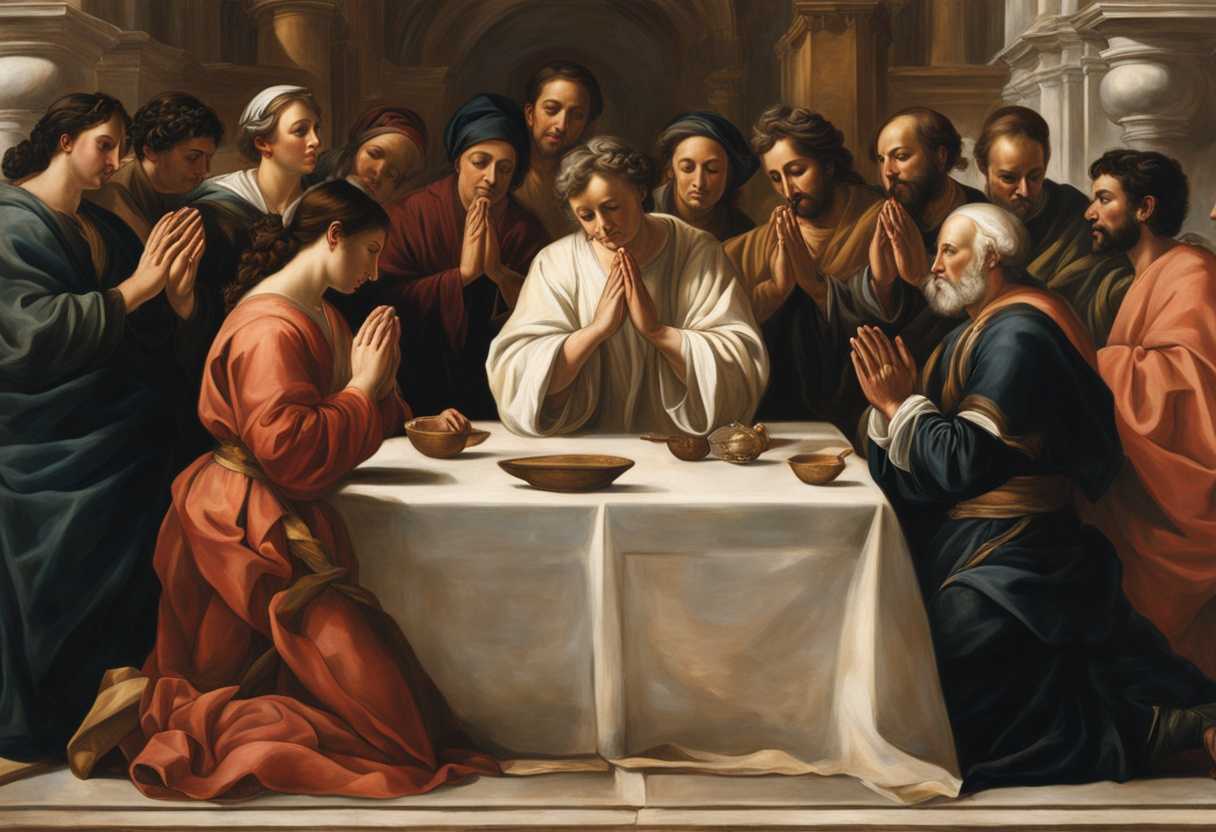
Setting the Scene for Isaiah 1:13-15
In Isaiah chapter 1, we find a poignant scene unfolding in the ancient city of Jerusalem. The prophet Isaiah stands in the courtyard of the temple, surrounded by a group of priests and elders of the city. The air is heavy with the scent of incense and the sound of prayers being offered up to the heavens. The sun beats down on the stone walls of the temple, casting long shadows across the courtyard.
The priests and elders have gathered to hear Isaiah’s words, but their hearts are far from the true worship of God. Isaiah, with a heavy heart, rebukes them for their empty rituals and hypocritical behavior. He condemns their sacrifices and offerings, declaring that God will not listen to their prayers as long as their hands are stained with injustice and their hearts are filled with wickedness. The scene is tense as Isaiah’s words cut through the facade of piety that the priests and elders have carefully constructed.
As the sun begins to set on the horizon, the group disperses, each person left to ponder the prophet’s words and examine their own hearts. The courtyard of the temple stands silent, a stark reminder of the need for true repentance and genuine worship in the eyes of the Lord.
What is Isaiah 1:13-15 about?
God emphasizes the importance of sincerity and authenticity in our relationship with Him in this verse. It conveys the message that simply going through the motions of rituals and traditions without genuine repentance or a commitment to justice is not pleasing to God. It challenges us to look beyond outward appearances and instead focus on the true intentions and motivations of our actions. God desires a deep, heartfelt connection with us, rather than just superficial observance of religious practices.
Reflect on your own practices and beliefs. Are you engaging in rituals out of habit or social expectation, or are you approaching them with a sincere heart and a genuine desire for repentance and justice? This verse encourages us to not only participate in religious practices but to also live out the values and principles they represent in our daily lives. It serves as a reminder to continually assess and align our actions with our inner beliefs and values, ensuring that we are truly seeking God’s will and living justly in all aspects of our lives.
Understanding what Isaiah 1:13-15 really means
In the Book of Isaiah, a major prophet addressing the people of Judah and Jerusalem, we encounter a recurring theme of judgment and redemption. These verses form part of God’s rebuke to the people for their empty rituals and insincere worship. The phrase “Bring no more vain offerings” signifies God’s rejection of sacrifices devoid of genuine faith or repentance, underscoring the necessity of sincerity in worship. Similarly, when God declares, “Incense is an abomination to me,” it reveals that even symbolic prayers become detestable when offered insincerely, emphasizing the primacy of heartfelt intentions over mere ritualistic practices.
Moreover, the passage criticizes the observance of religious festivals when coupled with sinful behavior, stating, “New moon and Sabbath and the calling of convocations—I cannot endure iniquity and solemn assembly.” This highlights the futility of religious rituals devoid of righteous living, emphasizing that true worship necessitates moral integrity. God’s refusal to heed prayers from hypocritical individuals, as expressed in “When you spread out your hands, I will hide my eyes from you,” underscores the importance of authenticity and integrity in one’s relationship with God.
Furthermore, the verse, “Even though you make many prayers, I will not listen; your hands are full of blood,” emphasizes that God values the quality of worshiper’s lives over the quantity of prayers. The imagery of “hands full of blood” symbolizes guilt and injustice, stressing the imperative of moral purity in worship. These themes resonate with other biblical passages like Amos 5:21-24 and Micah 6:6-8, which similarly emphasize God’s rejection of insincere worship and call for justice and righteousness.
The relevance of these verses extends to contemporary society, urging individuals to introspect on their faith and practices, advocating for authenticity in worship and daily conduct. It challenges communities to align their professed beliefs with their actions, promoting social justice and ethical behavior as integral components of genuine worship. An illustrative anecdote of a devout churchgoer engaging in unethical practices outside the church serves as a poignant reminder that true worship encompasses both religious observances and ethical living.
In conclusion, Isaiah 1:13-15 underscores the significance of genuine worship and righteous living, urging readers to evaluate their lives and strive for alignment between their faith and actions. It reminds us that God desires a sincere relationship marked by justice, mercy, and humility, emphasizing the transformative power of authentic worship in both personal and communal contexts.
Are my religious actions sincere or hypocritical?
Based on the passage from Isaiah, your religious actions are viewed as hypocritical. The verse emphasizes God’s dissatisfaction with performing religious rituals for the sake of appearances rather than with a sincere heart. These verses highlight the importance of genuine intent and devotion in worship, rather than mere outward displays of religion. When actions are done with insincerity or hypocrisy, they are seen as empty and unacceptable to God.
Therefore, it is essential to evaluate the motive behind your religious actions. Are you engaging in these practices sincerely out of love and devotion to God, or are you simply going through the motions to appear righteous to others? True worship is rooted in authenticity and a genuine desire to honor God with a pure heart. Reflecting on the message of the verses can help you strive to align your actions with true sincerity and cultivate a deeper connection with your faith.
Application
Let’s be the architects of change in the construction site of life, reshaping our actions to mirror true justice and mercy. The blueprint calls for us to defend the vulnerable, correct oppression, and act with sincerity instead of hollow gestures. Let’s not merely clock in and out of life, but truly commit to building a better world for all. Will you pick up the tools of righteousness and reconstruct the world around you with compassion and integrity?

Reverend Michael Johnson is an experienced Church Minister with a profound expertise in spirituality and guidance. With a serene presence and a compassionate heart, he has faithfully served his congregation for over 20 years, leading them on a spiritual journey towards inner peace and enlightenment. Reverend Johnson’s extensive knowledge of religious philosophies and profound understanding of human nature have made him a trusted confidant and mentor to many, as he seamlessly weaves his profound wisdom into life teachings. Reverend Johnson’s calming demeanor and empathetic nature continue to uplift and heal souls, nurturing a sense of unity and tranquility within his community.