
John 12:8 is about Jesus affirming the importance of his imminent sacrifice and burial, indicating that although the poor will always be among us to serve and be served, the time for his sacrificial death draws near.
8 For the poor you always have with you, but you do not always have me.”
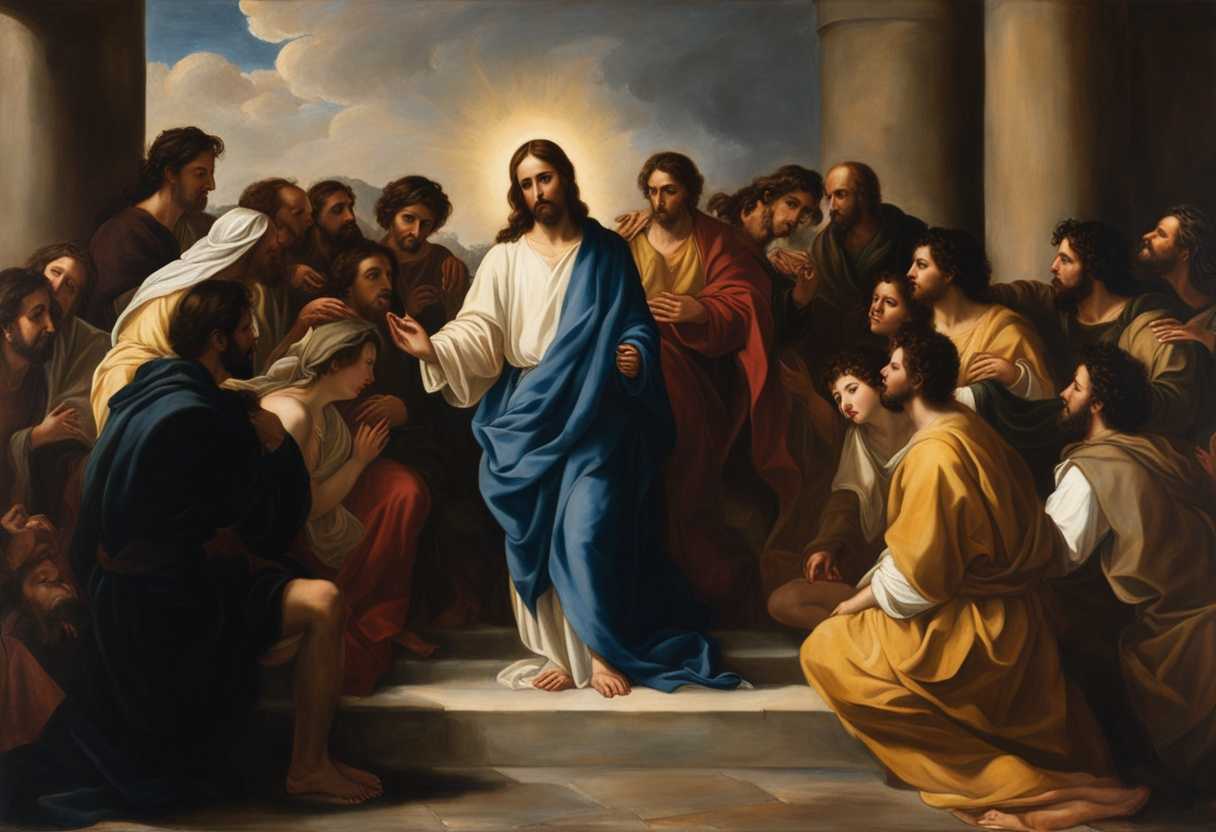
Setting the Scene for John 12:8
In John chapter 12, we find Jesus in the town of Bethany, at the home of Lazarus, whom Jesus had raised from the dead. Alongside Lazarus is his sister, Mary, who is known for her act of anointing Jesus’ feet with expensive perfume and wiping them with her hair. Also present is Martha, another sister of Lazarus, who is serving the guests.
The scene is set in a humble yet welcoming home, filled with the aroma of the perfume that Mary had used to anoint Jesus. The atmosphere is one of gratitude and reverence, as Jesus is surrounded by those who have witnessed his miraculous power and have experienced his love firsthand. The disciples are also present, along with other followers of Jesus who have gathered to spend time with him.
As they recline at the table, sharing a meal and engaging in conversation, the air is thick with anticipation and a sense of impending change. Jesus knows that his time on earth is drawing to a close, and the events that will lead to his crucifixion are already set in motion. Yet, in this moment of peace and fellowship, there is a sense of unity and love that transcends the challenges that lie ahead.
What is John 12:8 about?
Jesus acknowledges and commends Mary for her act of love and devotion towards Him in this verse. Despite the criticism she faced from others for using expensive perfume on Jesus, she showed her deep affection and respect for Him. Mary demonstrated her belief in His importance and her understanding of His impending death and burial by anointing Jesus with the costly perfume.
This verse teaches us about the value of expressing love and devotion towards our beliefs and the people we care about, even if it means going against societal norms or facing criticism from others. It prompts us to reflect on our own actions and attitudes towards showing reverence and care for those we hold dear. Jesus highlights the significance of genuine acts of selfless love and sacrifice by praising Mary, reminding us of the importance of expressing our devotion in meaningful ways. Mary’s love and devotion led her to anoint Jesus with such expensive perfume as we ponder on this verse. How would you show your love and reverence for someone or something important to you? How can this verse inspire you to express your affection and respect towards those you hold dear, despite potential challenges or criticisms? Let us reflect on the profound message of this verse and strive to embody the selfless love and devotion that Mary displayed towards Jesus.
Understanding what John 12:8 really means
In the narrative of Jesus being anointed by Mary in Bethany, a poignant moment unfolds as Judas questions the use of expensive perfume, suggesting it could have been sold to aid the poor. Jesus responds with a profound statement, “The poor you will always have with you, but you will not always have me.” This declaration carries layers of meaning that resonate through time and challenge us to reflect on our priorities and values.
“The poor you will always have with you” acknowledges the enduring presence of poverty in the world. It serves as a reminder of the continuous need for compassion and generosity towards those in need. Despite our efforts, poverty persists, calling us to a perpetual commitment to alleviating suffering and injustice.
On the other hand, “But you will not always have me” underscores the transient nature of unique opportunities, such as being in the physical presence of Jesus. This statement highlights the importance of recognizing and cherishing sacred moments, urging us to value spiritual encounters and divine connections that enrich our lives.
Drawing parallels from Deuteronomy 15:11, which emphasizes the ongoing presence of poverty and the call to generosity, and related passages like Matthew 26:11 and Mark 14:7, we see a consistent message across biblical accounts. The theme of balancing material needs with spiritual awareness runs through these texts, guiding us in navigating our responsibilities towards others and our relationship with the divine.
In our contemporary context, this verse prompts us to consider the delicate equilibrium between addressing immediate needs and honoring moments of spiritual significance. It challenges us to integrate acts of charity and service with a mindful recognition of the sacred in our daily lives, fostering a holistic approach to compassion and faith.
To illustrate this balance, envision a scenario at a community center serving meals to the homeless. Amidst the bustling kitchen, a visitor renowned for spiritual wisdom arrives. While some focus on the practical tasks, one individual chooses to sit and absorb the teachings of the spiritual leader. Though criticized for not actively helping, this person recognizes the value of seizing a rare opportunity for spiritual growth, which can ultimately deepen their service to others.
In conclusion, John 12:8 invites us to harmonize action with contemplation, service with spiritual awareness. It urges us to remain steadfast in our commitment to helping the marginalized while staying attuned to the transformative power of sacred moments that can illuminate our path and inspire our deeds.
What is the true value of material possessions?
The true value of material possessions lies in their utility and ability to be used for the greater good. Jesus explains in the verse that the poor will always be present to offer opportunities for helping others with our possessions. This implies that material wealth is not to be hoarded or valued for its own sake, but should rather be used to benefit those in need and advance God’s kingdom on earth. We ultimately measure the worth of our possessions by the impact they have on the lives of others and the extent to which they reflect our dedication to serving God and serving others. We understand that material possessions can be a means to express our love for God and for others, recognizing that their value lies not in their intrinsic worth, but in how we use them as instruments of generosity, compassion, and kindness. Instead of being a source of pride or status, possessions are to be viewed as tools for building relationships, alleviating suffering, and spreading God’s love in the world. Therefore, the true worth of material possessions is found in their capacity to bring about positive change and make a difference in the lives of those around us.
Application
Think of your life as a bustling workplace or a lively family gathering. Each act of generosity you make is like helping a coworker meet a deadline or sharing a meal with loved ones. By giving with a heart full of love, you light up someone’s world, just as Jesus did. Imagine the impact you can make if every gesture, no matter how small, is filled with sacrificial love. Ready to transform your everyday actions into acts of selfless giving?

Reverend Michael Johnson is an experienced Church Minister with a profound expertise in spirituality and guidance. With a serene presence and a compassionate heart, he has faithfully served his congregation for over 20 years, leading them on a spiritual journey towards inner peace and enlightenment. Reverend Johnson’s extensive knowledge of religious philosophies and profound understanding of human nature have made him a trusted confidant and mentor to many, as he seamlessly weaves his profound wisdom into life teachings. Reverend Johnson’s calming demeanor and empathetic nature continue to uplift and heal souls, nurturing a sense of unity and tranquility within his community.