
Matthew 26:11 is about recognizing the importance of caring for the poor and vulnerable, understanding that there will always be those in need among us.
11 For you always have the poor with you, but you will not always have me.
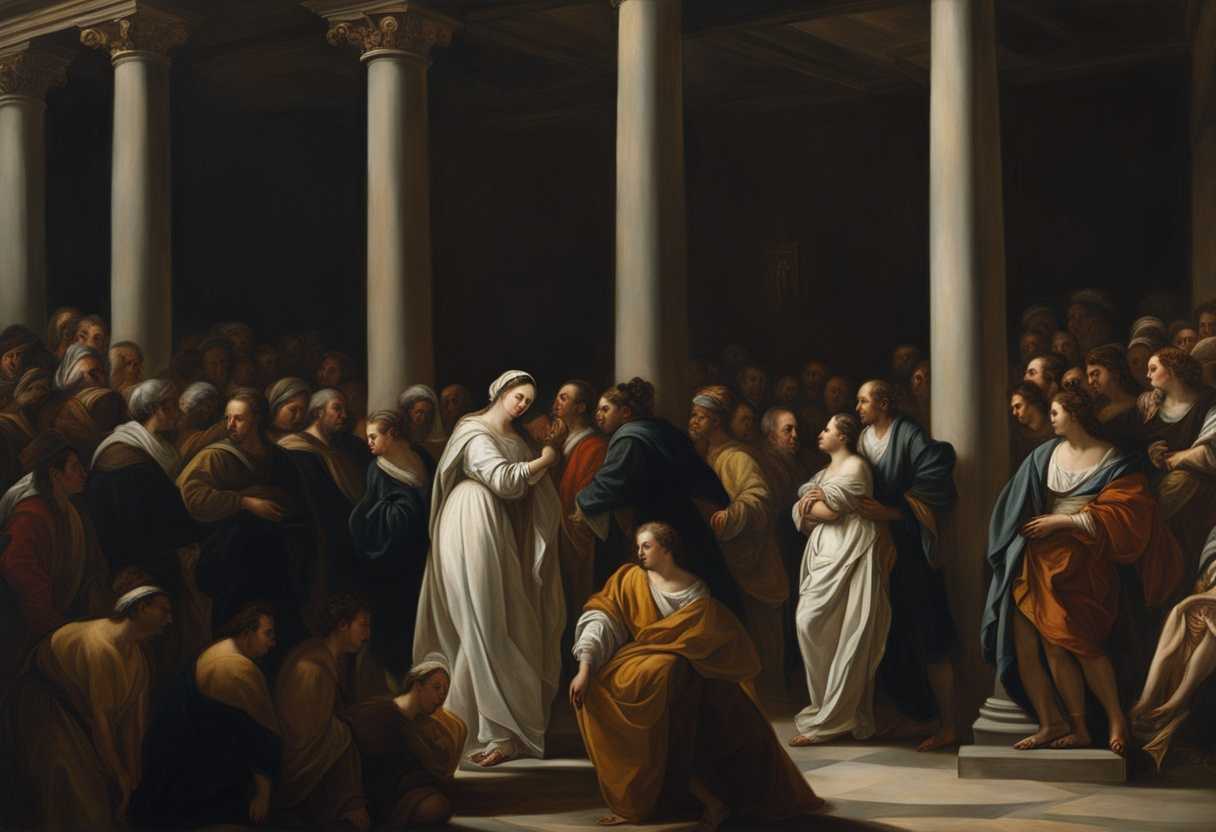
Setting the Scene for Matthew 26:11
In Matthew chapter 26, we find Jesus in Bethany, at the house of Simon the leper. Jesus is reclining at the table with his disciples when a woman approaches Him with an alabaster jar of very expensive perfume. This woman is Mary, the sister of Martha and Lazarus, whom Jesus had raised from the dead.
The scene is intimate and filled with emotion as Mary breaks the jar and pours the perfume on Jesus’ head as an act of love and devotion. The disciples, particularly Judas Iscariot, are taken aback by the extravagance of the gesture, questioning why the perfume was not sold and the money given to the poor. However, Jesus defends Mary, commending her for preparing Him for burial.
The atmosphere in the room is heavy with the impending events of Jesus’ betrayal and crucifixion. The fragrance of the perfume fills the air, symbolizing the sacrifice that Jesus is about to make for the sins of the world. This moment captures the deep love and reverence that Mary has for Jesus, foreshadowing the ultimate sacrifice that He will soon make on the cross.
What is Matthew 26:11 about?
This verse comes from the Gospel of Matthew, where Jesus is responding to criticism after a woman poured expensive perfume on his head as an act of worship. Jesus is referencing a verse from the Old Testament in Deuteronomy 15:11 which acknowledges the perpetual existence of poverty and the importance of caring for the less fortunate. Jesus emphasizes the eternal presence of poverty in the world and the ongoing responsibility of his followers to help those in need by stating “you always have the poor with you.”
At the same time, Jesus goes on to say, “but you will not always have me,” highlighting his impending crucifixion and the significance of cherishing the time spent with him on Earth. This statement underscores the temporal nature of Jesus’ physical presence, urging his disciples to make the most of the opportunity to be in his presence and learn from him while they still can. It serves as a reminder to prioritize spiritual connection and growth in the limited time that Jesus was physically present with them.
Reflecting on this verse, we are prompted to consider the enduring issue of poverty and our responsibility to address it, as well as the preciousness of our relationship with Christ and the importance of making the most of our time to learn from him. How can we continue to serve the poor and marginalized in our communities with compassion and generosity? How can we value and deepen our relationship with Jesus in our daily lives, recognizing the temporary nature of our time on Earth? These questions invite us to reflect on our actions and priorities in light of both our duty to serve others and our opportunity to draw closer to Christ.
Understanding what Matthew 26:11 really means
In Matthew 26:11, we encounter a poignant moment where Jesus responds to criticism about a woman anointing Him with expensive perfume. The disciples, particularly Judas, question the act, suggesting that the perfume could have been sold to aid the poor. Jesus’ response, “The poor you will always have with you, but you will not always have me,” carries profound implications for our understanding of priorities and spiritual significance.
This verse is situated within a narrative where Jesus is anointed, sparking a debate about the use of resources. The disciples’ concern for the poor is valid, reflecting a common ethical dilemma faced by believers – how to balance acts of worship and charity. Jesus’ response challenges us to consider the fleeting nature of opportunities for spiritual connection and the enduring presence of poverty in the world.
Drawing from related passages like Deuteronomy 15:11, we see a consistent theme of acknowledging the reality of poverty while emphasizing the call to generosity. The juxtaposition of worship and charity in this narrative prompts us to reflect on our own lives and how we navigate the tension between spiritual devotion and social responsibility.
Consider a family investing in a special reunion instead of donating to charity. While some may critique this choice, the reunion fosters love and unity within the family, echoing the woman’s act of anointing Jesus as a profound expression of love and devotion. Both scenarios illustrate the complexity of balancing personal acts of worship with communal acts of charity.
“The poor you will always have with you” acknowledges the enduring presence of poverty, urging us to maintain a heart of compassion and generosity towards those in need. Conversely, “But you will not always have me” underscores the transient nature of opportunities for spiritual connection, urging us to seize moments of significance with intentionality and reverence.
Reflecting on Matthew 26:11 invites us to navigate the tension between worship and charity, recognizing the value of both in a faithful life. It challenges us to prioritize moments of spiritual significance while remaining committed to serving those in need, embodying a holistic approach to faith that honors both the transient and enduring aspects of our Christian journey.
What are we willing to sacrifice for God?
The verse in Matthew 26:11 speaks about the value of an expensive ointment and how it could have been sold for a high price to help the poor. It reminds us to reflect on what we are willing to sacrifice for God and for the sake of others. We may give up or share things of value in our lives that we possess or hold dear to serve a greater purpose. This verse encourages us to think about our priorities and how we can use our resources and blessings to make a positive difference in the world.
God calls us to have a sacrificial heart, willing to give up our comforts or desires for the benefit of others. It urges us to evaluate our lives and consider what we are willing to sacrifice in order to live out God’s will and demonstrate love towards our neighbor. The verse prompts us to examine our choices, possessions, and actions, urging us to align them with God’s values of compassion, generosity, and selflessness. The verse ultimately challenges us to be mindful of our stewardship of resources and blessings, and to consider how we can use them in ways that honor God and show love for others. It calls us to be willing to make sacrifices, whether big or small, in order to live a life that reflects God’s love and compassion for all people.
Application
Think of your life as a bustling city, filled with deadlines and family moments. Amidst this, remember that your kindness is like a beacon in the darkness to those in need. Share what you’ve been blessed with—your time, resources, and empathy. Extend a helping hand just as Jesus did. Will you answer this call and light up someone’s world today?

Reverend Michael Johnson is an experienced Church Minister with a profound expertise in spirituality and guidance. With a serene presence and a compassionate heart, he has faithfully served his congregation for over 20 years, leading them on a spiritual journey towards inner peace and enlightenment. Reverend Johnson’s extensive knowledge of religious philosophies and profound understanding of human nature have made him a trusted confidant and mentor to many, as he seamlessly weaves his profound wisdom into life teachings. Reverend Johnson’s calming demeanor and empathetic nature continue to uplift and heal souls, nurturing a sense of unity and tranquility within his community.