
Genesis 35:27-29 is about the conclusion of Jacob’s journey, reflecting the fulfillment of God’s promise as he reunites with his father Isaac and eventually passes away, emphasizing the importance of family, faith, and the continuity of God’s covenant throughout generations.
27 And Jacob came to his father Isaac at Mamre, or Kiriath-arba (that is, Hebron), where Abraham and Isaac had sojourned.
28 And the days of Isaac were a hundred and eighty years.
29 And Isaac breathed his last, and he died and was gathered to his people, old and full of days. And his sons Esau and Jacob buried him.
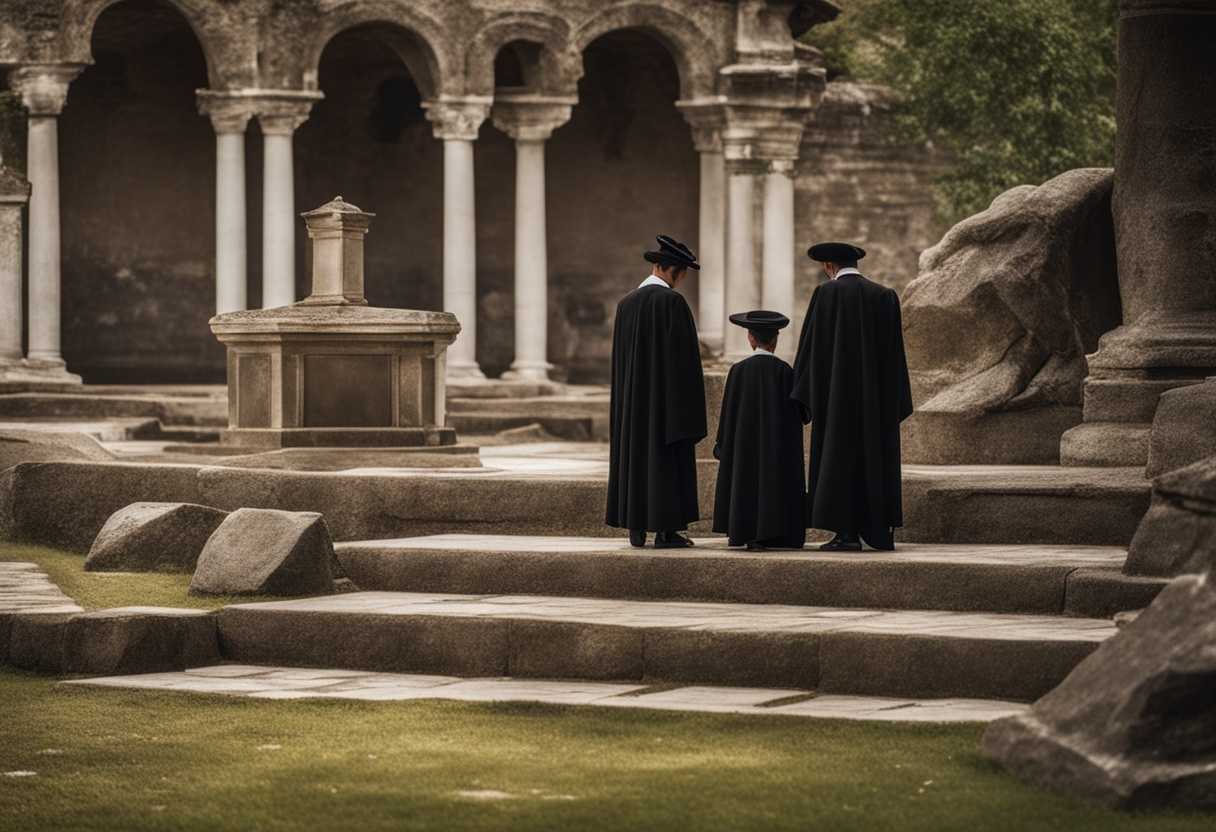
Setting the Scene for Genesis 35:27-29
In Genesis 35:27-29, we find Jacob, also known as Israel, on his journey back to his father Isaac in Hebron. Jacob had just reunited with his brother Esau after many years of separation and had settled in Succoth and then in Shechem. As Jacob and his family continue their journey, they arrive in Hebron, where his father Isaac resides.
The scene is set in Hebron, a significant city in biblical times located in the region of Canaan. Jacob is accompanied by his twelve sons, who would later become the twelve tribes of Israel, as well as their wives and children. The family is reunited with Isaac, the patriarch of their family, in a touching and emotional moment. The reunion is filled with joy and gratitude as they gather together in the presence of their father.
The surroundings are likely pastoral and serene, with the family coming together under the ancient trees of Hebron. The scene is a culmination of Jacob’s journey, filled with both trials and blessings, as he returns to his father’s house with his loved ones by his side. It is a moment of reflection and thanksgiving for the faithfulness of God throughout their travels and reunions.
What is Genesis 35:27-29 about?
We observe the passing of one generation to the next in this verse. Jacob returning to his father Isaac symbolizes the cyclical nature of life and the importance of honoring and caring for our elders. The act of burying Isaac by his sons not only reflects a duty to honor and respect one’s parents but also signifies a deep bond of love and responsibility within a family. Let us reflect on this verse and ponder the significance of family ties and the legacy we carry forward. How do we show reverence and gratitude to those who came before us? How can we ensure that we pass down values, wisdom, and love to the next generation? Cherish and prioritize our family relationships, knowing that they shape our identity and influence the way we navigate the world. May we embrace the interconnectedness of generations and the enduring power of familial bonds, just as Jacob returned to his father and his sons buried him with reverence.
Understanding what Genesis 35:27-29 really means
In Genesis 35:27-29, we witness a poignant moment in the biblical narrative as Jacob returns to his father Isaac in Mamre, marking the end of an era with Isaac’s passing and burial by his sons Esau and Jacob. This passage serves as a transition of leadership from one generation to the next, symbolizing the patriarchal torch being passed from Isaac to Jacob.
The death and burial of Isaac parallel those of his father Abraham in Genesis 25:7-10, underscoring the cyclical nature of life and the continuity of the patriarchal lineage. Jacob’s instructions for his own burial in Genesis 49:29-33 further emphasize the significance of family traditions and the importance of honoring one’s ancestors in the biblical narrative. Hebrews 11:20 sheds light on Isaac’s faith in blessing his sons, illustrating the spiritual legacy passed down through generations.
These verses hold relevance for contemporary readers in various ways. The reunion of Jacob and Esau at their father’s burial can inspire individuals to seek reconciliation and unity within their own families, fostering healing and restoration. The emphasis on legacy and heritage prompts reflection on the importance of honoring one’s roots and the enduring impact of familial ties. Moreover, the contemplation of life and death encourages readers to lead purposeful lives and consider the legacy they will leave behind.
Consider a scenario where a family gathers for a grandparent’s funeral, setting aside past grievances to honor their loved one. This moment of unity and reflection on the grandparent’s values can catalyze healing and strengthen familial bonds, illustrating the power of coming together in times of loss.
The phrase “Jacob came to his father Isaac at Mamre” signifies the significance of familial connections and the value of returning to one’s origins, even after prolonged separations. “Isaac breathed his last and died” serves as a reminder of the inevitability of death and the importance of living a life that positively impacts others. The act of Esau and Jacob burying their father highlights the unity that can arise in moments of grief, transcending past differences to honor a shared heritage.
By contemplating these verses, readers are encouraged to mend fractured relationships, uphold their family legacies, and lead lives that contribute meaningfully to their own narratives. The narrative of Jacob, Esau, and Isaac serves as a timeless reminder of the enduring power of familial bonds, the inevitability of mortality, and the significance of leaving behind a positive legacy for future generations.
How can we find blessings in times of struggle?
We can find blessings in times of struggle by reflecting on the bigger picture of our lives. Jacob ultimately blessed with a large family and descendants who went on to become the twelve tribes of Israel, despite struggling throughout his life and facing difficulties and challenges. We can find hope and strength to keep moving forward by staying focused on the long-term blessings that may come from enduring hardships.
Furthermore, seeking blessings in times of struggle can also involve recognizing the growth and lessons that come from facing challenges. Our own struggles can shape us into stronger, more resilient individuals as we transform and evolve throughout our lives. We can find blessings in the form of personal growth and development by embracing the lessons learned from difficult times.
Finally, finding blessings in times of struggle can also involve seeking support and guidance from others. Jacob’s life was intertwined with the lives of his family members and loved ones, who were there to offer him comfort, support, and advice during his trials. Reaching out to our support network in our own struggles can bring blessings in the form of love, understanding, and shared burdens.
Application
Time flies endlessly and unpredictably like fleeting moments at work or the bonds we build with family. Reflect on your legacy not in treasures, but in the lasting footprints you leave on hearts. Reevaluate what truly matters, prioritizing soulful connections and spreading joy. How will you shape your purpose and faith into actions today?

Reverend Michael Johnson is an experienced Church Minister with a profound expertise in spirituality and guidance. With a serene presence and a compassionate heart, he has faithfully served his congregation for over 20 years, leading them on a spiritual journey towards inner peace and enlightenment. Reverend Johnson’s extensive knowledge of religious philosophies and profound understanding of human nature have made him a trusted confidant and mentor to many, as he seamlessly weaves his profound wisdom into life teachings. Reverend Johnson’s calming demeanor and empathetic nature continue to uplift and heal souls, nurturing a sense of unity and tranquility within his community.