
29 Then he commanded them and said to them, “I am to be gathered to my people; bury me with my fathers in the cave that is in the field of Ephron the Hittite,
30 in the cave that is in the field at Machpelah, to the east of Mamre, in the land of Canaan, which Abraham bought with the field from Ephron the Hittite to possess as a burying place.
31 There they buried Abraham and Sarah his wife. There they buried Isaac and Rebekah his wife, and there I buried Leah—
32 The field and the cave that is in it were bought from the Hittites.
33 When Jacob finished commanding his sons, he drew up his feet into the bed and breathed his last and was gathered to his people.
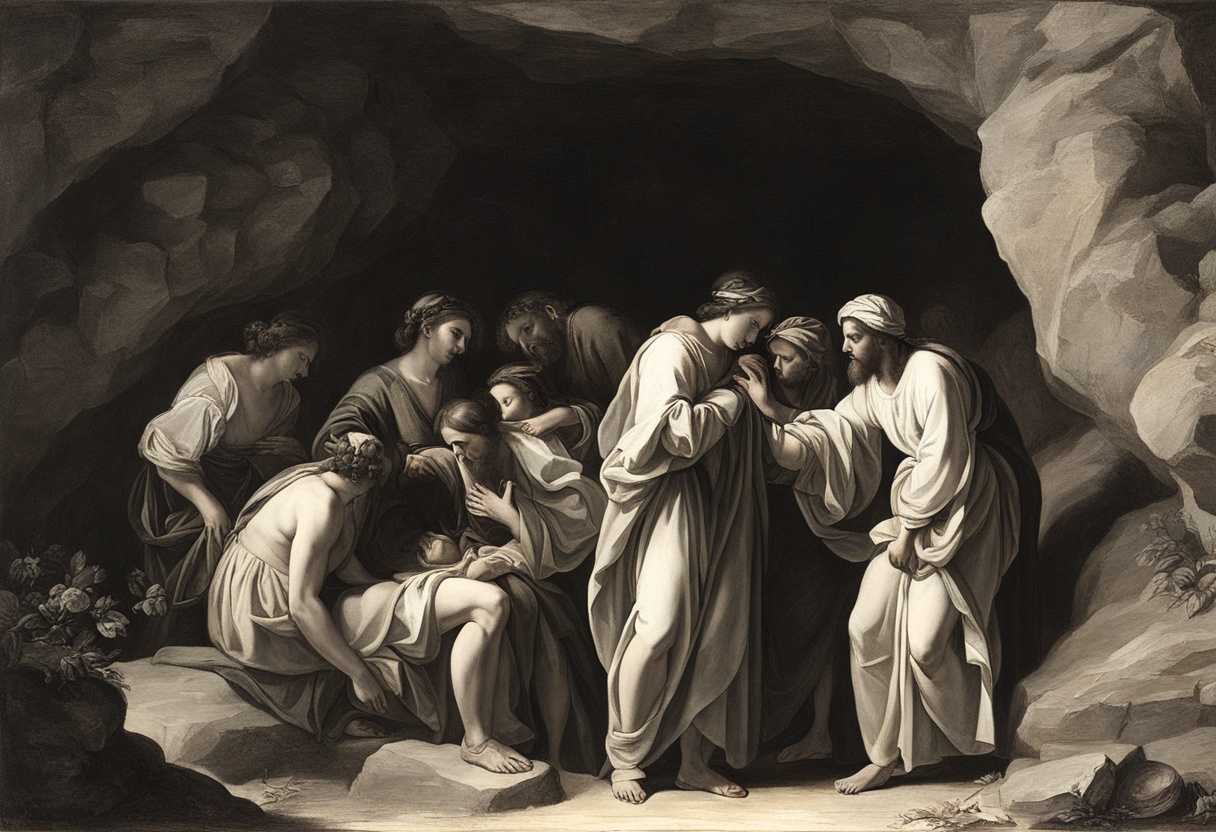
Setting the Scene for Genesis 49:29-33
In Genesis 49:29-33, we find Jacob, also known as Israel, on his deathbed. He calls his twelve sons to his side to bless them and give them each a prophecy about their future. The scene is set in a dimly lit tent, with the dying patriarch surrounded by his sons who are gathered around him, eager to hear his final words.
The atmosphere is heavy with emotion as Jacob imparts his blessings and prophecies to each of his sons, speaking words of encouragement, correction, and foresight. The sons listen intently, knowing the weight and significance of their father’s words as he speaks over each of them, foretelling their destinies and the roles they will play in the future of the nation of Israel.
As Jacob finishes blessing his sons, he draws his feet into the bed, breathes his last breath, and is gathered to his people. The scene is one of both sorrow and hope, as the torch is passed from the old patriarch to the next generation, marking the end of an era and the beginning of a new chapter in the history of God’s chosen people.
What is Genesis 49:29-33 about?
This verse is telling us about a significant moment in the life of Jacob, a patriarch in the Bible, as he imparts his final words of wisdom and guidance to his sons before his death. Imagine the gravity of the situation – a father passing down his last words, ensuring his legacy and teachings will live on through his children. It is a moment of reflection, love, and foresight as Jacob carefully considers each son’s character and future path. We witness a father who knows the strengths and weaknesses of his children intimately as we dive into Jacob’s final instructions. His words are not just a list of commands but a nuanced understanding of each son’s unique role in the family and society. Through this act, Jacob offers a roadmap for his sons to follow, guiding them on how to live their lives with integrity, honor, and faith. It prompts us to ponder: What lessons are we leaving for our loved ones? How can we impart wisdom and values that will endure long after we are gone? It’s a powerful reminder of the importance of passing down knowledge, morals, and love to the next generation.
Understanding what Genesis 49:29-33 really means
Structure for Commentary
- Introduction to the Passage
- Historical and Cultural Context
- Analysis of Key Phrases
- Related Biblical Passages
- Relevance to Contemporary Life
- Jacob gives final instructions to his sons before his death in Genesis 49:29-33. This passage is significant as it captures Jacob’s final wishes and the culmination of his life journey. It serves as both a personal and communal moment, highlighting themes of legacy, heritage, and the continuity of God’s promise to Abraham, Isaac, and Jacob.
Historical and Cultural Context
Jacob’s instructions to his sons to bury him in the cave in the field of Machpelah establish a connection to his ancestors. This site holds immense historical value, being the burial place of Abraham, Sarah, Isaac, Rebekah, and Leah. The act of specifying his burial place underscores the importance of family heritage and continuity of the covenant relationship with God. Burial practices in ancient Near Eastern culture deeply tied identity and familial bonds, emphasizing Jacob’s desire to be eternally united with his lineage.
Analysis of Key Phrases
“Gathered to his people” is a phrase rich with meaning. It signifies a kind of spiritual reunion with ancestors, implying a belief in an afterlife and the ongoing existence of familial connections. This idea aligns with earlier passages in Genesis where burial in the family plot was a way of maintaining a connection with the covenant promises.
The command to “bury me with my fathers” also underscores the importance of maintaining faith traditions and honoring one’s heritage. It is a powerful reminder of the continuity of God’s promises across generations.
Related Biblical Passages
Jacob’s instructions resonate with earlier patriarchal narratives. For instance, in Genesis 23, Abraham purchases the cave of Machpelah as a family burial site, establishing it as a key location in the biblical story. Similarly, in Genesis 35:29, Isaac is “gathered to his people,” illustrating a consistent theme of familial unity in death.
Relevance to Contemporary Life
Today, this passage prompts us to consider how we honor our own families and heritage. It invites reflection on the legacies we leave behind and how our actions contribute to the broader narrative of our communities and faith. The emphasis on family and community ties offers a countercultural message about the importance of relationships and continuity in an increasingly individualistic society.
Personal Anecdote and Final Reflection
I remember a member of our congregation, Mrs. Thompson, who often spoke about her family’s history and traditions. Her stories weren’t just about the past; they were about values, faith, and identity passed down through generations. When she passed away, her family took great care in following her wishes for a traditional burial that honored her roots. This act was not just about respecting her final wishes, but about affirming their place within a continuous, faith-driven story. Jacob’s instructions to his sons serve as a profound reminder of the importance of legacy. It teaches us the value of looking back to our roots while considering the future we build for those who come after us. May we find ways to honor and uphold the heritage, faith, and values that shape us, ensuring their endurance for generations to come as we reflect on our own lives.
How can we ensure our final resting place honors God?
To ensure our final resting place honors God, it is important to prioritize our spiritual legacy and pass on a heritage of faith to the next generation. We can leave a lasting impact that glorifies God even after we have passed away by living a life that demonstrates love, kindness, and obedience. Choosing a burial place that reflects our commitment to God and our beliefs can also be a way to honor Him in death.
Just as Jacob made specific requests for his burial place and passed on his instructions to his sons, we can also plan ahead and make arrangements that align with our faith. This can include choosing a burial site that holds significance to our spiritual journey or where we can be laid to rest in a manner that reflects our relationship with God. Our final resting place should ultimately serve as a reminder of our devotion to God and the hope we have in Him, pointing others towards His love and grace even in death.
Application
Picture your work emails piling up or family moments slipping by unacknowledged. In Genesis 49:29-33, Jacob made sure his final wishes were clear. Just like that, consider how important it is to set your own house in order, both in life and in work. Are you managing your responsibilities and relationships with the care they deserve? Today, take that crucial step to prioritize what matters most. Will you take action now to secure your future and honor those you love?

Reverend Michael Johnson is an experienced Church Minister with a profound expertise in spirituality and guidance. With a serene presence and a compassionate heart, he has faithfully served his congregation for over 20 years, leading them on a spiritual journey towards inner peace and enlightenment. Reverend Johnson’s extensive knowledge of religious philosophies and profound understanding of human nature have made him a trusted confidant and mentor to many, as he seamlessly weaves his profound wisdom into life teachings. Reverend Johnson’s calming demeanor and empathetic nature continue to uplift and heal souls, nurturing a sense of unity and tranquility within his community.