
28 All these are the twelve tribes of Israel. This is what their father said to them as he blessed them, blessing each with the blessing suitable to him.
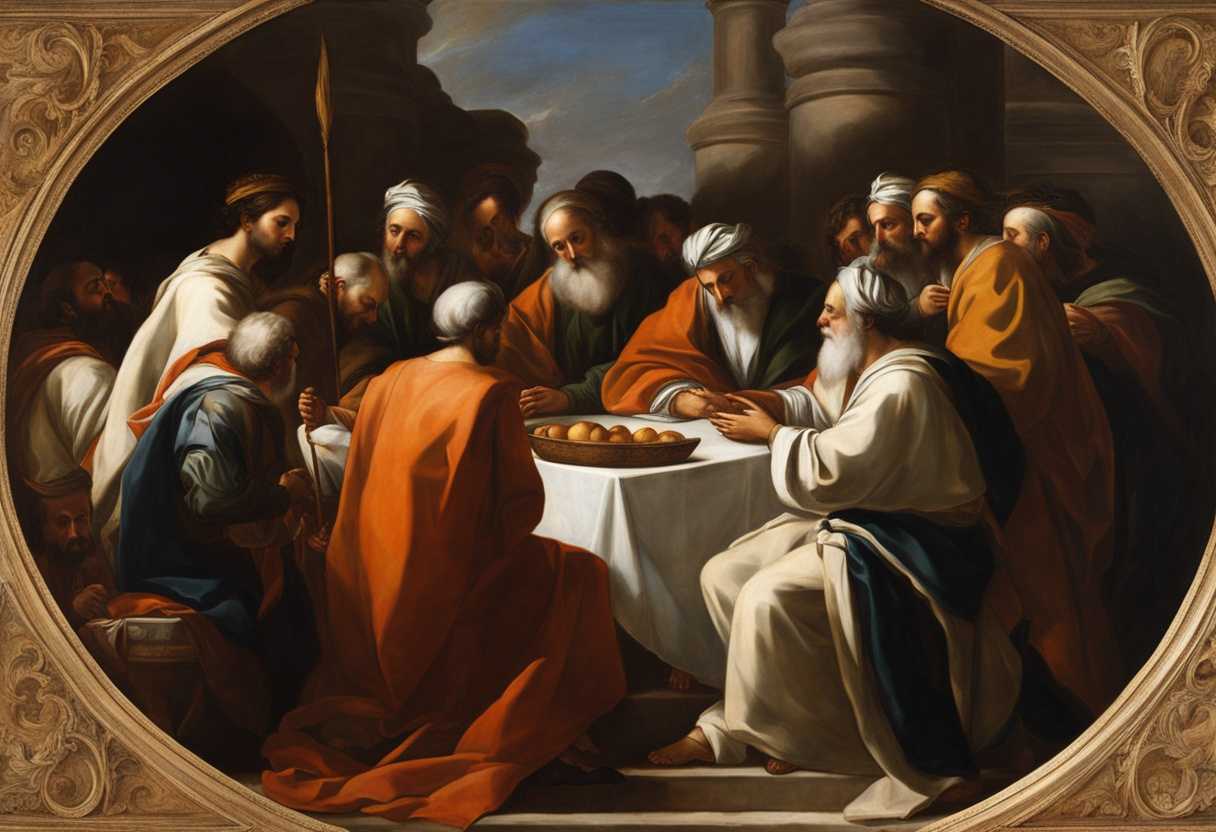
Setting the Scene for Genesis 49:28
In Genesis chapter 49, we find Jacob, also known as Israel, on his deathbed. He calls his twelve sons to his side to bless them and prophesy over their future. The scene is set in a dimly lit tent, with the flickering light of oil lamps casting shadows on the faces of the gathered family members. The air is heavy with the scent of myrrh and frankincense, creating an atmosphere of solemnity and reverence.
The twelve sons of Jacob, including Reuben, Simeon, Levi, Judah, Dan, Naphtali, Gad, Asher, Issachar, Zebulun, Joseph, and Benjamin, are gathered around their father, their faces a mix of anticipation and trepidation. Each son has a unique personality and history, shaped by their experiences and relationships within the family. Jacob, weakened by age and illness, speaks with a voice filled with emotion as he imparts his final blessings and prophecies upon his sons, foretelling their destinies and the roles they will play in the future of the nation of Israel.
As Jacob concludes his blessings, the weight of his words hangs in the air, leaving a profound impact on each of his sons. The scene is one of familial intimacy and spiritual significance, as the patriarch of the family imparts his final wisdom and blessings before passing into eternity.
What is Genesis 49:28 about?
Jacob, the patriarch of the twelve tribes of Israel, bestows blessings upon his sons in a powerful moment in Genesis 49:28, foretelling their future paths and outcomes. This passage encapsulates the importance of familial relationships, generational legacies, and the impact of words spoken with intention and foresight.
Imagine standing alongside Jacob as he imparts these blessings to his sons, each word filled with love, wisdom, and spiritual insight. Reflect on the significance of parental guidance and how these blessings shape the destinies of his sons, setting the course for their lives and the future of their descendants. The prophecies showcase the intricate tapestry of divine providence and human agency as they unfold throughout the biblical narrative. As we delve into Genesis 49:28, let us ponder our own roles within our families and communities, recognizing the profound influence we have through our words and actions. How can we emulate Jacob’s example by speaking words of blessing, encouragement, and guidance to those around us? How can we foster a sense of purpose and unity within our own families, ensuring that our legacies reflect values of faith, love, and resilience? We should draw inspiration from Jacob’s blessings and strive to impart wisdom and hope to future generations, crafting a narrative of strength and compassion for all who come after us.
Understanding what Genesis 49:28 really means
Structure for Commentary:
- Introduction to the Verse: Context and Relevance
- Key Phrases and Their Meanings
- Cross-references to Other Bible Passages
- Relevance to Modern Life
- Engaging Anecdote
- Reflective Questions and Closing Thoughts
Commentary:
-
Introduction to the Verse: Context and Relevance
Genesis 49:28 encapsulates Jacob’s final blessings to his twelve sons, who represent the twelve tribes of Israel. Situated within Jacob’s prophetic declarations, this verse signifies the culmination of his life’s reflections and the divine destinies assigned to each son. Understanding this verse provides insights into heritage, legacy, and the fulfillment of God’s promises. -
Key Phrases and Their Meanings
The phrase “each according to his blessing” emphasizes the distinct path and role each tribe will play. The blessings are not uniformly distributed but tailored to the characteristics, behavior, and roles of each son. “Blessed them” indicates the conveying of favor and divine intention, showing that despite human flaws, God’s plans remain sovereign and purposeful. -
Cross-references to Other Bible Passages
This verse can be enriched by referencing Deuteronomy 33, where Moses also blesses the tribes of Israel just before his death. Similarly, Joshua 24:14-28 recounts Joshua reminding the tribes of their specific roles and duties upon taking the Promised Land. These passages collectively highlight a recurring biblical theme: the imparting of blessings and responsibilities shaped by divine foresight. -
The notion of individual gifts and roles carries profound significance in today’s world. Just as Jacob’s blessings recognized the uniqueness of each son, we are reminded that every person has distinct talents and callings. This verse speaks to embracing our personal strengths and purposes within the greater community, whether in our families, workplaces, or churches.
-
Sarah is a young woman to consider. She always felt overshadowed by her siblings, who excelled in academia and sports. One day, her church pastor spoke on Genesis 49:28, explaining how each son of Jacob had his unique blessing. Enlightened by this message, Sarah found encouragement to pursue her passion for music, eventually becoming a worship leader. She realized that her distinct gift was invaluable to her community and glorified God in ways only she could.
-
Reflective Questions and Closing Thoughts
How often do we compare ourselves to others, ignoring the unique blessings and roles God has bestowed upon us? This verse challenges us to reflect on our personal callings and embrace them fully. Let’s consider as we navigate our lives: What are my unique gifts and how can I use them to serve others and honor God? Genesis 49:28 invites us to find peace and purpose in our God-given roles in a world where comparison and competition are rampant. Every blessing, though distinct, contributes to the fulfillment of God’s grand design. We should cherish and cultivate our particular blessings, trusting in the divine wisdom that apportions them.
How can we ensure our spiritual legacy endures?
Our spiritual legacy can endure through the intentional passing down of our beliefs, values, and teachings to the next generation. We can leave a lasting impact on those around us by embodying and living out our faith in a way that is authentic and sincere. Just as Jacob passed on his blessings and prophecies to his sons in Genesis 49, we too can pass on our spiritual wisdom and guidance to our loved ones.
Furthermore, investing in relationships and creating a strong sense of community can help ensure that our spiritual legacy endures. We can create a network of support and encouragement that will help sustain our legacy long after we are gone by nurturing connections with others who share our beliefs and values. Building a community that values and upholds the teachings we hold dear can help ensure that our spiritual impact continues to be felt for generations to come. Our actions and the way we live out our faith in our daily lives can ultimately endure as our spiritual legacy through their transformative power. We can leave a legacy that speaks volumes long after we are gone by striving to be a reflection of our beliefs through our words, deeds, and interactions with others. Our commitment to living out our faith authentically and intentionally can inspire others to do the same, creating a ripple effect that extends far beyond our own lifetime.
Application
Think of your words as seeds. Just as Jacob planted hope and love in his children’s lives, you have the power to nurture growth in your family, friends, and colleagues. Will your words inspire and uplift them? In a world full of challenges and stress, be the sunshine that helps others bloom. How will you spread positivity and blessings today?

Reverend Michael Johnson is an experienced Church Minister with a profound expertise in spirituality and guidance. With a serene presence and a compassionate heart, he has faithfully served his congregation for over 20 years, leading them on a spiritual journey towards inner peace and enlightenment. Reverend Johnson’s extensive knowledge of religious philosophies and profound understanding of human nature have made him a trusted confidant and mentor to many, as he seamlessly weaves his profound wisdom into life teachings. Reverend Johnson’s calming demeanor and empathetic nature continue to uplift and heal souls, nurturing a sense of unity and tranquility within his community.