
Genesis 40:16-19 is about Joseph interpreting the dreams of Pharaoh’s cupbearer and baker while they were in prison, foretelling the cupbearer’s restoration to his position and the baker’s execution.
16 When the chief baker saw that the interpretation was favorable, he said to Joseph, “I also had a dream: there were three cake baskets on my head,
17 In the uppermost basket there were all sorts of baked food for Pharaoh, but the birds were eating it out of the basket on my head.”
18 And Joseph answered and said, “This is its interpretation: the three baskets are three days.
19 Yet within three days Pharaoh will lift up your head—from you!—and hang you on a tree. And the birds will eat the flesh from you.”
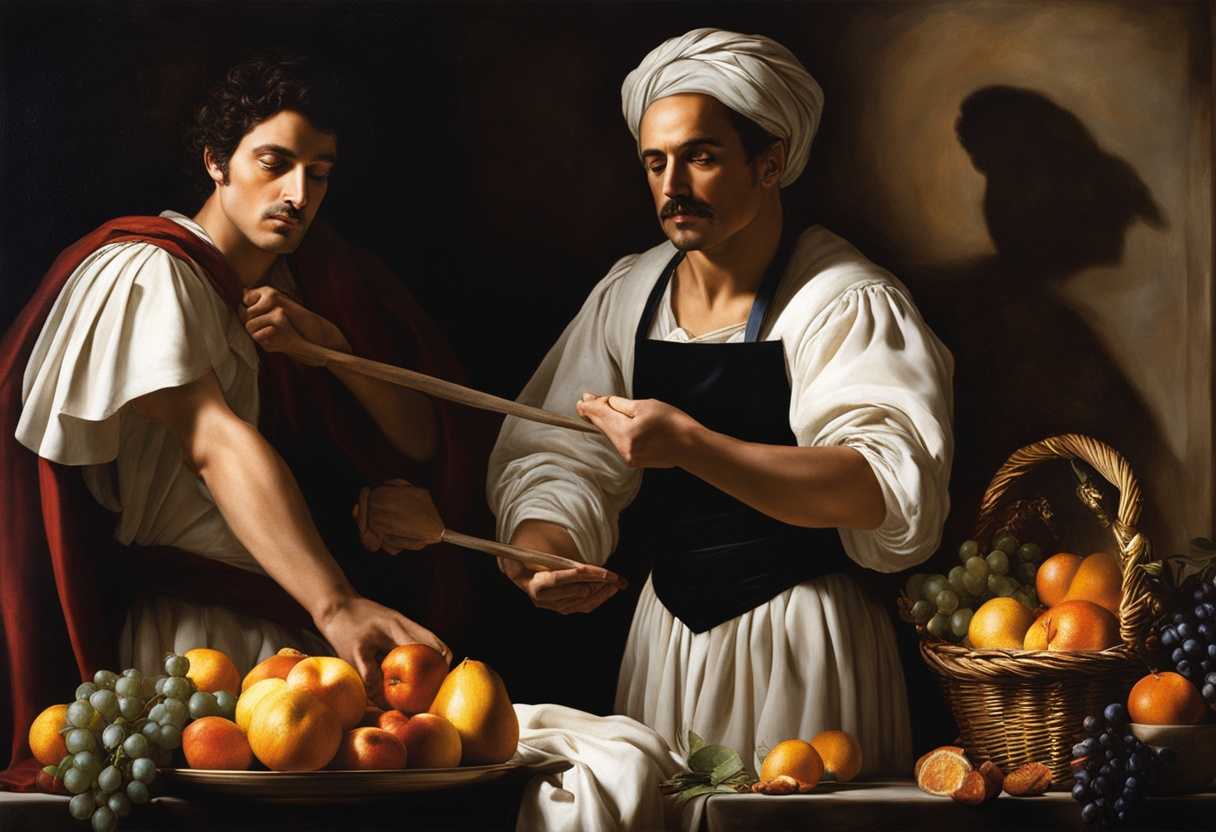
Setting the Scene for Genesis 40:16-19
In Genesis 40:16-19, we find Joseph interpreting dreams for two fellow prisoners in Egypt. The scene is set in a dimly lit prison cell, with the air heavy with the scent of despair and confinement. Joseph, a Hebrew man who was sold into slavery by his jealous brothers, finds himself in this predicament after being falsely accused by his master’s wife. Despite his unjust circumstances, Joseph remains faithful to God and uses his gift of dream interpretation to help those around him.
The two men in the scene are Pharaoh’s chief cupbearer and chief baker, who have each had troubling dreams. They are drawn to Joseph because of his reputation for accurately interpreting dreams. The cupbearer and baker are anxious and troubled, seeking answers and solace in a place where hope seems scarce. As Joseph listens to their dreams, the flickering light from a small torch casts shadows on the damp walls of the cell, adding to the atmosphere of mystery and anticipation. The men wait with bated breath as Joseph reveals the meanings behind their dreams, offering them a glimmer of hope in their dark circumstances.
What is Genesis 40:16-19 about?
This verse from the story of Joseph in the Bible demonstrates the unique gift of dream interpretation that Joseph possessed. It showcases Joseph’s ability to not only understand the symbolic language of dreams but also to accurately predict future events based on those interpretations. Joseph not only showcases his God-given talent but also becomes a pivotal figure in the overarching narrative of his own life story by correctly interpreting the dreams of the cupbearer and the baker.
Have you ever pondered the significance of dreams and their potential to reveal hidden truths or insights? Joseph’s story challenges us to consider the possibility that dreams can hold important messages or warnings. It also prompts us to reflect on how being open to interpreting dreams, whether our own or others’, can lead to a deeper understanding of ourselves and the world around us. Furthermore, Joseph’s actions in this verse highlight the importance of using our unique gifts and talents to help and serve others, even in the most unexpected circumstances. How can we, like Joseph, embrace and cultivate our special abilities to make a positive impact on those around us?
Understanding what Genesis 40:16-19 really means
In the narrative of Joseph’s time in an Egyptian prison, we encounter a pivotal moment where the chief baker, inspired by the positive interpretation of the cupbearer’s dream, eagerly shares his own dream. His dream of three baskets of bread on his head, with birds devouring the bread, sets a foreboding tone. The symbolism of the bread, typically associated with sustenance and life, takes on a darker meaning as it foreshadows the baker’s impending doom. The imagery of birds consuming the bread serves as a stark omen of death and destruction, a common motif in biblical literature signifying imminent loss.
Joseph’s direct and grim prophecy to the chief baker, foretelling his execution by Pharaoh in three days, stands in stark contrast to the cupbearer’s favorable outcome. This sharp juxtaposition highlights the harsh reality of the baker’s fate and underscores the weight of Joseph’s interpretations. The unfolding events in this passage serve as a reminder of the intricate interplay between human actions and divine providence, showcasing God’s sovereignty over the lives of individuals even in the midst of dire circumstances.
Drawing parallels to other biblical passages, such as Joseph’s eventual rise to power through accurate dream interpretations in Genesis 41:1-13, we see a recurring theme of God’s guidance and faithfulness. Similarly, in Daniel 2:27-28, Daniel attributes true wisdom and revelation to God, emphasizing the importance of divine insight over human understanding. Proverbs 3:5-6 further reinforces the notion of trusting in the Lord wholeheartedly, highlighting the significance of relying on God’s wisdom rather than leaning on our limited understanding.
The relevance of this passage extends to contemporary life, urging us to trust in God’s plan amidst uncertainty and adversity. Joseph’s unwavering faithfulness in interpreting dreams, even when the outcomes are unfavorable, serves as a poignant example of remaining steadfast in truth and integrity. Through Joseph’s story, we are reminded of God’s overarching sovereignty and His benevolent intentions for our lives, even when circumstances seem bleak or incomprehensible.
Consider a scenario where a young professional faces sudden job loss, initially grappling with despair and doubt. Yet, by maintaining faith in God’s plan and remaining steadfast, they eventually discover a new opportunity that not only aligns with their passions but also leads to personal growth and fulfillment. This narrative echoes Joseph’s journey, where initial hardships pave the way for unforeseen blessings and a greater purpose.
In conclusion, the passage from Genesis 40:16-19 serves as a profound testament to the importance of trusting in God’s wisdom and timing. It prompts us to uphold faithfulness and truthfulness in the face of adversity, knowing that God’s sovereignty reigns supreme in all circumstances. As we reflect on Joseph’s story, may we find solace in the assurance that God’s plans, though mysterious at times, are always rooted in love and ultimate goodness.
Are we using our gifts to serve others?
Joseph interprets the dreams of the chief cupbearer and the chief baker in Genesis 40:16-19, revealing that the cupbearer’s dream signifies restoration to his former position while the baker’s dream signifies his impending death. Joseph uses his gift of interpretation from God to serve these men by providing insight and guidance.
Similarly, we can reflect on how we are using the gifts and talents that God has given us to serve others. Are we actively seeking opportunities to help, support, and uplift those around us? We can also use our own abilities to make a positive impact in the lives of others and bring glory to God through our service, just as Joseph used his gift to bring clarity and hope to the chief cupbearer.
It is important for us to remember that our gifts are not meant to be hoarded or used solely for our own benefit, but rather to be shared with others in love and humility. We can use our gifts to serve others and ultimately be a source of light and encouragement in the world by following the example set by Joseph in Genesis 40:16-19.
Application
Just like Joseph deciphered dreams patiently, trusting in God’s timing and plan, we too must have faith in our own journey. Let us confidently embrace our gifts and skills, serving a higher purpose just as Joseph served faithfully. Will you have the courage to follow God’s calling, just like Joseph did, even when the path seems unclear?

Reverend Michael Johnson is an experienced Church Minister with a profound expertise in spirituality and guidance. With a serene presence and a compassionate heart, he has faithfully served his congregation for over 20 years, leading them on a spiritual journey towards inner peace and enlightenment. Reverend Johnson’s extensive knowledge of religious philosophies and profound understanding of human nature have made him a trusted confidant and mentor to many, as he seamlessly weaves his profound wisdom into life teachings. Reverend Johnson’s calming demeanor and empathetic nature continue to uplift and heal souls, nurturing a sense of unity and tranquility within his community.