
1 Samuel 13:5-7 is about King Saul facing a difficult predicament as he waits for Samuel to arrive for a sacrifice before battle, highlighting the importance of patience, obedience to God, and the consequences of taking matters into one’s own hands.
5 And the Philistines mustered to fight with Israel, thirty thousand chariots and six thousand horsemen and troops like the sand on the seashore in multitude. They came up and encamped in Michmash, to the east of Beth-aven.
6 When the men of Israel saw that they were in trouble (for the people were hard pressed), the people hid themselves in caves and in holes and in rocks and in tombs and in cisterns,
7 And some of the Hebrews crossed the fords of the Jordan to the land of Gad and Gilead. But Saul was still at Gilgal, and all the people followed him trembling.
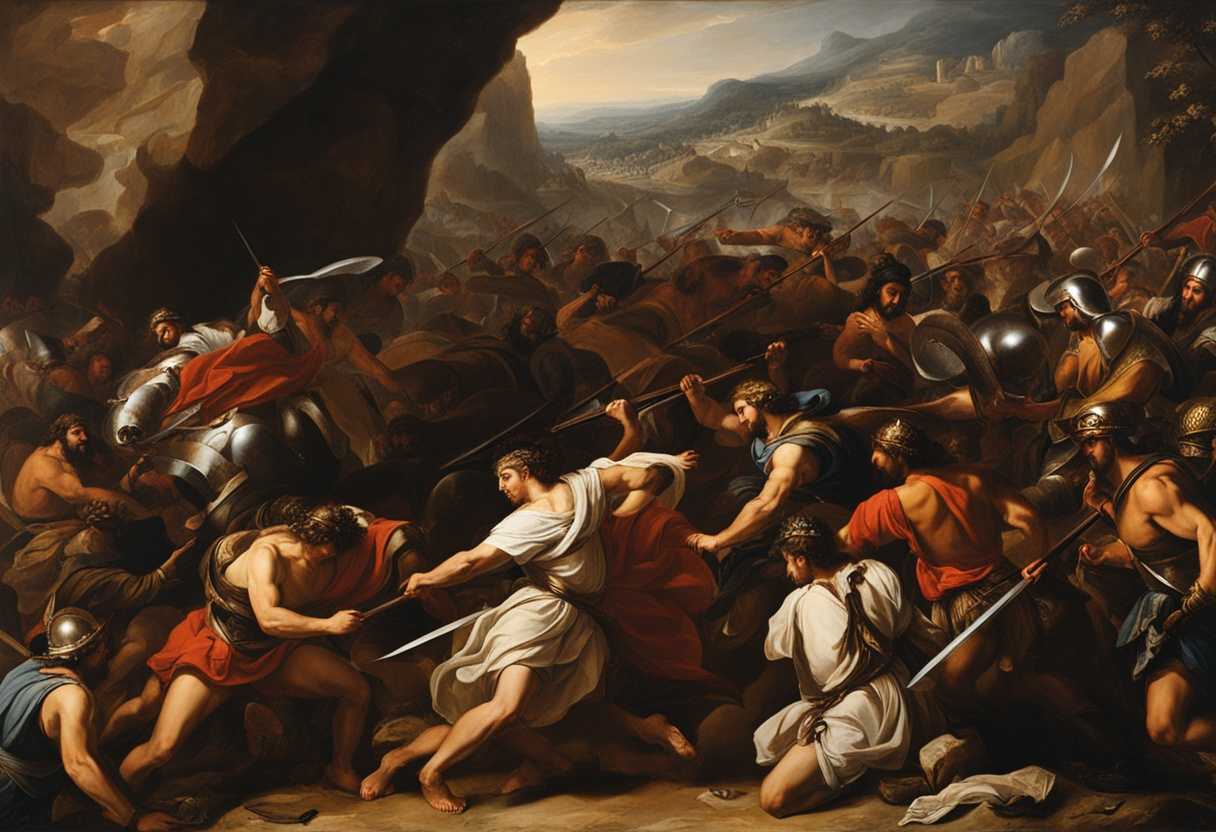
Setting the Scene for 1 Samuel 13:5-7
In 1 Samuel chapter 13, we find King Saul and his son Jonathan in a tense situation. The scene is set in the rugged terrain of Michmash, a strategic location in Israel. The Philistine army has gathered for battle against the Israelites, and fear is palpable among Saul’s men as they see the vast Philistine forces arrayed against them.
Saul, as the king of Israel, is responsible for leading his army into battle. However, as the days pass and the pressure mounts, his men begin to scatter. In the midst of this turmoil, Saul is waiting for the prophet Samuel to arrive and offer sacrifices to seek God’s favor before the battle. But as the hours turn into days, and with his men deserting him, Saul’s resolve begins to waver.
Jonathan, Saul’s son, stands by his father’s side, loyal and ready to support him in any way he can. The tension in the air is thick as they wait for Samuel, unsure of what the future holds for them and their people. The weight of leadership and the uncertainty of the situation weigh heavily on Saul and Jonathan as they stand on the brink of a crucial moment in Israel’s history.
What is 1 Samuel 13:5-7 about?
A powerful lesson about faith and obedience to God’s will is seen in this verse. Saul’s actions demonstrate impatience and a lack of trust in God’s plan. Instead of waiting for Samuel, the appointed prophet, to offer the sacrifice before going into battle as instructed, Saul chooses to take matters into his own hands. His disobedience not only shows a lack of faith in God’s timing and guidance but also a desire to control the situation himself.
Have you ever found yourself in a situation where you were tempted to take matters into your own hands instead of waiting for God’s timing? It’s natural to feel impatient or uncertain at times, but Saul’s actions serve as a reminder to trust in God’s plan and timing. We show our faith and reliance on God’s wisdom and guidance by being patient and obedient. It’s a challenging lesson to learn, but one that can ultimately strengthen our relationship with God and deepen our faith.
Next time you are faced with a difficult decision or waiting for an answer, remember Saul’s impatience and disobedience. Take a moment to pause, pray, and trust in God’s plan. We open ourselves up to His blessings and guidance in our lives by seeking His will above our own desires and being obedient to His word. Let Saul’s story be a reminder to have faith, patience, and obedience in all circumstances.
Understanding what 1 Samuel 13:5-7 really means
In 1 Samuel 13:5-7, we find the Israelites in a dire situation, facing a formidable Philistine army. The text vividly describes the Philistines assembling for battle, their numbers likened to the sand on the seashore, emphasizing the overwhelming odds against the Israelites. The men of Israel, recognizing the critical nature of their circumstances, sought refuge in caves, thickets, rocks, pits, and cisterns, highlighting their fear and desperation in the face of imminent danger.
This passage sets the stage for King Saul’s subsequent actions, revealing his response to the crisis and the implications for his kingship. The context underscores the intense pressure and fear experienced by Saul and his men, a relatable experience for anyone who has felt overwhelmed by daunting challenges. The imagery of hiding in caves resonates with similar accounts in the Bible, such as the Israelites seeking refuge during the oppression of the Midianites in Judges 6:2.
The phrase “The Lord is my light and my salvation—whom shall I fear?” from Psalm 27:1 contrasts the fear of the Israelites with the confidence that comes from trusting in God. Similarly, Isaiah 41:10 reassures believers of God’s presence and support in times of fear, echoing the timeless message of trusting in God even in the midst of dire circumstances. These passages offer comfort and encouragement to those facing overwhelming situations today, reminding them of the steadfastness of God’s presence and promises.
Consider a scenario where a small business owner grapples with the threat of bankruptcy amid economic challenges. The fear and desperation experienced in such a situation parallel the emotions of the Israelites hiding in caves. By turning to God for guidance and strength, the business owner can find the courage to navigate through adversity and make wise decisions, mirroring the call for trust in God amidst fear.
In conclusion, 1 Samuel 13:5-7 serves as a poignant reminder of the human tendency to fear when confronted with daunting obstacles. The passage encourages readers to anchor their trust in God, drawing strength from His unwavering presence and promises. By reflecting on related scriptures and real-life applications, believers can find hope and resilience to confront their own “Philistine armies” with faith and confidence, knowing that God is their refuge and strength in times of trouble.
Are we trusting in God’s timing and promises?
We see a vivid example of the importance of trusting in God’s timing and promises in the passage from 1 Samuel 13:5-7. Saul was facing a difficult situation where his soldiers were fearful, and the Philistines were advancing. Saul took matters into his own hands instead of waiting for the appointed time set by God in his anxiousness. This impatience led to consequences and ultimately revealed a lack of faith in God’s ability to deliver on His promises.
This story serves as a powerful reminder for us today. We may also face situations in our own lives where we feel pressured to take matters into our own hands instead of waiting on the Lord. However, just like Saul, we are called to trust in God’s timing and promises. We must remember that God’s timing is always perfect, and He is faithful to fulfill what He has promised. We can rest assured that He will work all things together for our good and His glory by surrendering our anxieties and fears to Him. Let us consider this passage as a lesson to have faith and patience in God’s timing. May we learn to wait on the Lord with confident expectation, knowing that He is faithful to fulfill His promises in His own perfect timing. We can rest in the assurance that God is always working for our good by trusting in His sovereignty and His faithfulness, even when we may not see immediate results.
Application
Let’s pause, reflect, and let the words of 1 Samuel 13:5-7 resonate deep within us. Trusting in God’s timing means embracing patience and faith, knowing that His plans are always precise. Just like how we trust our GPS to navigate us through unfamiliar roads, let us trust in God to lead us in the right direction. Will you join me in waiting on His perfect timing, allowing Him to steer our path with unwavering faith and trust in His divine plan?

Reverend Michael Johnson is an experienced Church Minister with a profound expertise in spirituality and guidance. With a serene presence and a compassionate heart, he has faithfully served his congregation for over 20 years, leading them on a spiritual journey towards inner peace and enlightenment. Reverend Johnson’s extensive knowledge of religious philosophies and profound understanding of human nature have made him a trusted confidant and mentor to many, as he seamlessly weaves his profound wisdom into life teachings. Reverend Johnson’s calming demeanor and empathetic nature continue to uplift and heal souls, nurturing a sense of unity and tranquility within his community.