
Esther 9:19 is about the establishment of the annual commemoration of the Jews’ deliverance from their enemies as a time of feasting and joy.
19 Therefore the Jews of the villages, who live in the rural towns, hold the fourteenth day of the month of Adar as a day for gladness and feasting, as a holiday, and as a day on which they send gifts of food to one another.
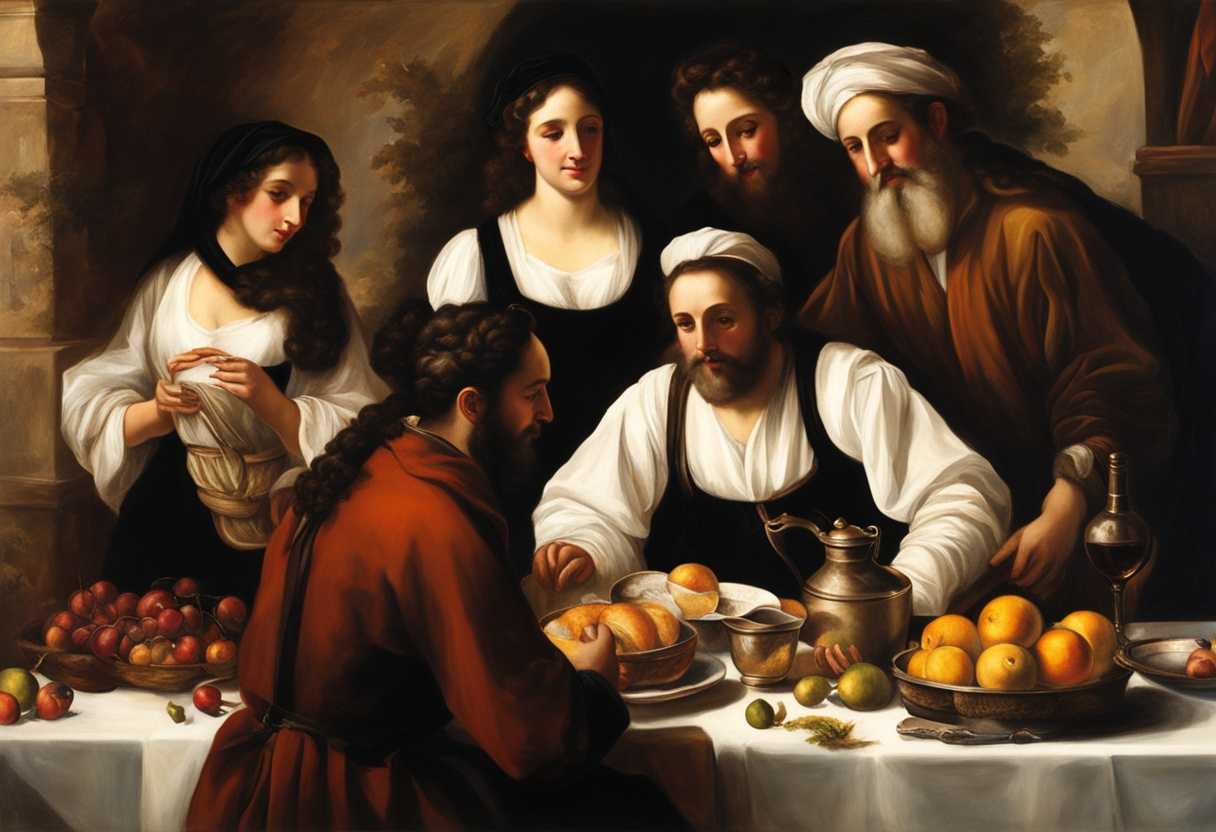
Setting the Scene for Esther 9:19
In Esther chapter 9, we find ourselves in the ancient Persian city of Susa. The scene is bustling with activity as the Jewish people, led by Queen Esther and Mordecai, have just emerged victorious from a plot to annihilate them. The atmosphere is one of relief and jubilation as the Jews celebrate their deliverance from the evil schemes of Haman.
Esther, a courageous and wise queen, had risked her life by revealing her Jewish identity to King Xerxes in order to save her people. Mordecai, her cousin and guardian, had played a crucial role in uncovering the plot against the Jews and ensuring their safety. Now, surrounded by their fellow Jews, they come together to commemorate their salvation.
The city streets are filled with music, dancing, and feasting as the Jewish community rejoices in their newfound freedom. Esther and Mordecai stand at the forefront, honored and respected for their bravery and leadership. The scene is a testament to the power of faith, courage, and unity in the face of adversity.
What is Esther 9:19 about?
The verse is highlighting the significance of Purim, a Jewish holiday commemorating the salvation of the Jewish people from Haman’s plot to destroy them, as recounted in the Book of Esther. It serves as a reminder of God’s providence and protection over His people, even in the face of adversity. The celebration of Purim is not just a historical event but a time for reflection on the enduring power of faith and the triumph of good over evil. The verse emphasizes the need to show kindness to others during Purim, underscoring the importance of spreading joy, unity, and compassion within the community. It encourages individuals to extend goodwill and support to those in need, thereby embodying the values of charity and empathy that lie at the heart of the holiday. Through acts of kindness and generosity, individuals not only honor the spirit of Purim but also contribute to creating a more harmonious and caring society. Let us consider how we can apply the deeper meanings behind Purim in our own lives as we ponder this verse. How can we emulate God’s deliverance by overcoming challenges with faith and perseverance? How can we demonstrate kindness and solidarity towards others, reflecting the spirit of Purim throughout the year? Let us actively participate in shaping a more compassionate and just world for all during this time of celebration.
Understanding what Esther 9:19 really means
The Book of Esther unfolds against the backdrop of the Persian Empire, narrating the courageous tale of Esther, a Jewish queen who thwarts a plot to annihilate her people. Esther 9:19 zooms in on the aftermath of the Jewish community’s triumph over their adversaries, marking the genesis of the festival of Purim.
“The Jews of the villages” underscores the solidarity and shared identity of the Jewish populace, irrespective of their scattered dwellings. “A day of gladness and feasting” epitomizes a period of jubilation and revelry, accentuating the significance of communal merriment and thanksgiving. The term “holiday” designates a sacred interval for rest and festivity, underscoring the importance of commemorating and honoring God’s deliverance. The gesture of “sending gifts of food to one another” symbolizes unity, benevolence, and the reinforcement of social ties.
Drawing parallels from other biblical passages enriches our understanding of Esther 9:19. Nehemiah 8:10 echoes the theme of joy and celebration, while Psalm 30:11 portrays the transition from mourning to dancing, akin to the Jews’ shift from sorrow to joy. Romans 12:15 underscores the value of communal experiences, advocating for shared rejoicing and mourning.
In our contemporary context, Esther 9:19 resonates profoundly. It serves as a poignant reminder of the significance of community and unity, urging us to come together to commemorate victories and offer support. The verse prompts us to cultivate gratitude and celebrate the blessings and deliverances in our lives, nurturing a spirit of thankfulness. Additionally, it inspires acts of generosity and sharing, encouraging us to build stronger relationships through kindness.
Consider a scenario where a town emerges resilient from a calamity and decides to host a communal feast to celebrate their unity. Through shared meals, stories, and gifts, the townspeople strengthen their bonds and express gratitude for their collective survival. This modern-day anecdote mirrors the essence of Esther 9:19, illustrating how communal celebration and generosity can unite people and cultivate shared joy and appreciation.
Reflecting on the enduring themes of unity, celebration, and generosity in Esther 9:19 unveils their timeless relevance in our lives today. As we ponder on the call to communal solidarity, gratitude, and benevolence, may we find inspiration to foster deeper connections, celebrate victories together, and extend generosity to those around us.
How can we trust God’s timing and deliverance?
The verse in Esther 9:19 teaches us that we can trust in God’s timing and deliverance because His provisions are always timely and reliable. We can have faith that God’s timing is perfect in our own lives as we celebrate our deliverance and victory at the right time according to God’s plan. Even when we may not understand why certain events are happening or why things are taking longer than we expected, we can have confidence that God is working behind the scenes to bring about His purposes at just the right moment.
The story of Esther reminds us that deliverance may come in ways we least expect, but God’s faithfulness is unwavering. Trusting in His timing allows us to surrender our anxieties and fears, knowing that He is in control and will bring about the best outcome for us. When we align our hearts with God’s perfect timing, we can experience peace and assurance that He will come through for us in ways that exceed our expectations. Reflecting on the lesson from Esther 9:19 reminds us that God’s timing is always perfect and His deliverance is sure. We can rest in the knowledge that He is faithful to fulfill His promises and bring about redemption in our lives at the appointed time as we wait with patience and trust in Him. We can confidently await and rely on God’s deliverance in our own circumstances, knowing that He is working all things together for our good, just as He orchestrated the salvation of the Jews in Esther’s time.
Application
Let’s step into the role of a caring leader in our daily “work” of life. Just like thriving in your profession or nurturing your “family,” let’s actively extend kindness and generosity to those who could use a helping hand. It’s not enough to just know about doing good; the key is to actually reach out and make a positive impact. Embrace the chance to spread love and warmth not only where you are comfortable but also where it might be most needed. Will you seize this opportunity to be a beacon of light and empathy in someone’s world today?

Reverend Michael Johnson is an experienced Church Minister with a profound expertise in spirituality and guidance. With a serene presence and a compassionate heart, he has faithfully served his congregation for over 20 years, leading them on a spiritual journey towards inner peace and enlightenment. Reverend Johnson’s extensive knowledge of religious philosophies and profound understanding of human nature have made him a trusted confidant and mentor to many, as he seamlessly weaves his profound wisdom into life teachings. Reverend Johnson’s calming demeanor and empathetic nature continue to uplift and heal souls, nurturing a sense of unity and tranquility within his community.