
Deuteronomy 34:5 is about the death of Moses and how despite not being able to enter the Promised Land, he was still honored by God.
5 So Moses the servant of the Lord died there in the land of Moab, according to the word of the Lord.
Setting the Scene for Deuteronomy 34:5
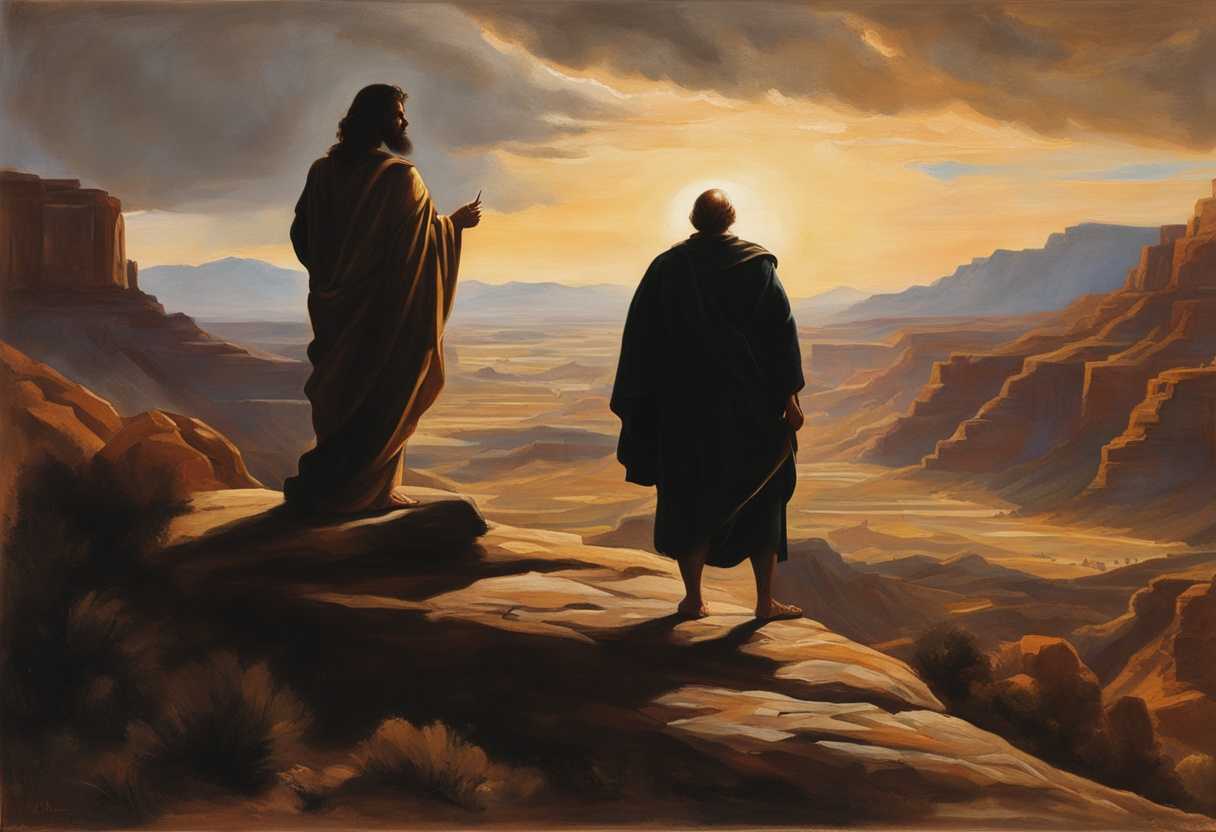
In Deuteronomy chapter 34, we find ourselves at the end of Moses’ life. The scene is set on Mount Nebo, overlooking the Promised Land. Moses, the great leader of the Israelites, stands with Joshua, his faithful assistant and chosen successor. The two men have climbed the mountain, guided by the hand of God, to witness the land that was promised to the descendants of Abraham, Isaac, and Jacob.
As Moses gazes upon the lush valleys and rolling hills of the Promised Land, he knows that he will not be able to enter it himself. The Lord had told him that he would see the land from a distance but would not set foot in it. Despite his deep desire to lead his people into their new home, Moses accepts God’s decree with humility and grace. Joshua stands by his side, ready to take up the mantle of leadership and guide the Israelites across the Jordan River into the land flowing with milk and honey.
The atmosphere is bittersweet as Moses imparts his final blessings and instructions to Joshua and the people. The sun sets over the horizon, casting a warm glow over the land that symbolizes both the fulfillment of God’s promise and the end of an era. Moses’ legacy as the great lawgiver and prophet of Israel is secure, and Joshua is prepared to lead the Israelites into a new chapter of their history.
What is Deuteronomy 34:5 about?
This verse from the Bible, found in Deuteronomy 34:5-6, holds profound significance and serves as a poignant reminder of the consequences of our actions. Moses, the great leader chosen by God to lead the Israelites out of Egypt and towards the promised land, is denied entry into this long-awaited destination. This outcome stemmed from a moment of disobedience and lack of faith earlier in his leadership journey. Despite all his efforts and sacrifices, Moses was not exempt from the consequences of his actions.
Reflecting on this verse, we are prompted to consider the importance of obedience, faithfulness, and humility in our own lives. Are we following God’s guidance and staying true to His commands? Are we allowing doubts or fears to overshadow our faith and lead us astray? Just like Moses, we must strive to live in alignment with God’s will, even in the face of challenges and uncertainties. This verse serves as a cautionary tale but also offers hope and encouragement to trust in God’s plan, even when the path forward may seem unclear.
Let Moses’ story inspire us to seek obedience, faith, and trust in God, knowing that He is always with us, guiding our steps and leading us towards our own promised land. And like Moses, may we learn from our mistakes, grow in faith, and continue to walk in obedience, knowing that God’s plans for us are always good and purposeful.
Understanding what Deuteronomy 34:5 really means
In Deuteronomy 34:5, we find Moses standing on Mount Nebo, overlooking the land of Canaan, the Promised Land. This verse marks a poignant moment in the life of Moses, the great leader of Israel, as he nears the end of his earthly journey. After forty years of leading the Israelites through the wilderness, Moses is about to pass away, and this verse captures the finality of his time on earth.
As Moses is referred to as the “servant of the Lord” in this verse, we see the profound significance of his role in God’s plan. Being called a servant of the Lord highlights Moses’ faithfulness, dedication, and obedience throughout his life. Despite his human flaws, Moses remained steadfast in his commitment to God, setting an example for all believers to follow.
The mention that Moses “died there in the land of Moab” holds symbolic weight. It signifies the completion of Moses’ journey and the fulfillment of God’s promise, even though Moses himself was not permitted to enter the Promised Land. This location serves as a reminder of both God’s justice and mercy, as His promises are always fulfilled, even if not in the ways we expect.
In Joshua 1:1-2, we witness the seamless transition of leadership from Moses to Joshua, underscoring the continuity of God’s plan for His people. Hebrews 3:5-6 further compares Moses’ faithfulness as a servant in God’s house to Jesus’ faithfulness as the Son over God’s house, drawing parallels between the Old Testament and the New Testament. Additionally, Numbers 20:12 sheds light on why Moses was not allowed to enter the Promised Land, providing context for his passing in Moab.
The themes of faithfulness, leadership, and the fulfillment of God’s promises in Moses’ story resonate with us today. Like Moses, we may not always see the full realization of our efforts in this lifetime, but our faithfulness and obedience are still valuable in God’s eyes. It is a reminder to trust in God’s timing and plan, even when we do not fully understand it.
Consider a modern-day individual who dedicated their life to a cause but did not witness its completion. Their legacy continued to inspire and lead others long after their passing, much like Moses’ legacy did for the Israelites. This serves as a powerful illustration of the lasting impact of faithfulness and obedience to God’s calling.
In conclusion, Moses’ faithfulness, the passing of leadership to Joshua, and the importance of trusting in God’s plan are timeless lessons we can glean from Deuteronomy 34:5. Let us be encouraged to remain faithful in our own journeys, knowing that our efforts are part of a larger divine narrative that transcends our earthly lives.
How can we trust God when facing unknown futures?
We can trust God when facing unknown futures by remembering His faithfulness in the past. Just like how God led the Israelites through difficult times and unknown territories, we can be reassured that He will continue to lead and guide us in our own unknown futures. Reflecting on the times when God has been faithful and provided for us in the past can help strengthen our trust in Him for the future.
Additionally, we can trust God by acknowledging His sovereignty and control over all circumstances. Even when we cannot see what lies ahead, we can have confidence that God is in control and has a plan for our lives. Surrendering our fears and uncertainties to Him allows us to place our trust in His wisdom and goodness, knowing that He will work all things together for our good. Trusting God with our unknown futures requires faith and reliance on His character and promises.
Application
Just as Moses found his resting place in the hands of God, let us strive for a close bond with our Creator. Let’s tune our hearts to His divine frequency, letting Him lead our life’s symphony. Will you take this chance to deepen your spiritual connection, embracing His wisdom and grace, as Moses did?

Reverend Michael Johnson is an experienced Church Minister with a profound expertise in spirituality and guidance. With a serene presence and a compassionate heart, he has faithfully served his congregation for over 20 years, leading them on a spiritual journey towards inner peace and enlightenment. Reverend Johnson’s extensive knowledge of religious philosophies and profound understanding of human nature have made him a trusted confidant and mentor to many, as he seamlessly weaves his profound wisdom into life teachings. Reverend Johnson’s calming demeanor and empathetic nature continue to uplift and heal souls, nurturing a sense of unity and tranquility within his community.