
Leviticus 9:15-17 is about the importance of obeying God’s commands and rituals, as Aaron and his sons followed the prescribed offering procedures to seek atonement and blessing from the Lord.
15 Then he presented the people’s offering and took the goat of the sin offering that was for the people and killed it and offered it as a sin offering, like the first one.
16 And he washed the entrails and the legs and burned them with the burnt offering on the altar.
17 Then he presented the grain offering, took a handful of it, and burned it on the altar, besides the burnt offering of the morning.
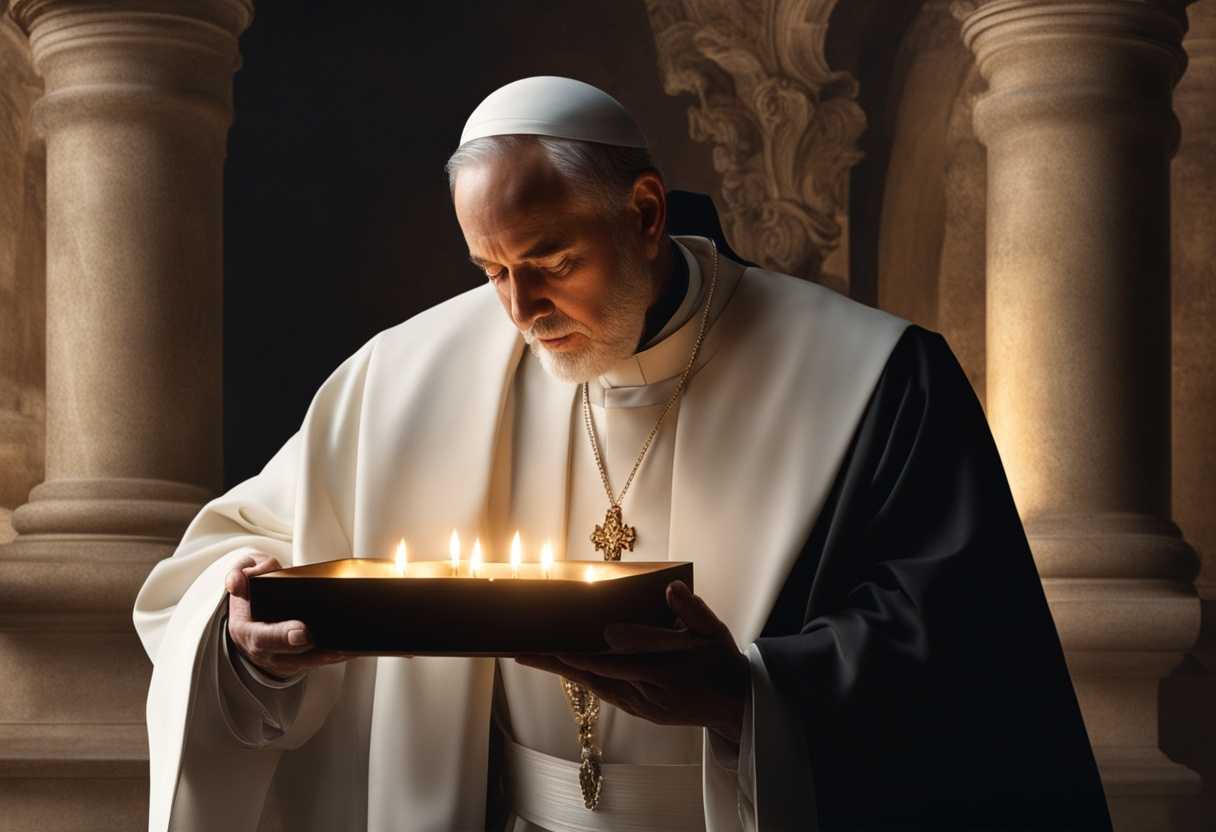
Setting the Scene for Leviticus 9:15-17
The scene described in Leviticus 9:15-17 takes place in the Tabernacle, a sacred tent constructed by the Israelites in the wilderness under the guidance of Moses. The Tabernacle was the central place of worship and sacrifice for the Israelites during their journey from Egypt to the Promised Land.
In this particular scene, Aaron, the high priest, is standing before the altar. He is accompanied by his sons, Nadab, Abihu, Eleazar, and Ithamar, who are also priests. The sons are assisting Aaron in performing the rituals and offerings prescribed by God. The Tabernacle is filled with the fragrant smoke of the burnt offerings, and the people of Israel are gathered outside, watching in awe as the priests carry out their duties.
The atmosphere is solemn and reverent as Aaron follows the instructions given to him by God through Moses. The people witness the divine presence as fire comes out from the presence of the Lord and consumes the burnt offering on the altar. This miraculous event confirms to the Israelites that God has accepted their offerings and that His presence dwells among them in the Tabernacle. The scene is a powerful display of God’s holiness and the importance of following His commands in worship and sacrifice.
What is Leviticus 9:15-17 about?
What a powerful verse! Aaron, as a mediator between the people and God, takes on the responsibility of presenting offerings to seek forgiveness for the sins of the people. This exemplifies the concept of atonement, where actions are taken to reconcile with God and seek forgiveness for wrongdoing.
Through this act, Aaron not only seeks to atone for the sins but also to restore the favor of God upon the people. This ritual serves as a symbolic gesture of humility, repentance, and a desire to be in alignment with God’s will. It is a reminder of the importance of acknowledging our mistakes, seeking forgiveness, and striving to mend our relationship with the Divine.
Reflecting on this verse prompts us to consider our own actions and how we seek forgiveness when we fall short. How do we approach atonement in our lives? Are we willing to humble ourselves, admit our mistakes, and seek reconciliation with those we may have wronged? Let this verse inspire us to reflect on our own journey towards forgiveness and restoration in our relationships, both with others and with the Divine.
Understanding what Leviticus 9:15-17 really means
Leviticus 9:15-17 takes us back to a time when rituals and offerings were central to the worship practices of the Israelites. In this passage, we witness Aaron, the high priest, carrying out specific offerings as part of the consecration ceremony for the tabernacle. These offerings were not mere rituals but held deep symbolic meanings for the people of Israel. The sin offering, burnt offering, and grain offering each served a distinct purpose in the religious life of the community.
Reflecting on Hebrews 10:1-4, we see a shift in perspective towards these sacrifices. The New Testament sheds light on the limitations of the Old Testament sacrifices, pointing to Jesus Christ as the ultimate sacrifice for the atonement of sins. Romans 12:1 further emphasizes the idea of offering ourselves as living sacrifices, highlighting the importance of dedicating our lives to God in worship. 1 Peter 2:5 reinforces this concept by describing believers as a holy priesthood, offering spiritual sacrifices through Jesus Christ.
The relevance of these ancient practices to our lives today is profound. While the sacrificial system of Leviticus has been fulfilled in Christ, the principles behind these offerings remain significant. The call to offer ourselves as living sacrifices challenges us to live lives that are pleasing to God, dedicated to His service, and marked by holiness. Just as the Israelites were called to present their offerings with reverence and purity, we are called to honor God with our whole being.
Consider a family tradition where the act of cleaning and restoring a cherished heirloom symbolizes respect for heritage and commitment to future generations. Similarly, the offerings in Leviticus symbolize the Israelites’ commitment to maintaining a pure and holy relationship with God. The sin offering, burnt offering, and grain offering all carry profound meanings that resonate with our spiritual journey today.
The sin offering speaks of the need for repentance and forgiveness, reminding us of our constant need for God’s mercy. The burnt offering symbolizes total dedication and surrender to God, challenging us to give our all without reservation. The grain offering, with its elements of fine flour, oil, and frankincense, prompts us to express gratitude and acknowledge God’s provision in our lives. These offerings serve as tangible reminders of the depth of our relationship with God and the significance of living a life devoted to Him.
By delving into the meanings behind these ancient rituals, we gain a deeper understanding of our faith and the profound call to live sacrificially for God. May we, like the Israelites of old, approach our worship with reverence, gratitude, and a wholehearted commitment to honoring God in all aspects of our lives.
How can we ensure reverence in worship practices?
To ensure reverence in worship practices in alignment with the verse being discussed, individuals can abide by the instructions given regarding the offering of sacrifices. This involves following the specific procedures and guidelines set forth in the verse with attentiveness and respect. Individuals can create a sacred and solemn atmosphere during their religious practices by approaching the act of worship with a mindset of obedience and reverence.
Furthermore, paying attention to detail and adhering to the prescribed rituals with sincerity can cultivate a sense of awe and veneration towards the divine. Engaging in worship practices with a heart inclined towards honoring and respecting the sanctity of the act can deepen one’s spiritual connection and reverence for the worship experience. Upholding the traditions and customs outlined in the verse can serve as a reminder of the holiness of the encounter with the divine and encourage individuals to approach worship with humility and mindfulness. Individuals can maintain a sense of reverence and awe towards the divine by incorporating the teachings and instructions provided in the verse into their worship practices. Following the prescribed methods and rituals with a heart and mind devoted to honoring God can enhance the worship experience and foster a deeper connection with the sacred. This adherence to the guidance given in the verse can help individuals approach their worship practices with a posture of respect and reverence, thereby fulfilling the intended purpose of drawing near to the divine with humility and devotion.
Application
Be like Aaron – precise and reverent in following God’s guidance in all aspects of life. Let our actions speak of our faith, just as his did in the old days. Every task, no matter how big or small, is an opportunity to show commitment and obedience. Will you rise to the challenge, giving your best in work and family, reflecting the faith within you?

Reverend Michael Johnson is an experienced Church Minister with a profound expertise in spirituality and guidance. With a serene presence and a compassionate heart, he has faithfully served his congregation for over 20 years, leading them on a spiritual journey towards inner peace and enlightenment. Reverend Johnson’s extensive knowledge of religious philosophies and profound understanding of human nature have made him a trusted confidant and mentor to many, as he seamlessly weaves his profound wisdom into life teachings. Reverend Johnson’s calming demeanor and empathetic nature continue to uplift and heal souls, nurturing a sense of unity and tranquility within his community.