
Exodus 2:15-22 is about Moses finding refuge in Midian after fleeing from Egypt, demonstrating God’s faithfulness in providing a way of escape in times of trouble and preparing Moses for his future role as the deliverer of Israel.
15 When Pharaoh heard of it, he sought to kill Moses. But Moses fled from Pharaoh and stayed in the land of Midian. And he sat down by a well.
16 Now the priest of Midian had seven daughters, and they came and drew water and filled the troughs to water their father’s flock.
17 Now the shepherds came and drove them away, but Moses stood up and saved them, and watered their flock.
18 When they came home to their father Reuel, he said, “How is it that you have come home so soon today?”
19 They said, “An Egyptian delivered us out of the hand of the shepherds and even drew water for us and watered the flock.”
20 He said to his daughters, “Then where is he? Why have you left the man? Call him, that he may eat bread.”
21 And Moses was content to dwell with the man, and he gave Moses his daughter Zipporah.
22 She gave birth to a son, and he called his name Gershom, for he said, “I have been a sojourner in a foreign land.”
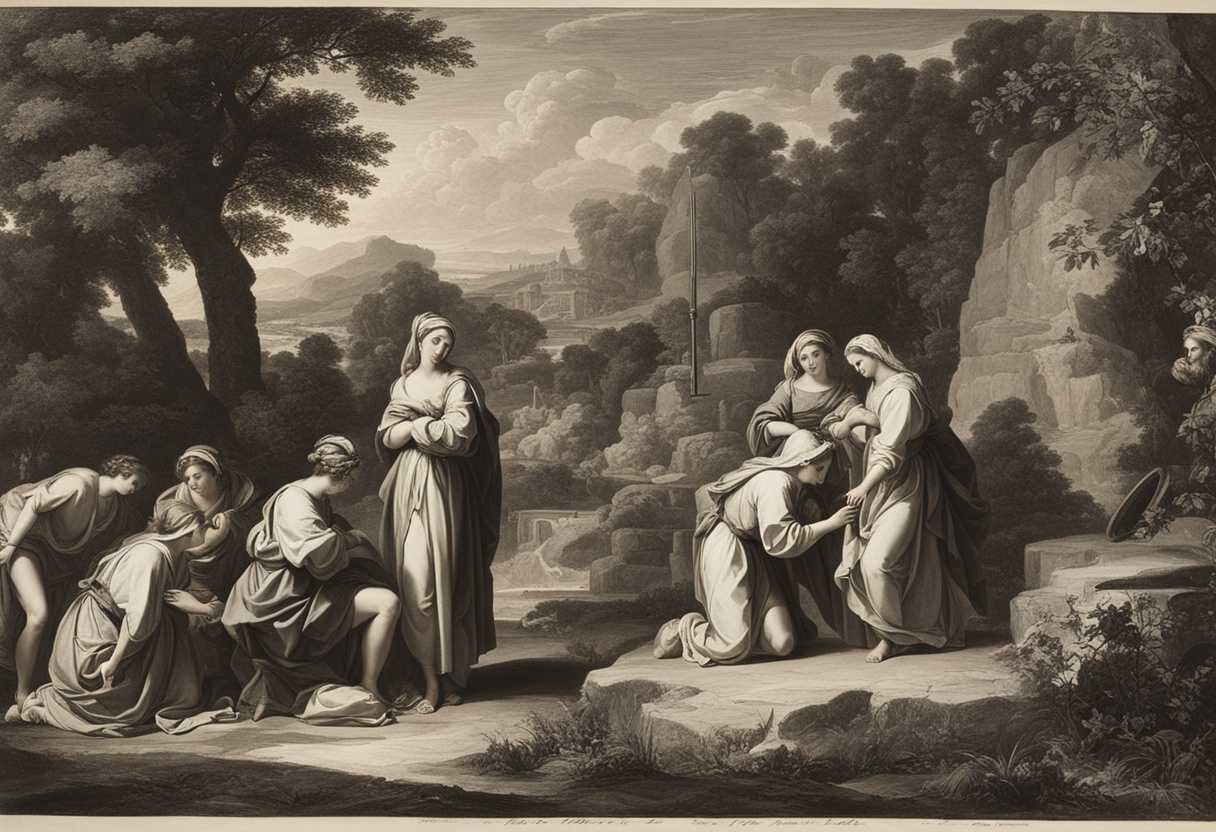
Setting the Scene for Exodus 2:15-22
In Exodus chapter 2, we find Moses fleeing from Egypt after he had killed an Egyptian who was beating a Hebrew slave. He arrived in the land of Midian and sat down by a well. This well was a common meeting place for the women of the area who would come to draw water for their flocks. As Moses sat there, he witnessed a group of shepherds driving away the daughters of Jethro, the priest of Midian, who had also come to draw water.
One of the daughters, named Zipporah, caught Moses’ attention as she struggled to water her flock. Being a stranger in the land, Moses stood up to defend the women and helped them water their flock. Impressed by his kindness and bravery, the women invited Moses to their home to meet their father, Jethro. This encounter led to Moses being welcomed into Jethro’s household, where he eventually married Zipporah and lived for many years before his encounter with God at the burning bush.
The scene at the well was a pivotal moment in Moses’ life, marking the beginning of his time in Midian and his eventual call to lead the Israelites out of Egypt. The dusty surroundings of the well, the sound of sheep bleating, and the warm hospitality of Jethro’s family all played a role in shaping Moses’ journey and his eventual role as the great leader of the Israelites.
What is Exodus 2:15-22 about?
Moses is seen at a significant turning point in his life in this verse. Fleeing from Egypt after committing a grave mistake, Moses finds refuge in the land of Midian. Here, he adopts a new way of life by marrying Zipporah and becoming a shepherd. This transition represents a period of reflection, growth, and transformation for Moses. He tends to his flock, physically shepherding the animals and metaphorically shepherding his own spirit, finding renewed purpose. Moses finds solace and a chance for redemption by embracing a simpler life as a shepherd. This verse highlights the importance of humility, patience, and starting anew when faced with challenges or failures. It symbolizes the idea of leaving behind past mistakes and embracing a fresh beginning, much like the sheep Moses cares for with diligence and compassion. We too can learn from Moses’s story and find strength in times of transition or uncertainty, as he found a new identity and purpose as a shepherd in Midian.
Understanding what Exodus 2:15-22 really means
The passage in Exodus 2:15-22 paints a vivid picture of Moses’ pivotal moment as he flees from Pharaoh’s wrath after killing an Egyptian. This act sets him on a new path, leading him to Midian where he encounters the daughters of Reuel at a well. The phrase “Moses fled from Pharaoh” marks a significant turning point in his life, symbolizing his departure from his Egyptian past and the beginning of a fresh chapter in a foreign land. As he “sat down by a well,” we see a moment of pause and contemplation, highlighting the wells in biblical times as places of rest and social interaction.
Moses’ innate sense of justice and compassion shines through as he “helped” the daughters of Reuel, showcasing his character traits that will later define his leadership. The gesture of assistance not only reveals his moral compass but also foreshadows his role as a deliverer of his people. When Reuel offers Moses his daughter Zipporah in marriage, it signifies not just a union but also Moses’ integration into a new community, marking the beginning of his family life in Midian.
Drawing parallels with other biblical passages enriches our understanding of Moses’ journey. The story of Rebekah at the well in Genesis 24:11-20 underscores the significance of wells as sites of divine encounters and new beginnings. Similarly, Jesus’ conversation with the Samaritan woman at the well in John 4:7-26 emphasizes themes of spiritual renewal and living water. Acts 7:29-30, in Stephen’s speech, provides a broader context for Moses’ flight to Midian and his encounter with God at the burning bush, shedding light on the unfolding of God’s plan for Moses.
The themes of transition, justice, and community in Moses’ story resonate with people today. Just as Moses navigated a significant life change, individuals often encounter transitions that present challenges but also opportunities for personal growth and fresh starts. Moses’ act of kindness towards Reuel’s daughters serves as a reminder of the importance of standing up for others and practicing compassion, especially in unfamiliar or difficult circumstances. His acceptance into Reuel’s family underscores the universal human need for belonging and community, highlighting the value of relationships in a fragmented world.
Consider a scenario where a young professional faces sudden job loss, akin to Moses’ abrupt departure from Egypt. Through volunteering at a local shelter and extending kindness to those in need, they discover a renewed sense of purpose and forge meaningful connections within the community. This anecdote mirrors Moses’ journey, illustrating how moments of crisis can pave the way for personal growth, resilience, and new opportunities.
In conclusion, the passage from Exodus 2:15-22 offers profound insights into themes of transition, justice, and community. By reflecting on Moses’ experiences, we glean encouragement and wisdom for our own journeys, recognizing that amidst uncertainties, there are openings for growth, acts of kindness, and fresh beginnings.
How can we show compassion and help others in need?
One way we can show compassion and help others in need is by being attentive to their struggles and offering our help without judgment. It’s important to listen to their concerns, empathize with their situation, and provide support in a non-condescending manner. Building a genuine connection based on understanding and kindness can make a significant difference in someone’s life.
Another way to show compassion is by taking action to alleviate the suffering of others. This can involve practical steps such as offering financial assistance, providing resources, or offering our time and efforts to help them overcome their difficulties. Showing compassion is not limited to just feeling sympathy for others but also actively engaging in efforts to improve their situation.
Lastly, demonstrating kindness and understanding towards those in need can create a sense of community and support. We can build a bond of trust and solidarity with others by offering our help and support without expecting anything in return. Small gestures of compassion and acts of kindness can have a ripple effect, inspiring others to also show empathy and support to those in need.
Application
Stand tall like Moses in the face of injustice. Our world needs you to be a beacon of light in the darkness of oppression. Be a voice for the marginalized and downtrodden, for they need our support. Take action, speak out, and fight for justice in our communities. Will you answer the call to make a difference in the lives of those who need it most?

Reverend Michael Johnson is an experienced Church Minister with a profound expertise in spirituality and guidance. With a serene presence and a compassionate heart, he has faithfully served his congregation for over 20 years, leading them on a spiritual journey towards inner peace and enlightenment. Reverend Johnson’s extensive knowledge of religious philosophies and profound understanding of human nature have made him a trusted confidant and mentor to many, as he seamlessly weaves his profound wisdom into life teachings. Reverend Johnson’s calming demeanor and empathetic nature continue to uplift and heal souls, nurturing a sense of unity and tranquility within his community.