
Acts 7:29-30 is about Moses fleeing from Egypt after killing an Egyptian for oppressing a Hebrew, foreshadowing his role as a deliverer and leader of the Israelites out of Egypt.
29 At this retort Moses fled and became an exile in the land of Midian, where he became the father of two sons.
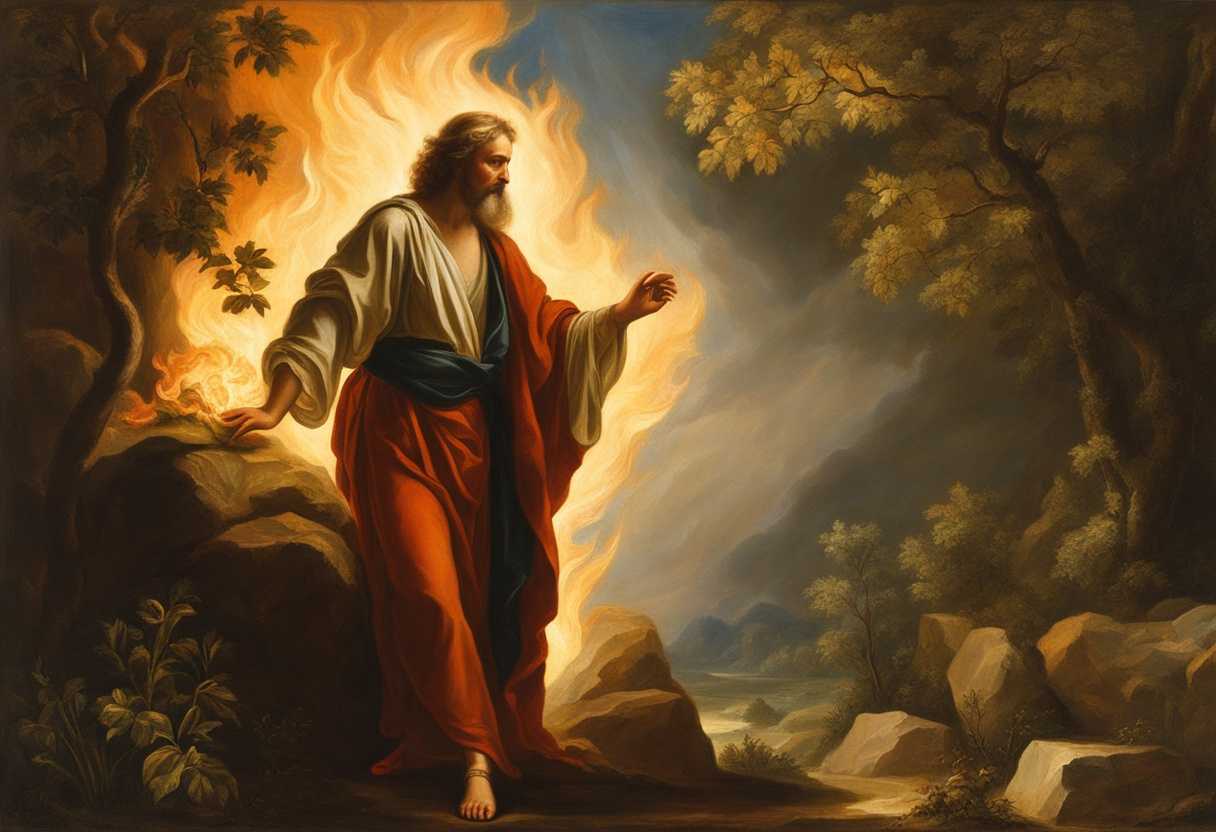
30 “Now when forty years had passed, an angel appeared to him in the wilderness of Mount Sinai, in a flame of fire in a bush.”
Setting the Scene for Acts 7:29-30
In Acts chapter 7, we find Stephen, a man full of faith and the Holy Spirit, addressing the Sanhedrin, the Jewish high court. Stephen had been brought before the council to answer charges of blasphemy against Moses and God. As he stood before the religious leaders, he began to recount the history of the Israelites, starting with Joseph being sold into slavery by his brothers.
The scene is set in the grand hall of the Sanhedrin, a place of great importance and authority in Jerusalem. The room is filled with the members of the council, including the high priest and other prominent religious figures. Stephen stands in the center, his face filled with boldness and conviction as he speaks. The tension in the room is palpable as Stephen’s words challenge the beliefs and traditions of those present.
As Stephen continues his speech, he recounts how Moses fled Egypt after killing an Egyptian who was mistreating an Israelite. The listeners lean in, captivated by Stephen’s storytelling and the way he weaves together the history of their people with his message of the coming of Jesus Christ. The atmosphere crackles with anticipation as Stephen’s words hang in the air, challenging the very foundation of the religious establishment before him.
What is Acts 7:29-30 about?
This verse captures a pivotal moment in the life of Moses, the great prophet and leader of the Israelites. It reveals Moses’ deep sense of justice and his willingness to take action when he witnessed oppression and mistreatment. Despite being in a position of privilege and power in the Egyptian palace, Moses chose to stand up for what is right and flee from a corrupt system. This decision reflects his integrity, courage, and faith in God’s plan. Let us consider the importance of standing up against injustice, even when it may be difficult or risky as we reflect on this verse. Like Moses, we are called to be advocates for those who are oppressed and marginalized, and to trust in God’s timing for justice and deliverance. This verse reminds us that God works in mysterious ways, and that sometimes we need to step back and wait for the right moment to act, trusting in His divine plan. Let us draw inspiration from Moses’ example and commit ourselves to fighting for justice and liberation for all people, regardless of the challenges we may face.
Understanding what Acts 7:29-30 really means
Acts 7:29-30 is a pivotal part of Stephen’s speech before the Sanhedrin, where he delves into the history of Israel and highlights significant moments of divine intervention. These verses specifically recount Moses’ escape to Midian after committing a grave act and residing there for forty years before encountering the iconic burning bush.
In Exodus 2:15, we find the original narrative of Moses fleeing to Midian to escape Pharaoh’s wrath. Exodus 3:1-2 details Moses’ profound encounter with the burning bush, marking the commencement of his mission to liberate the Israelites. Hebrews 11:24-27 underscores Moses’ unwavering faith and his decision to endure hardships alongside God’s people rather than indulge in temporary pleasures.
The relevance of these verses extends to contemporary individuals who often undergo seasons of waiting and preparation akin to Moses’ time in Midian. They serve as a poignant reminder of God’s impeccable timing, illustrating that periods of apparent stagnation are often crucial for future endeavors. Moses’ narrative inspires us to uphold faith and obedience, even when the path ahead seems unclear.
Consider a young professional sensing a divine calling but encountering obstacles and delays. Similar to Moses, they may perceive these setbacks as a desert-like phase. However, such periods are instrumental for personal growth and readiness. When the opportune moment arrives, they will be equipped to embrace their calling, mirroring Moses’ journey.
The phrase “Moses fled” encapsulates a pivotal juncture in Moses’ life, symbolizing fear, uncertainty, and new beginnings. “Lived as a foreigner in the land of Midian” underscores Moses’ outsider status, emphasizing humility and a season of learning. “Forty years had passed” symbolizes a period of testing and preparation, highlighting the significance of patience and God’s enduring plans. “An angel appeared to him in the flames of a burning bush” signifies divine intervention and the inception of Moses’ divine mission, showcasing God’s propensity to unveil His will in unexpected ways.
Through contemplation of these verses, we derive solace during our own periods of waiting, trusting that God is meticulously preparing us for His ordained purposes.
How can we faithfully respond to God’s call?
To faithfully respond to God’s call, we can look to the example illustrated in this passage. We should be attentive to God’s voice in our lives and obedient to His will, just as Moses responded to God’s call to deliver his people from slavery in Egypt. It is important to stay connected to God through prayer, study of His Word, and seeking guidance from the Holy Spirit to discern His calling for us. We should trust in God’s timing and His plan in our response to His call, even when it may seem difficult or challenging. Like Moses, who initially questioned his ability to lead the Israelites out of Egypt, we may face doubts and uncertainties. However, through faith and reliance on God’s strength and guidance, we can overcome obstacles and fulfill the purposes He has for us. Faithfully responding to God’s call ultimately involves surrendering our own will and desires to align with His greater plan. It requires humility, obedience, and a willingness to step out in faith, trusting that God will equip us and empower us to accomplish His purposes. We can demonstrate our love and devotion to God through our obedience and willingness to answer His call on our lives by following the example of servants like Moses.
Application
Reflect on Moses’s courage and be inspired to stand up against injustice. Take action like Moses did and become a voice for the voiceless in your community. Let’s be a beacon of hope for those who are marginalized and in need. Will you step up and join me in making a difference today?

Reverend Michael Johnson is an experienced Church Minister with a profound expertise in spirituality and guidance. With a serene presence and a compassionate heart, he has faithfully served his congregation for over 20 years, leading them on a spiritual journey towards inner peace and enlightenment. Reverend Johnson’s extensive knowledge of religious philosophies and profound understanding of human nature have made him a trusted confidant and mentor to many, as he seamlessly weaves his profound wisdom into life teachings. Reverend Johnson’s calming demeanor and empathetic nature continue to uplift and heal souls, nurturing a sense of unity and tranquility within his community.