
1 Now Moses was keeping the flock of his father-in-law, Jethro, the priest of Midian, and he led his flock to the west side of the wilderness and came to Horeb, the mountain of God.
2 And the angel of the Lord appeared to him in a flame of fire out of the midst of a bush. He looked, and behold, the bush was burning, yet it was not consumed.
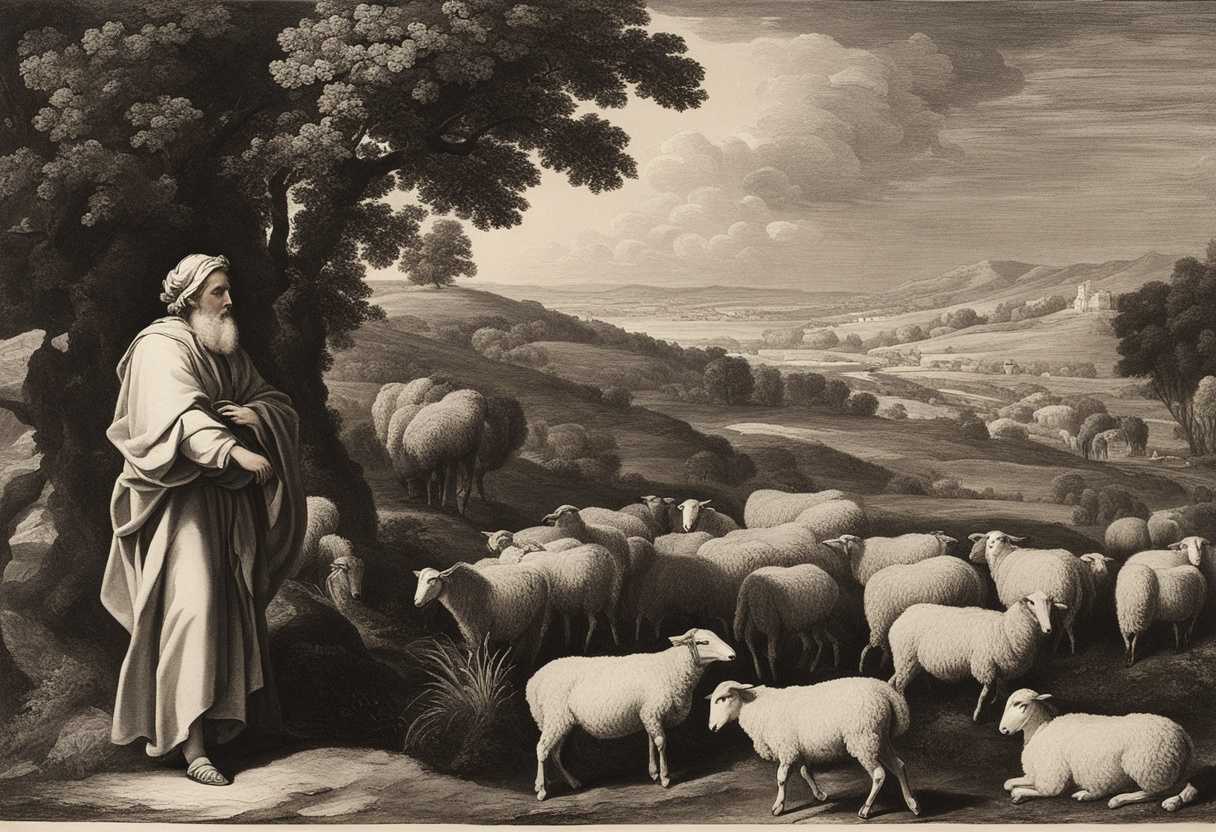
Setting the Scene for Exodus 3:1-2
In Exodus chapter 3, we find Moses, a former prince of Egypt turned shepherd, tending to his father-in-law Jethro’s flock in the wilderness near Mount Horeb. The scene is set in the vast and rugged terrain of the desert, with the scorching sun beating down on the sandy landscape. The air is dry, and the only sound is the bleating of sheep and the occasional gust of wind.
As Moses leads the flock, he comes to a specific area near the mountain, where the presence of God is about to be revealed to him in a profound way. Suddenly, he notices a bush that is on fire but is not being consumed by the flames. Intrigued by this miraculous sight, Moses decides to approach the burning bush to investigate further.
Little does Moses know that this seemingly ordinary day of shepherding will turn into a pivotal moment in his life, as God is about to call him to a great task – to lead the Israelites out of slavery in Egypt. The burning bush symbolizes the presence of God, and as Moses draws near, he is about to receive his divine commission and instructions that will change the course of history.
What is Exodus 3:1-2 about?
Imagine the awe and wonder that must have filled Moses when he encountered God in the form of a burning bush. This powerful moment marked the beginning of a profound journey for Moses, one that would lead him to become a pivotal figure in the history of the Israelites. The burning bush symbolizes God’s presence, holiness, and power, as well as His ability to appear in unexpected and miraculous ways to communicate with His people. God can enter our lives in unexpected ways, calling us to embark on our own journeys of faith and purpose as we reflect on this verse. Just as God revealed Himself to Moses through the burning bush, He continues to reveal Himself to us in unique and meaningful ways. This verse serves as a powerful reminder of God’s constant presence in our lives, His ability to guide us, and His call for us to trust in Him as we navigate our own paths towards fulfilling our divine purposes.
Understanding what Exodus 3:1-2 really means
Certainly! Let’s reflect on Exodus 3:1-2 in a structured manner to uncover its profound meaning and relevance for us today.
Structure for Commentary:
- Context and Background
- Detailed Explanation of Key Phrases
- Theological Insights
- Relevance to Contemporary Life
- Personal Anecdote and Reflection
1. Context and Background
Exodus 3:1-2 introduces us to a pivotal moment when Moses encounters the burning bush. Moses, once a prince of Egypt, is now tending to the flock of his father-in-law, Jethro, in the wilderness. The backdrop of this encounter is one of significant transition and divine intervention.
2. Detailed Explanation of Key Phrases
-
“Moses was tending the flock”: This phrase emphasizes Moses’s humble position and his everyday responsibilities. Despite his past grandeur in Pharaoh’s palace, Moses now leads a simple life—an essential reminder that God’s calling often comes in the midst of our ordinary duties.
-
“Mount Horeb, the mountain of God”: This highlights the sacred nature of the location. Horeb, also known as Sinai, becomes a place of divine revelation. It foreshadows the future significance this mountain will have when Moses receives the Ten Commandments.
-
“The angel of the Lord appeared to him in flames of fire from within a bush”: The burning bush is symbolic. It is ablaze yet not consumed, representing God’s perpetual power, presence, and holiness. This miraculous sight captures Moses’s attention, stirring curiosity and reverence.
3. Theological Insights
The encounter at the burning bush is rich in theological meaning. It marks the beginning of Moses’s prophetic mission and underscores God’s approachability. Here, God chooses to reveal Himself in a form that both captivates and confounds human understanding. This aligns with other biblical accounts, such as Gideon’s encounter with the Angel of the Lord in Judges 6, where divine presence transforms an ordinary moment into something extraordinary.
4. Relevance to Contemporary Life
Today, in our fast-paced and often materialistic society, encountering God might seem like a far-off reality. However, the passage reminds us that God is present even in the mundane. It encourages us to be attentive to moments where God might be speaking to us, perhaps in the midst of our daily responsibilities. Just as God called Moses during an ordinary day, He can reach out to us in our everyday lives.
5. Personal Anecdote and Reflection
I recall a time when I felt overwhelmed with the routine tasks of ministry. One day, while performing what seemed like tedious work, I felt a deep sense of God’s presence and calling. This moment became a burning bush experience for me—a reminder that my work, no matter how mundane it appeared, had divine significance. It transformed my perspective, much like Moses’s encounter transformed his life. We are called to recognize and value the sacred in our everyday routines by embracing the lesson in these verses. How might God be calling you today, even in the midst of your ordinary tasks? Reflect on this, and remain open to His surprising, transformative presence in your life.
How can we recognize God’s presence in our lives?
We can recognize God’s presence in our lives through moments of divine revelation, like the burning bush that Moses encountered in Exodus 3. These moments can be when God speaks to us through signs, miracles, or inner promptings. It is often a moment of awe, wonder, and realization that we are in the presence of something greater than ourselves.
Additionally, God’s presence can be felt through a deep sense of peace, guidance, and comfort during challenging times. It is the assurance that we are not alone, that there is a higher power watching over us and guiding us through life’s trials and tribulations. Recognizing God’s presence in our lives ultimately requires openness, faith, and a willingness to see beyond the ordinary and into the realm of the divine. It is about being attuned to the subtle ways in which God reveals Himself to us and being receptive to His guidance and love.
Application
Imagine your daily grind—meetings, homework, dinner plans. Amidst all this, there’s a burning bush moment waiting for you, just like Moses. Pay attention. God is trying to speak right in the middle of your busy life. Will you listen? Will you open your heart to His call today?

Reverend Michael Johnson is an experienced Church Minister with a profound expertise in spirituality and guidance. With a serene presence and a compassionate heart, he has faithfully served his congregation for over 20 years, leading them on a spiritual journey towards inner peace and enlightenment. Reverend Johnson’s extensive knowledge of religious philosophies and profound understanding of human nature have made him a trusted confidant and mentor to many, as he seamlessly weaves his profound wisdom into life teachings. Reverend Johnson’s calming demeanor and empathetic nature continue to uplift and heal souls, nurturing a sense of unity and tranquility within his community.