
Author: Reverend Michael Johnson
-

What does Numbers 19:17-19 really mean?
Numbers 19:17-19 is about the purification ritual involving the ashes of the red heifer, emphasizing the importance of cleansing oneself from uncleanness and sin before being able to approach the holiness of God. 17 And for the unclean they shall take some ashes of the burnt sin offering, and fresh water shall be added in…
-

What does Psalms 62:11-12 really mean?
Psalms 62:11-12 is about recognizing the supreme power and steadfast love of God, knowing that true strength and salvation come from Him alone. 11 Once God has spoken; twice have I heard this: that power belongs to God. 12 and that to you, O Lord, belongs steadfast love. For you will render to a man…
-

What does Exodus 32:26-29 really mean?
Exodus 32:26-29 is about the faithful response of the Levites who were willing to take a stand for God by executing judgment against those who had sinned with the golden calf, highlighting the importance of loyalty and obedience in serving God. 26 then Moses stood in the gate of the camp and said, “Who is…
-

What does Deuteronomy 28:25-29 really mean?
Deuteronomy 28:25-29 is about the consequences of disobedience towards God, including experiencing defeat in battle, confusion and turmoil in daily life, and ultimately being oppressed and plundered due to turning away from His commandments. 25 “The Lord will cause you to be defeated before your enemies. You shall go out one way against them and…
-

What does Hebrews 11:32-38 really mean?
Hebrews 11:32-38 is about the enduring faith and resilience of individuals who faced various trials and persecution throughout history, illustrating the power of faith to overcome hardships and pointing believers to the ultimate hope in God’s promises. 32 And what more shall I say? For time would fail me to tell of Gideon, Barak, Samson,…
-

What does Numbers 19:11-22 really mean?
Numbers 19:11-22 is about the purification ritual for being in contact with a dead body, emphasizing the need to cleanse oneself spiritually to remain pure before God. 11 Whoever touches the dead body of any person shall be unclean seven days. 12 He shall cleanse himself with the water on the third day and on…
-

What does Genesis 27:27-29 really mean?
Genesis 27:27-29 is about Jacob receiving his father Isaac’s blessing, signifying the importance of parental blessings and the fulfillment of divine promises in the lives of individuals. 27 So he came near and kissed him. And Isaac smelled the smell of his garments and blessed him and said, “See, the smell of my son is…
-

What does Leviticus 26:14-39 really mean?
Leviticus 26:14-39 is about the consequences that the Israelites will face for disobeying God’s commandments, including suffering from diseases, famine, and exile, with the ultimate purpose of reminding them of the importance of obeying God and the covenant they have with Him. 14 “But if you will not listen to me and will not do…
-
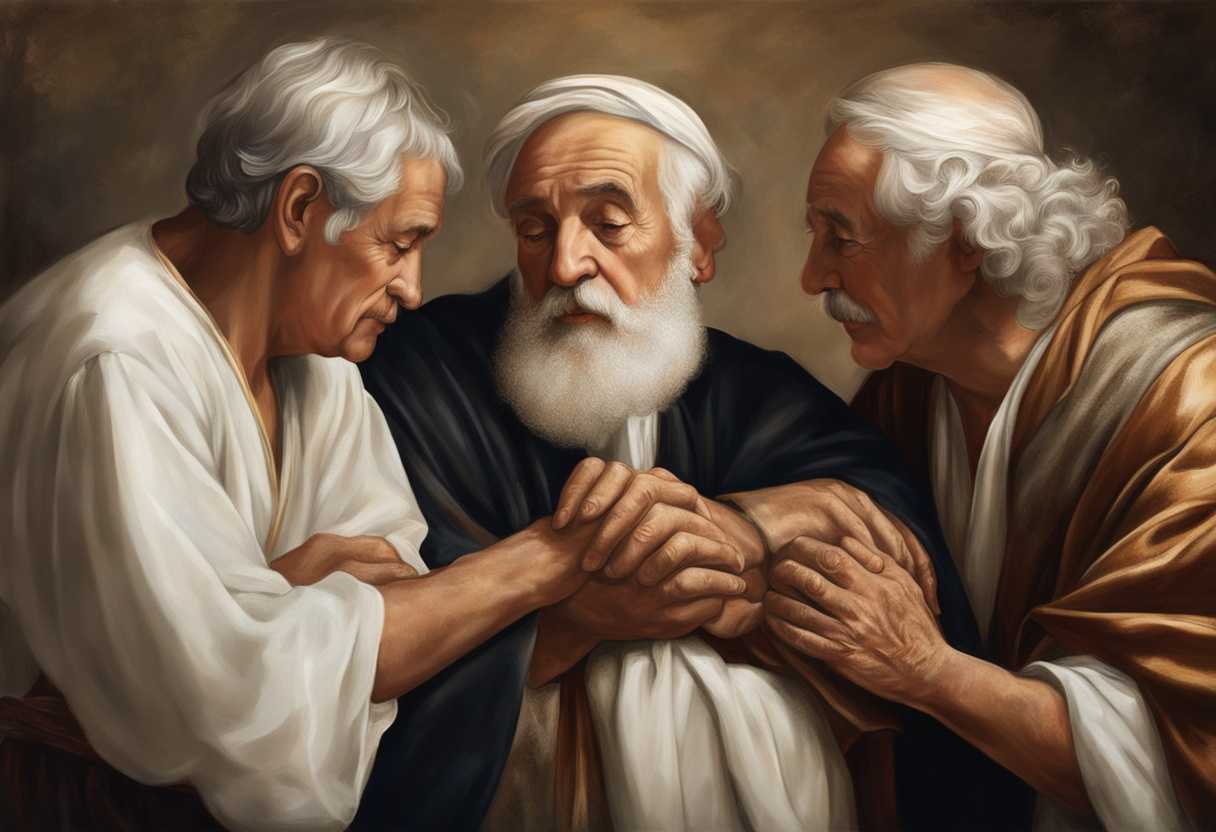
What does Genesis 48:1-20 really mean?
Genesis 48:1-20 is about Jacob adopting Ephraim and Manasseh, blessing them, and symbolizing the transfer of the birthright from the older to the younger son, highlighting God’s sovereign choice in determining blessings and inheritance. 1 After this, Joseph was told, “Behold, your father is ill.” So he took with him his two sons, Manasseh and…
-

What does Leviticus 16:9 really mean?
Leviticus 16:9 is about how on the Day of Atonement, Aaron shall bring a sin offering to make atonement for himself and the people of Israel, emphasizing the importance of seeking forgiveness and purification from sin before the Lord. 9 And Aaron shall present the goat on which the lot fell for the Lord and…