
Category: Leviticus
-

What does Leviticus 25:35-38 really mean?
Leviticus 25:35-38 is about the importance of providing for the needy and emphasizing the concept of brotherly love by encouraging lending without interest and helping fellow Israelites in times of financial hardship. 35 “If your brother becomes poor and cannot maintain himself with you, you shall support him as though he were a stranger and…
-
What does Leviticus 11:1-8 really mean?
Leviticus 11:1-8 is about God instructing the Israelites regarding which animals they are permitted to eat, emphasizing the importance of adhering to dietary laws as a way to maintain cleanliness and holiness before Him. 1 And the Lord spoke to Moses and Aaron, saying to them, 2 “Speak to the people of Israel, saying, These…
-

What does Leviticus 13:1-59 really mean?
Leviticus 13:1-59 is about the detailed regulations given by God to the ancient Israelites regarding identifying, isolating, and determining the cleanliness of individuals with various skin diseases, emphasizing the importance of maintaining physical and spiritual purity within the community. 1 The Lord spoke to Moses and Aaron, saying, 2 When a person has on the…
-

What does Leviticus 16:9 really mean?
Leviticus 16:9 is about how on the Day of Atonement, Aaron shall bring a sin offering to make atonement for himself and the people of Israel, emphasizing the importance of seeking forgiveness and purification from sin before the Lord. 9 And Aaron shall present the goat on which the lot fell for the Lord and…
-

What does Leviticus 16:32-34 really mean?
Leviticus 16:32-34 is about the importance of Aaron and his sons following the specific rituals and procedures established by God to cleanse the tabernacle and purify the Israelites from their sins on the Day of Atonement, emphasizing the gravity of sin and the need for repentance and forgiveness. 32 And the priest who is anointed…
-

What does Leviticus 26:40-42 really mean?
Leviticus 26:40-42 is about the importance of repentance and turning back to God in order to receive His mercy and forgiveness, even after committing sins and straying from His commandments. 40 “But if they confess their iniquity and the iniquity of their fathers in their treachery that they committed against me, and also in walking…
-

What does Leviticus 15:31 really mean?
Leviticus 15:31 is about emphasizing the importance of obeying God’s laws regarding cleanliness and purity in order to remain separate and holy before Him. 31 Thus you shall keep the people of Israel separate from their uncleanness, lest they die in their uncleanness by defiling my tabernacle that is in their midst. Setting the Scene…
-

What does Leviticus 27:9-13 really mean?
Leviticus 27:9-13 is about the valuation of offerings made to the Lord, emphasizing how different factors such as quality, age, and gender affect the worth of the offering. 9 “If the vow is an animal that may be offered as an offering to the Lord, all of it that he gives to the Lord is…
-
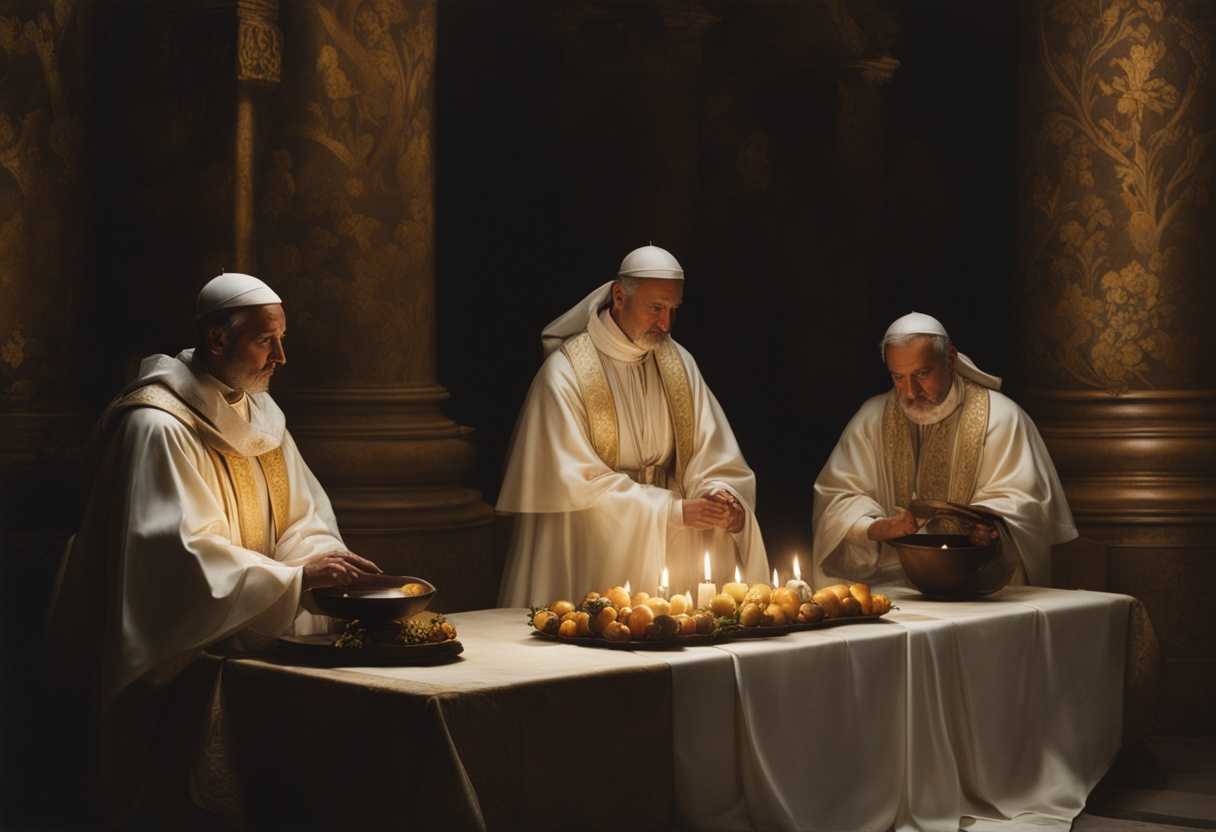
What does Leviticus 7:1-10 really mean?
Leviticus 7:1-10 is about the detailed instructions for the guilt offering, emphasizing the importance of specific ingredients, procedures, and the portion to be given to the priests, highlighting the seriousness of atonement for sin and reconciliation with God. 1 “This is the law of the guilt offering. It is most holy.” 2 In the place…
-

What does Leviticus 9:22-24 really mean?
Leviticus 9:22-24 is about Aaron, the high priest, blessing the people after offering sacrifices to God, representing the importance of the priestly blessing and the divine favor bestowed upon the people through obedience and worship. 22 Then Aaron lifted up his hands toward the people and blessed them, and he came down from offering the…