
Category: Leviticus
-

What does Leviticus 26:19 really mean?
Leviticus 26:19 is about the consequences of disobedience towards God and the idea that if people reject His commandments, they will face divine punishment and suffer the loss of blessings and prosperity. 19 and I will break the pride of your power, and I will make your heavens like iron and your earth like bronze.…
-

What does Leviticus 13:46 really mean?
Leviticus 13:46 is about the importance of isolating individuals with leprosy to prevent the spread of the disease and maintain the purity of the community according to the Mosaic law. 46 He shall remain unclean as long as he has the disease. He is unclean. He shall live alone. His dwelling shall be outside the…
-

What does Leviticus 21:5-6 really mean?
Leviticus 21:5-6 is about the requirement for the priests to maintain a certain level of ceremonial cleanliness by not shaving their heads or beards and not tearing their clothes as a sign of mourning in order to demonstrate their dedication and separation to the Lord. 5 They shall not make bald patches on their heads,…
-

What does Leviticus 14:4 really mean?
Leviticus 14:4 is about the purification process for those afflicted with skin diseases, symbolizing the cleansing and restoration of one’s spiritual purity and community reintegration after a period of isolation and repentance. 4 the priest shall command them to take for him who is to be cleansed two live clean birds and cedarwood and scarlet…
-

What does Leviticus 27:1-8 really mean?
Leviticus 27:1-8 is about the dedication of oneself or one’s possessions to God through a vow, highlighting the sanctity and value of offering one’s possessions in service to the divine. 1 The Lord spoke to Moses, saying, 2 “Speak to the people of Israel and say to them, If anyone makes a special vow to…
-
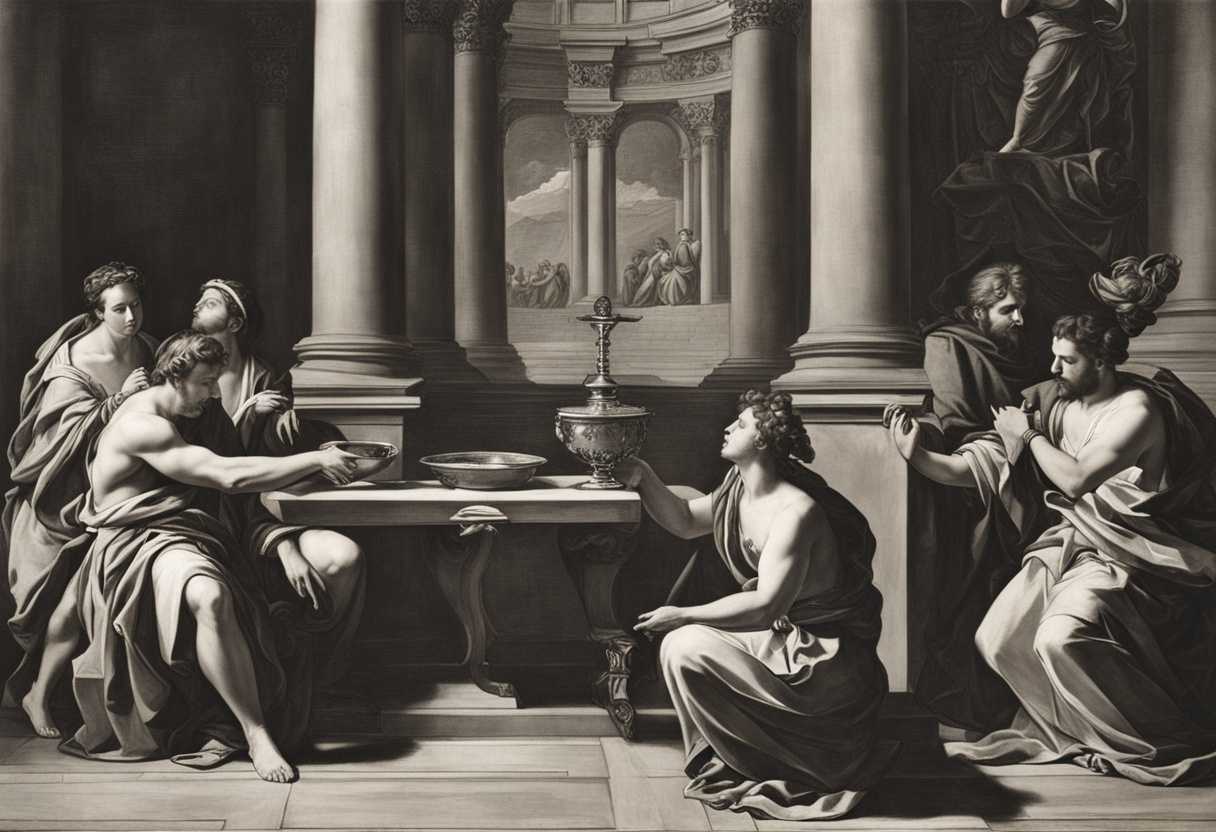
What does Leviticus 6:24-30 really mean?
Leviticus 6:24-30 is about the laws and procedures for the preparation and consumption of the sin offering, emphasizing the importance of properly handling sacrifices and maintaining purity before God. 24 And the Lord spoke to Moses, saying, 25 “Speak to Aaron and his sons, saying, This is the law of the sin offering. In the…
-

What does Leviticus 9:18-21 really mean?
Leviticus 9:18-21 is about Aaron presenting the burnt offering and the grain offering to God on behalf of the people of Israel, symbolizing the dedication, surrender, and atonement required in approaching and worshiping the divine presence. 18 Then he slaughtered the ox and the ram, the sacrifice of peace offerings for the people. And Aaron’s…
-
What does Leviticus 1:3-4 really mean?
Leviticus 1:3-4 is about how an individual who brings an offering to the Lord should willingly bring forth a male animal without blemish to initiate atonement, emphasizing the importance of pure and voluntary sacrifice in seeking reconciliation with God. 3 If his offering is a burnt offering from the herd, he shall offer a male…
-

What does Leviticus 16:14-19 really mean?
Leviticus 16:14-19 is about the ritual of the Day of Atonement where the high priest makes atonement for the sins of the people by sprinkling the blood of the goat before the ark of the covenant, emphasizing the need for purification and forgiveness through sacrifice. 14 And he shall take some of the blood of…
-

What does Leviticus 10:10-11 really mean?
Leviticus 10:10-11 is about emphasizing the importance of distinguishing between what is holy and what is common, teaching the Israelites to follow God’s statutes and laws to lead a righteous life. 10 You are to distinguish between the holy and the common, and between the unclean and the clean, 11 and you are to teach…