
Category: Doctrines and Beliefs
-

What the Bible Says About Death in the Pot: Understanding Its Meaning
“Death in the pot” refers to an incident in 2 Kings 4:38-41 where the prophet Elisha saves a pot of stew that had been poisoned by adding flour to it, rendering it safe to eat. This metaphorically illustrates God’s power to bring life and healing out of death and destruction. Scripture 38 And Elisha came…
-

What the Bible Says About Thinking Differently
The phrase “Think Different” can be interpreted biblically as an encouragement to renew one’s mind in alignment with God’s will, as stated in Romans 12:2, which urges believers not to conform to the patterns of this world but to be transformed by the renewal of their minds. Additionally, Isaiah 55:8-9 highlights the vast difference between…
-
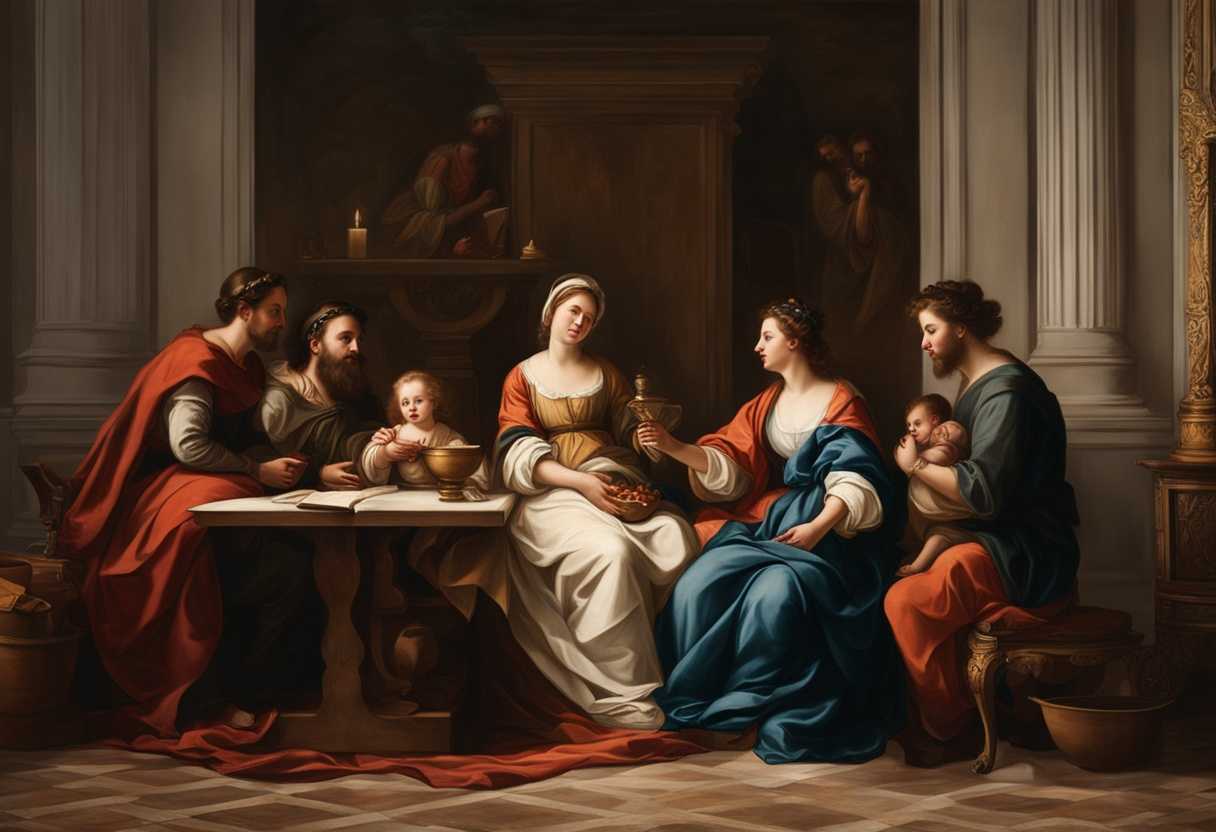
“What the Bible Says About Household Codes”
Household codes in the Bible refer to a set of instructions found in passages like Ephesians 5:22-6:9 and Colossians 3:18-4:1 that outline the roles and responsibilities within a Christian household, including directives for wives, husbands, children, and slaves. These codes aim to promote order, respect, and mutual submission in family and social relationships within the…
-

What the Bible Says About the Definition of Love
In the Bible, love is defined as a selfless and unconditional commitment to the well-being of others, as seen in 1 Corinthians 13:4-7, which describes love as patient, kind, and not easily angered. Additionally, 1 John 4:8 states, “Whoever does not love does not know God, because God is love,” emphasizing that love is central…
-

What the Bible Says About the Definition of a Hero
In the Bible, a hero is often depicted as someone who displays remarkable courage, faith, and righteousness, frequently acting in service to God and others. Examples include figures like David, who fought Goliath, and Esther, who risked her life to save her people, embodying divine purpose and moral integrity. Scripture 6 Be strong and courageous,…
-

What the Bible Says About Discipline and Discipleship
In the Bible, “discipline” often refers to the training and correction intended to promote growth in righteousness (Hebrews 12:11). A “disciple” is a follower or learner of Jesus Christ, committed to His teachings and example (Matthew 28:19-20). Scripture 11 My son, do not despise the Lord’s discipline or be weary of his reproof, 12 for…
-

What the Bible Says About Fornicators: Understanding the Definition and Context
In the Bible, fornicators refer to individuals who engage in sexual immorality outside the bounds of marriage, as condemned in passages like 1 Corinthians 6:9-10 and Hebrews 13:4. The term encompasses a broader context of sinful sexual behavior that is against God’s commandments. Scripture 9 Or do you not know that the unrighteous will not…
-

What the Bible Says About Mamzer: Understanding Its Definition and Implications
In biblical terms, a “mamzer” refers to a child born from an illicit union, specifically one who is the offspring of adultery or incest, as mentioned in Deuteronomy 23:2. This status carries social and religious implications, often excluding the individual from certain community privileges. Scripture 2 No one born of a forbidden union may enter…
-

What the Bible Says About the Definition of a Prince
In the Bible, the term “prince” often denotes a leader or ruler, typically signifying authority over a territory or a group of people (e.g., Genesis 14:18-20; Ezekiel 45:7). It can also refer to a title of honor or an exemplary figure, as seen in references to the “Prince of Peace” (Isaiah 9:6), which signifies Jesus…
-

What the Bible Says About the Definition of Sinful
In the Bible, sinful behavior is defined as actions that violate God’s laws and commands, leading to separation from Him (Romans 3:23). It encompasses both moral failings and deliberate disobedience to God’s will, highlighting the need for repentance and redemption (1 John 1:8-9). Scripture 19 Now the works of the flesh are evident: sexual immorality,…