
Category: Definitions
-

What the Bible Says About Ordination: Definition and Significance
In the Bible, ordination refers to the act of setting someone apart for a sacred role or ministry, typically through prayer, laying on of hands, and the acknowledgment of the local church community. It signifies the recognition of God’s calling on an individual’s life to serve in specific spiritual duties, as seen in passages like…
-
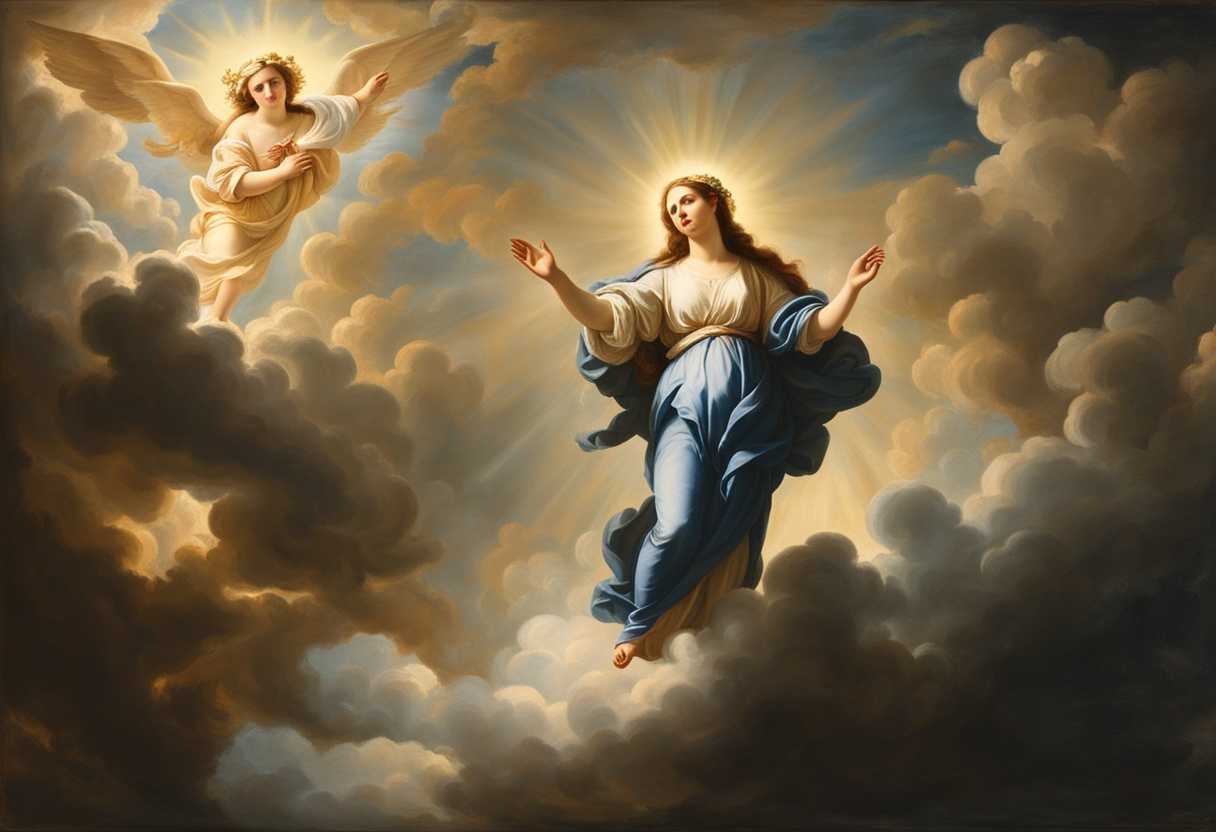
What the Bible Says About the Meaning of Assumption
In the Bible, “Assumption” is often associated with the belief in the bodily ascension of Mary into heaven, though the term itself is not explicitly used. This concept reflects the idea that certain individuals, like Enoch and Elijah, were taken up by God without experiencing death, highlighting divine favor and the promise of eternal life.…
-

What the Bible Says About Prevailing Faith
In the Bible, “prevail” often refers to overcoming adversities or enemies, as seen in instances where God’s strength empowers individuals or nations to conquer challenges (Psalm 60:12). It can also signify the triumph of truth and righteousness over falsehood and evil (Isaiah 54:17). Scripture 24 And Jacob was left alone. And a man wrestled with…
-

What the Bible Says About a Change of Nature
In the Bible, a change of nature often refers to a transformation in a person’s character or spiritual condition, typically through faith in Christ. This concept is exemplified in passages like 2 Corinthians 5:17, which states that anyone in Christ is a “new creation,” symbolizing a marked departure from their previous sinful ways. Scripture 1…
-

What the Bible Says About Valor: A Definition and Exploration
In the Bible, valor refers to great courage in the face of danger or adversity, often exemplified by heroic acts in battle or moral integrity. It is celebrated in various passages, such as in Proverbs 31: valor is associated with a strong and virtuous character, particularly in women of noble standing. Scripture 6 Be strong…
-

What the Bible Says About the Meaning of El Olam
“El Olam” is a Hebrew term that translates to “God of Eternity” or “Everlasting God,” emphasizing God’s eternal nature and unchanging character. It reflects the belief that God exists beyond time and is the ultimate source of life and existence, as seen in passages like Genesis 21:33. Scripture 33 Abraham planted a tamarisk tree in…
-

What the Bible Says About the Meaning of Potentate
In the Bible, a “potentate” refers to a powerful ruler or sovereign, often indicating someone with significant authority or dominion. The term is used to emphasize the sovereignty and might of earthly rulers or God in contrast to worldly power (e.g., 1 Timothy 6:15). Scripture 13 I charge you in the presence of God, who…
-

What the Bible Says About the Meaning of the Good Shepherd
In the Bible, the “Good Shepherd” primarily refers to Jesus Christ, who cares for, protects, and leads His followers, representing a deep relational bond with His flock (John 10:11-15). This metaphor emphasizes His sacrificial love and guidance, contrasting with false leaders who neglect or harm the sheep. Scripture 1 “Truly, truly, I say to you,…
-

What the Bible Says About Heritage: Understanding Its Meaning and Significance
In the Bible, heritage signifies the spiritual and cultural legacy passed down through generations, emphasizing the importance of family lineage and God’s covenant with His people. It also underscores the responsibility of individuals to honor and uphold the values and teachings inherited from their ancestors, as seen in passages like Deuteronomy 6:6-7. Scripture 7 And…
-

What the Bible Says About the Finished Work of Jesus
Jesus’ finished work refers to His complete and perfect sacrifice on the cross, which fulfilled the requirements of the law and provided atonement for humanity’s sins (John 19:30). This completion signifies that salvation is fully by grace through faith, not by human effort (Ephesians 2:8-9). Scripture 28 After this, Jesus, knowing that all was now…