
Category: Definitions
-

What the Bible Says About Economy: Understanding Its Meaning
The Bible underscores the importance of stewardship, encouraging individuals to manage resources wisely and ethically, as reflected in teachings about financial responsibility in parables like the Talents (Matthew 25:14-30). Additionally, it emphasizes the well-being of the community, advocating for fair dealings, support for the poor, and a just economic system (Proverbs 22:16; Deuteronomy 15:7-11). Scripture…
-

What the Bible Says About Divine Inspiration
Divine inspiration in the Bible refers to the belief that the Scriptures were written by human authors under the guidance of the Holy Spirit, ensuring that the writings are both authoritative and free from error in their teachings regarding faith and practice (2 Timothy 3:16-17). This concept emphasizes that God is the ultimate source of…
-

What the Bible Says About the Appearance of Evil: Understanding Its Meaning
The phrase “appearance of evil” comes from 1 Thessalonians 5:22, which instructs believers to “abstain from all appearance of evil.” This means that Christians should avoid not only sinful actions but also any behaviors that could give the impression of wrongdoing, thereby upholding their integrity and witness. Scripture 21 but test everything; hold fast what…
-

What the Bible Says About the Definition of Holy Power
In the Bible, holy power refers to the divine authority and strength that comes from God, often associated with the Holy Spirit. It empowers believers to perform acts of faith, bear witness to God’s truth, and live righteously in accordance with His will. Scripture 6 “Your right hand, O Lord, glorious in power, your right…
-

What the Bible Says About the Meaning of Samaritans
In the Bible, Samaritans are a group of people who lived in Samaria, historically viewed as outsiders by the Jews due to their mixed ancestry and differing religious practices. The Parable of the Good Samaritan (Luke 10:25-37) illustrates their positive role in embodying love and compassion, challenging prejudices of the time. Scripture 24 And the…
-

What the Bible Says About the Natural Man: Definition and Insights
In the Bible, the term “natural man” refers to an individual who is not influenced by the Holy Spirit and is often characterized by a lack of spiritual understanding and discernment, as seen in 1 Corinthians 2:14. This individual is typically driven by fleshly desires and worldly wisdom, contrasting with those who are spiritually discerned…
-

What the Bible Says About Death in the Pot: Understanding Its Meaning
“Death in the pot” refers to an incident in 2 Kings 4:38-41 where the prophet Elisha saves a pot of stew that had been poisoned by adding flour to it, rendering it safe to eat. This metaphorically illustrates God’s power to bring life and healing out of death and destruction. Scripture 38 And Elisha came…
-
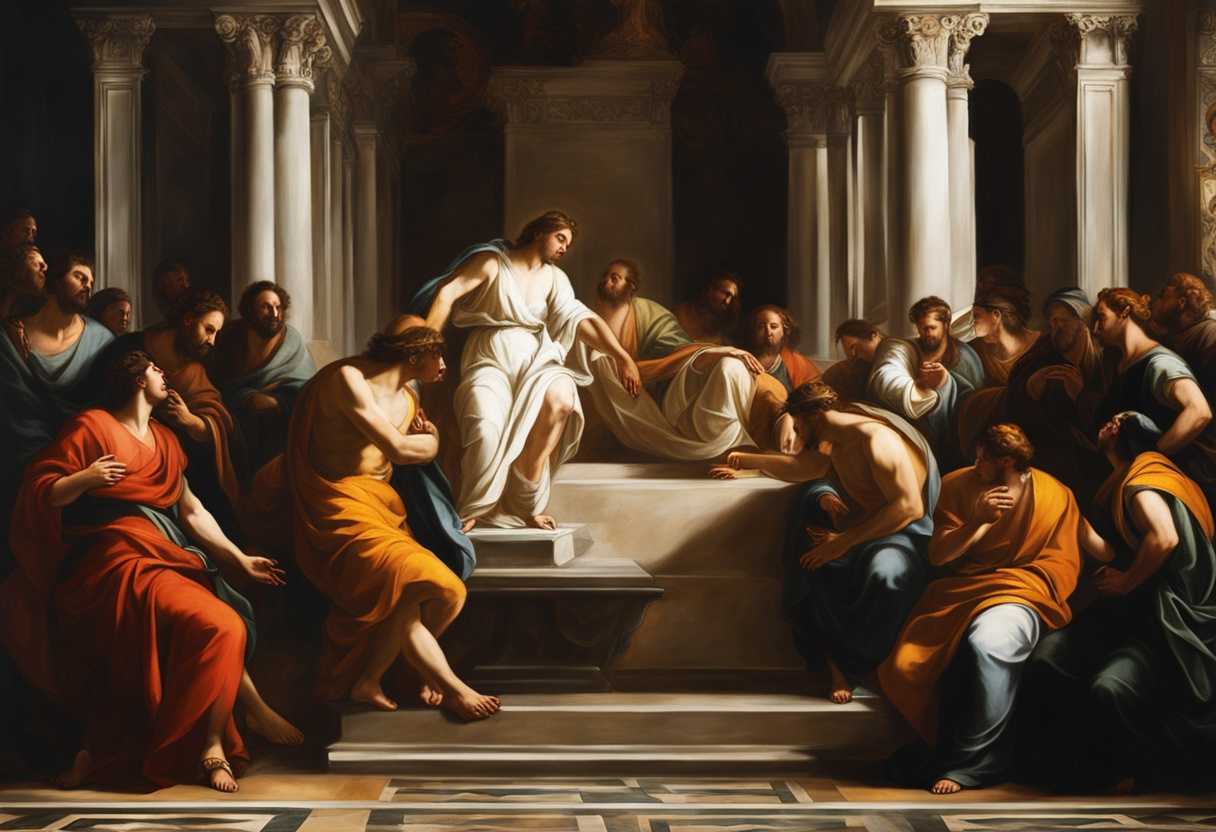
What the Bible Says About Reverence: A Definition and Exploration
In the Bible, reverence is a deep respect and awe towards God, demonstrating a recognition of His holiness and authority. It is often expressed through worship, obedience, and a humble attitude, as seen in passages like Hebrews 12:28-29, which calls for worship with reverence and awe. Scripture 10 The fear of the Lord is the…
-

What the Bible Says About Thinking Differently
The phrase “Think Different” can be interpreted biblically as an encouragement to renew one’s mind in alignment with God’s will, as stated in Romans 12:2, which urges believers not to conform to the patterns of this world but to be transformed by the renewal of their minds. Additionally, Isaiah 55:8-9 highlights the vast difference between…
-

What the Bible Says About Sovereignty
In the Bible, sovereignty refers to God’s ultimate authority and control over all creation, as seen in passages like Psalm 103:19, which states, “The Lord has established his throne in heaven, and his kingdom rules over all.” It underscores the belief that God actively governs the universe according to His divine will and purpose. Scripture…