
Category: Definitions
-
What the Bible Says About the Meaning of “Ammi”
In the Bible, “Ammi” means “my people” in Hebrew. It signifies a relationship of belonging and covenant between God and the Israelites, particularly in the context of the prophetic messages conveyed by Hosea (Hosea 1:10). Scripture 10 Yet the number of the children of Israel shall be like the sand of the sea, which cannot…
-

What the Bible Says About Teaching
In the Bible, “teach” generally refers to the imparting of knowledge or guidance about spiritual truths and moral principles, often seen as a divine command to instruct others in God’s ways (Matthew 28:19-20). It emphasizes the responsibility of believers to educate one another in faith and practice, reflecting the wisdom and authority of Scripture. Scripture…
-

What the Bible Says About the Meaning of Ada
In the Bible, Ada is a feminine name that means “adornment” or “noble.” It is associated with two figures: Ada, the daughter of Eshban, and Ada, one of the wives of Lamech in Genesis 4:19-20. Scripture 19 Lamech took two wives. The name of the one was Adah, and the name of the other Zillah.…
-
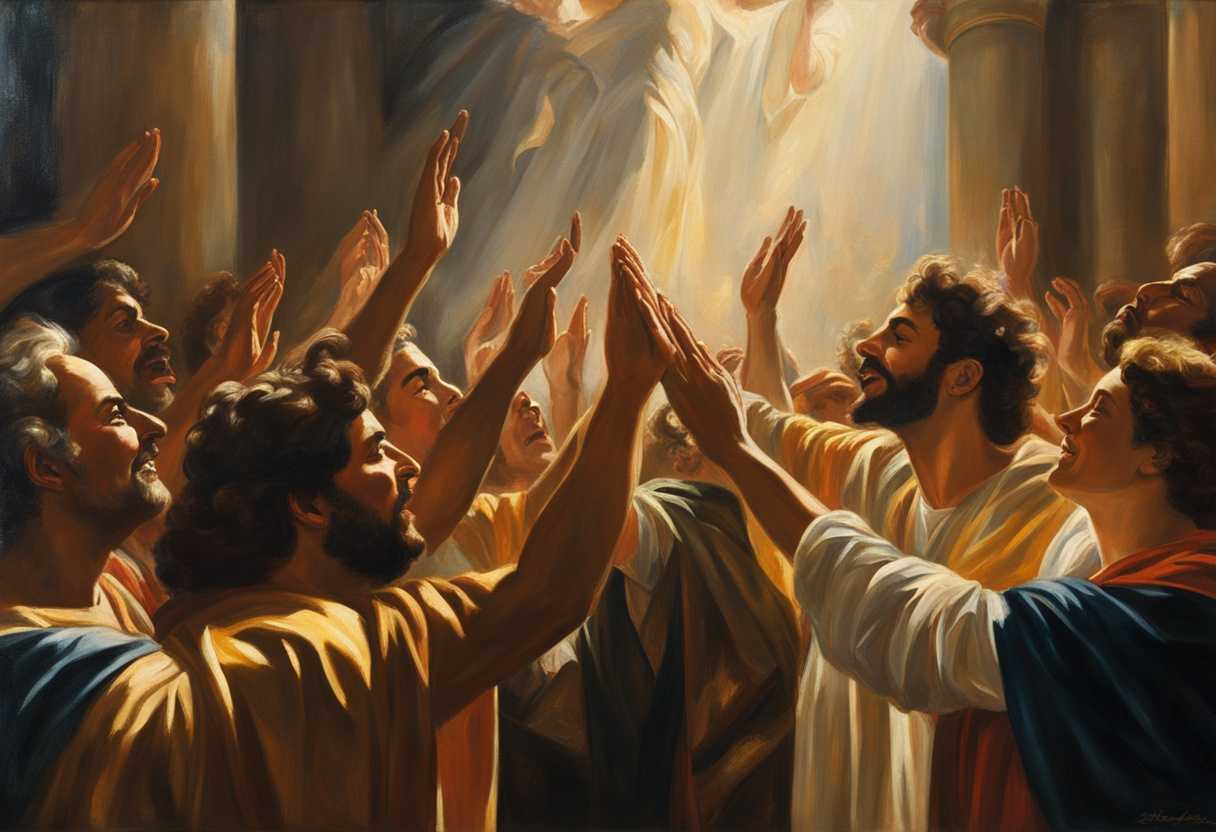
What the Bible Says About the Meaning of Lifted Hands
In the Bible, lifted hands in worship symbolize surrender, openness to God, and a desire for divine connection. This act can be seen as a physical expression of prayer and praise, exemplified in passages such as Psalm 63:4 and 1 Timothy 2:8. Scripture 29 Moses said to him, “As soon as I have gone out…
-

What the Bible Says About the Arvadites: Meaning and Significance
The Arvadites are a group mentioned in the Bible as descendants of the ancient city of Arvad, located on an island off the coast of what is now Syria. They are considered one of the Canaanite tribes and are listed among the descendants of Canaan in Genesis 10:18. Scripture 15 Canaan fathered Sidon his firstborn…
-

What the Bible Says About Beseeching: Definition and Meaning
In the Bible, “beseeching” refers to earnestly and fervently asking or pleading for something, often in a context of prayer or supplication (e.g., Philippians 4:6). It conveys a sense of urgency and sincerity in seeking God’s assistance or intervention. Scripture 11 But Moses implored the Lord his God and said, “O Lord, why does your…
-

What the Bible Says About the Meaning of Dara
In the Bible, Dara is mentioned as a descendant of Judah in 1 Chronicles 2:15. The name itself means “to tread” or “a dancing place,” but its specific significance within the biblical narrative is limited. Scripture 6 The sons of Zerah: Zimri, Ethan, Heman, Calcol, and Dara, five in all. 7 The son of Carmi:…
-

What the Bible Says About Donkeys: Meaning and Significance
In the Bible, donkeys symbolize humility, service, and peace. They are often associated with significant events, such as Jesus riding a donkey into Jerusalem, which fulfilled the prophecy of a humble King (Zechariah 9:9). Scripture 3 So Abraham rose early in the morning, saddled his donkey, and took two of his young men with him,…
-

What the Bible Says About the Meaning of Ephraim
In the Bible, Ephraim is one of the tribes of Israel, named after Joseph’s second son, and it represents prosperity and fruitfulness. Ephraim is also used symbolically to refer to the northern kingdom of Israel, highlighting its significance in biblical narratives as a center of idolatry and rebellion against God. Scripture 50 Before the year…
-

What the Bible Says About Beasts of the Field
In the Bible, “beasts of the field” typically refers to wild animals that inhabit the earth, emphasizing God’s creation and the natural order of life. This phrase appears in various contexts, often to illustrate themes of stewardship, man’s dominion over creation, or as part of God’s covenant with all living creatures (Genesis 1:24-26; 2:19-20). Scripture…