
Category: Definitions
-

What the Bible Says About the Meaning of the Hebrew Bible
The Hebrew Bible, also known as the Tanakh, is a collection of sacred texts in Judaism, consisting of three main parts: the Torah (Law), Nevi’im (Prophets), and Ketuvim (Writings). It serves as the foundational scripture for Jewish faith and practice, encapsulating religious laws, history, poetry, and prophecy. Scripture 1 In the beginning, God created the…
-

What the Bible Says About Wedlock: Understanding Its Definition and Significance
In the Bible, wedlock refers to the state of being married, signifying a sacred covenant between a man and a woman established by God (Genesis 2:24). It emphasizes the importance of fidelity, commitment, and the union meant to reflect the relationship between Christ and the Church (Ephesians 5:31-32). Scripture 18 Then the Lord God said,…
-
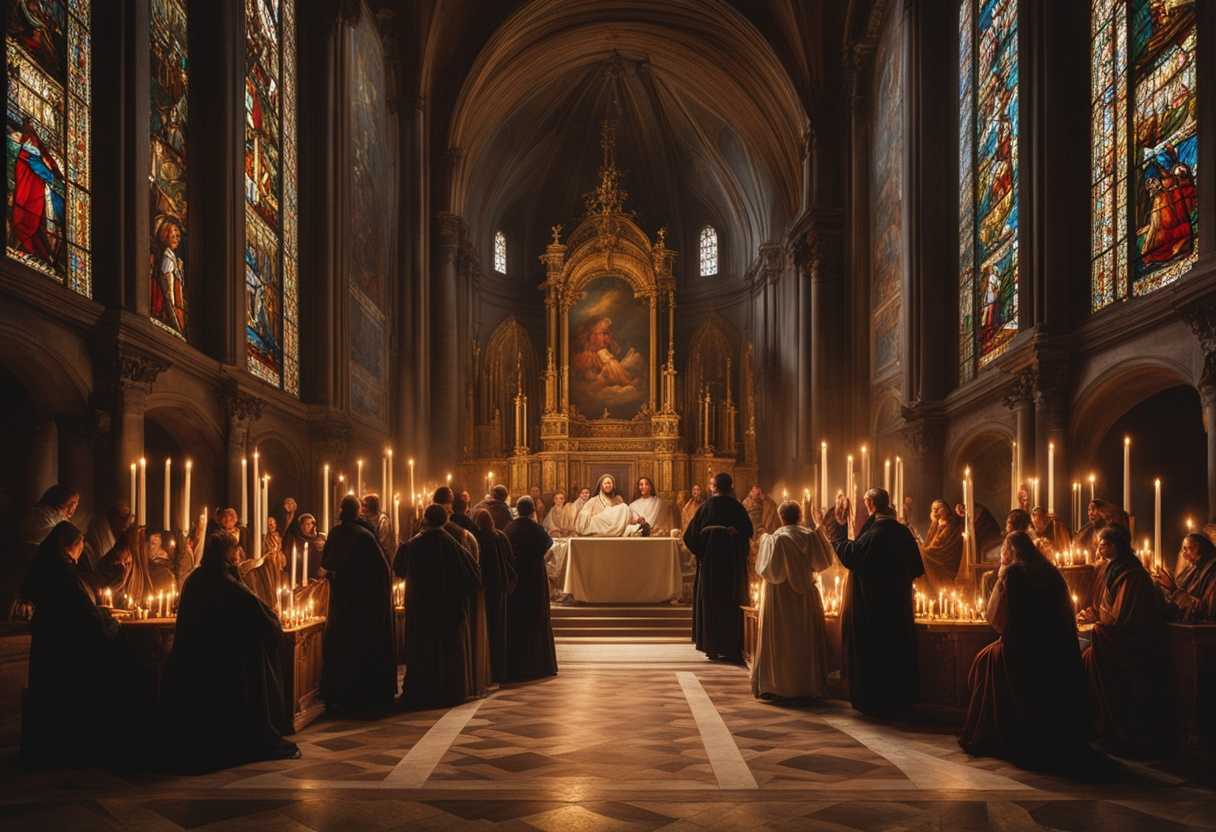
What the Bible Says About Doxology: Definition and Significance
Doxology in the Bible refers to a short hymn of praise to God, often used in liturgical contexts. It acknowledges God’s glory and majesty, typically concluding a prayer or a section of scripture, such as the well-known “Glory be to the Father, and to the Son, and to the Holy Spirit.” Scripture 1 Praise the…
-

What the Bible Says About Sexual Relationships
The Bible views sexual relationships as sacred and meant to be enjoyed within the bounds of marriage between a man and a woman, emphasizing fidelity, love, and mutual respect (Hebrews 13:4, Genesis 2:24). Sexual intimacy is portrayed as a profound union that reflects God’s covenant relationship with His people. Scripture 18 Then the Lord God…
-

What the Bible Says About Earnestly: A Definition and Exploration
In the Bible, “earnestly” refers to a sincere and intense conviction or fervor in one’s actions or prayers. It signifies a heartfelt and determined approach to seeking God or pursuing righteousness, as seen in passages like James 5:16, which emphasizes the power of earnest prayer. Scripture 16 Therefore, confess your sins to one another and…
-

What the Bible Says About the Meaning of Lintel
In the Bible, a lintel is notably mentioned in Exodus 12:7, where the Israelites are commanded to place the blood of a lamb on the lintel and doorposts of their homes during the Passover. This act signifies protection from judgment, reflecting themes of redemption and deliverance. Scripture 21 Then Moses called all the elders of…
-

What the Bible Says About Its Immutable Meaning
In the Bible, “immutable” refers to the unchanging nature of God, emphasizing His consistency and reliability. Key verses like James 1:17 highlight that with God, there is “no variation or shadow due to change,” signifying His eternal and unalterable essence. Scripture 19 God is not man, that he should lie, or a son of man,…
-

What the Bible Says About Infallibility in Catholic Teaching
The Catholic Church teaches that the Bible is the inspired word of God, and that it is free from error (infallible) in matters of faith and morals as guided by the Holy Spirit. This infallibility is exercised by the Magisterium, the Church’s teaching authority, particularly in defining dogmas and interpreting Scripture. Scripture 16 All Scripture…
-

What the Bible Says About the Meaning of “Way”
In the Bible, “way” often refers to a path or manner of living that guides one toward righteousness and alignment with God’s will (Psalm 1:6). It can imply both a literal journey and a metaphorical route representing one’s spiritual life and choices (Proverbs 3:6). Scripture 5 Trust in the Lord with all your heart, and…
-

What the Bible Says About Cumbereth: Understanding Its Definition and Context
The term “cumbereth” is an archaic form of “cumber,” which means to hinder or burden. In the Bible, it is used to describe someone or something that causes unnecessary trouble or distraction, as seen in the parable of the fig tree in Luke 13:7, where the owner expresses frustration over a tree that bears no…