
Category: Definitions
-

What the Bible Says About Golden Wings: Symbolism and Meaning
The phrase “golden wings” is not explicitly mentioned in the Bible. However, wings often symbolize protection, divine presence, or majesty, as seen in references to angels or God’s covering over His people, such as in Psalm 91:4, where it states, “He will cover you with his feathers, and under his wings you will find refuge.”…
-

What the Bible Says About the Hebrew Meaning of Damascus
In Hebrew, Damascus ( דַּמֶּשֶׂק, Damesek) is thought to mean “a sack” or “a place of a well,” reflecting its significant role as an ancient city and a center for commerce and trade due to its proximity to water sources. It is also mentioned in the Bible as a notable city in relation to various…
-

What the Bible Says About Linear Genealogy
In the Bible, a linear genealogy is a straightforward listing of descendants, often tracing lineage from one individual to another, usually to establish direct heritage or fulfill divine promises. This practice highlights the importance of family lineage, particularly in relation to God’s covenants, as seen in genealogies presented in books like Genesis and Matthew. Scripture…
-

What the Bible Says About Ablution: Understanding Its Definition and Significance
In the Bible, “ablution” refers to the ceremonial washing or cleansing ritual often associated with purification before engaging in sacred activities or approaching God. It signifies the importance of spiritual readiness and cleanliness, as seen in practices described in the Old Testament, such as the washing of priests or the ritual baths in the temple.…
-

What the Bible Says About Noble Birth and Its Meaning
In the Bible, noble birth typically refers to those born into a family of high social status or royal lineage, suggesting a privilege and responsibility to uphold moral and ethical standards. This concept is often contrasted with spiritual rebirth, emphasizing the importance of one’s character and faith over earthly lineage (John 3:3-6). Scripture 26 For…
-

What the Bible Says About Being the Salt of the Earth
The phrase “You are the salt of the earth” found in Matthew 5:13 implies that followers of Christ are called to preserve goodness and truth in the world, much like salt preserves food. It signifies their role in enhancing the moral and spiritual flavor of society. Scripture 13 “You are the salt of the earth,…
-

What the Bible Says About Renewed Youth
In the Bible, “renewed youth” refers to the rejuvenation or restoration of strength and vitality, often associated with God’s blessings and divine intervention. A key verse is Psalm 103:5, which states that God “satisfies your desires with good things so that your youth is renewed like the eagle’s.” Scripture 28 Have you not known? Have…
-

What the Bible Says About Living by the Sword: Understanding Its Meaning
The phrase “live by the sword, die by the sword” reflects the principle that those who engage in violence or aggression will ultimately face similar consequences. This concept is rooted in Matthew 26:52, where Jesus tells Peter, “For all who draw the sword will die by the sword,” emphasizing the cyclical nature of violence. Scripture…
-

What the Bible Says About the Meaning of Suffer in the King James Version
In the King James Bible, “suffer” commonly refers to enduring pain, hardship, or adversity. It often denotes the act of allowing or permitting something to happen, as in the context of bearing challenges with patience or accepting divine will. Scripture 18 For I consider that the sufferings of this present time are not worth comparing…
-
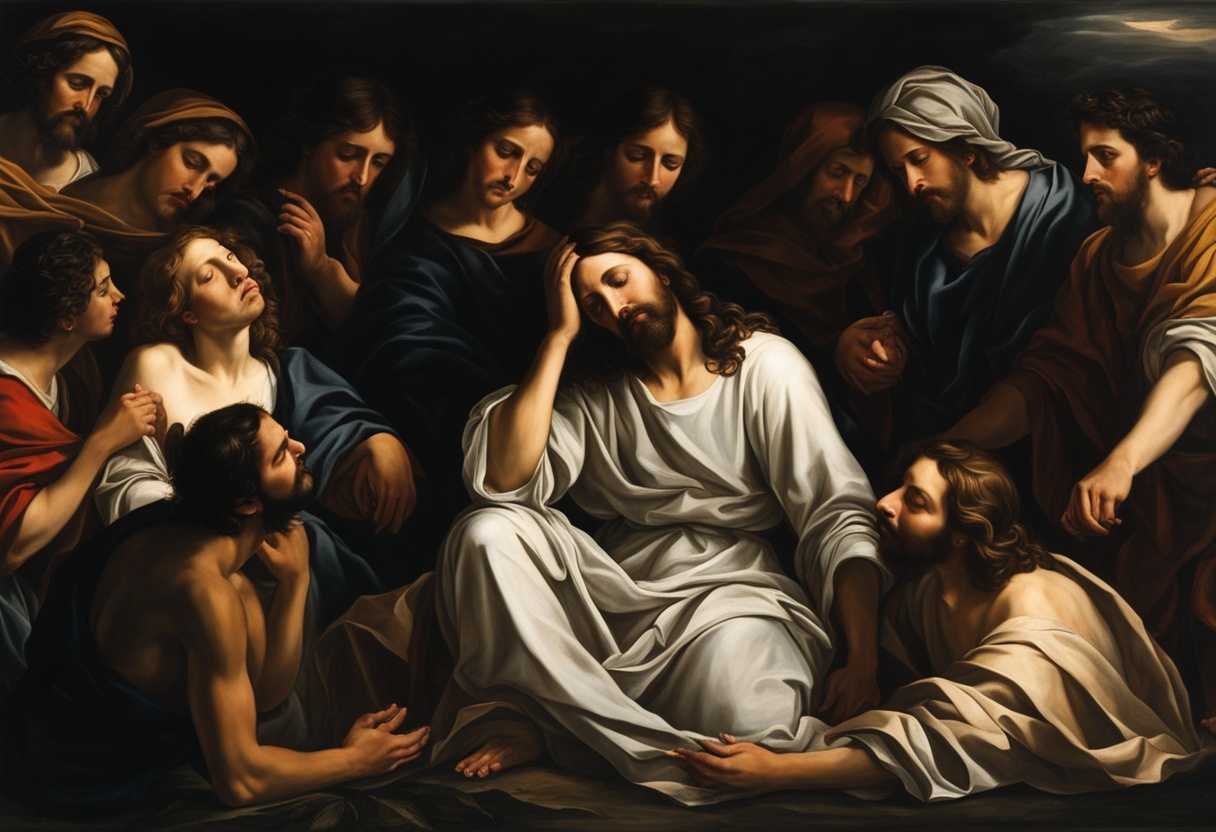
What the Bible Says About “Jesus Wept”: Understanding Its Meaning
The verse “Jesus wept” (John 11:35) highlights Jesus’ deep compassion and empathy in response to the grief of Mary and the others over Lazarus’ death. It underscores the humanity of Jesus, reflecting his ability to feel sorrow and connect with human emotions. Scripture 1 Now a certain man was ill, Lazarus of Bethany, the village…