
Category: Definitions
-

What the Bible Says About the Throne Room
The Throne Room in the Bible represents the divine presence of God and His sovereignty, as seen in passages like Isaiah 6 and Revelation 4. It symbolizes a place of worship, authority, and judgment where God reigns and His glory is revealed. Scripture 1 After this I looked, and behold, a door standing open in…
-

What the Bible Says About the Meaning of Ingathering
In the Bible, “ingathering” refers to the gathering of harvests or the collection of people, often in a celebratory context, such as the Feast of Tabernacles (Sukkot) where Israelite families brought in the harvest to celebrate God’s provision. It symbolizes both physical harvest and spiritual gathering, as seen in prophecies about the Lord gathering His…
-
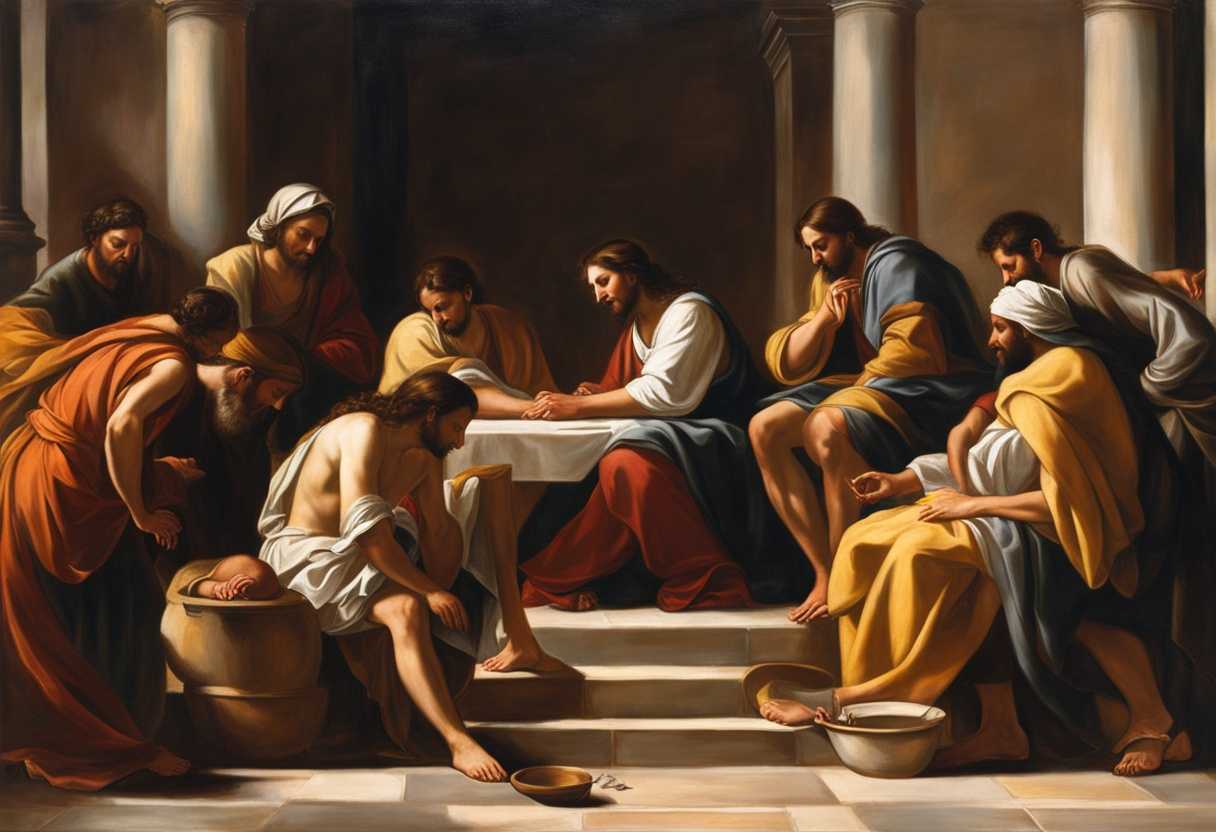
What the Bible Says About the Meaning of Washing Feet
Washing feet in the Bible symbolizes humility and servitude, reflecting the act of Jesus washing His disciples’ feet as a demonstration of love and a call to serve one another (John 13:1-17). It signifies the importance of selflessness and caring for others in a community of faith. Scripture 1 Now before the Feast of the…
-

What the Bible Says About the Meaning of Mixed Wine in Proverbs 9:2
In Proverbs 9:2, “mixed wine” refers to wine that has been blended or diluted, symbolizing a preparation of something enticing and pleasurable. It serves as a metaphor for wisdom’s invitation to partake in understanding and the blessings it brings. Scripture 1 Wisdom has built her house; she has hewn her seven pillars. 2 She has…
-

What the Bible Says About the Meaning of Life
Ecclesiastes 12:13-14 summarizes the meaning of life with the exhortation to “Fear God and keep His commandments, for this is the whole duty of man.” It emphasizes that life’s purpose is rooted in reverence for God and adherence to His will. Scripture 13 The end of the matter; all has been heard. Fear God and…
-

What the Bible Says About the Meaning of Plaques
In the Bible, a “plague” generally refers to a disease or disaster sent by God as a form of judgment or punishment, often to lead people to repentance. Notable examples include the ten plagues of Egypt described in Exodus, which were meant to convince Pharaoh to free the Israelites from slavery. Scripture 14 Then the…
-

What the Bible Says About “The Truth Will Set You Free”
The phrase “the truth will set you free” originates from John 8:32, where Jesus speaks about the liberating power of knowing and embracing the truth of His teachings and God’s Word. It emphasizes that spiritual freedom and understanding come from recognizing and following divine truth. Scripture 31 So Jesus said to the Jews who had…
-

What the Bible Says About the Meaning of Silver Links
In the Bible, a silver link can symbolize purity, value, and connection, often used metaphorically to represent relationships or bonds between individuals or between humanity and God. Silver is also frequently associated with redemption and sacrifice, reflecting its worth and significance in biblical contexts. Scripture 15 “My lord, listen to me; a piece of land…
-

What the Bible Says About Hast: Understanding Its Meaning and Context
In the Bible, “hast” is an archaic form of the word “have,” used to denote possession or urgency. It often appears in contexts conveying immediacy or a command, as seen in phrases like “thou hast” meaning “you have.” Scripture 11 He said, “Who told you that you were naked? Have you eaten of the tree…
-

What the Bible Says About the Meaning of the Middle Watch
The term “middle watch” in the Bible refers to a specific time period of night, typically the second guard shift from around midnight to dawn. It is mentioned in contexts relating to vigilance and preparedness, as seen in Luke 12:38, where it symbolizes a time when the faithful should be alert for the Lord’s return.…