
Category: Definitions
-
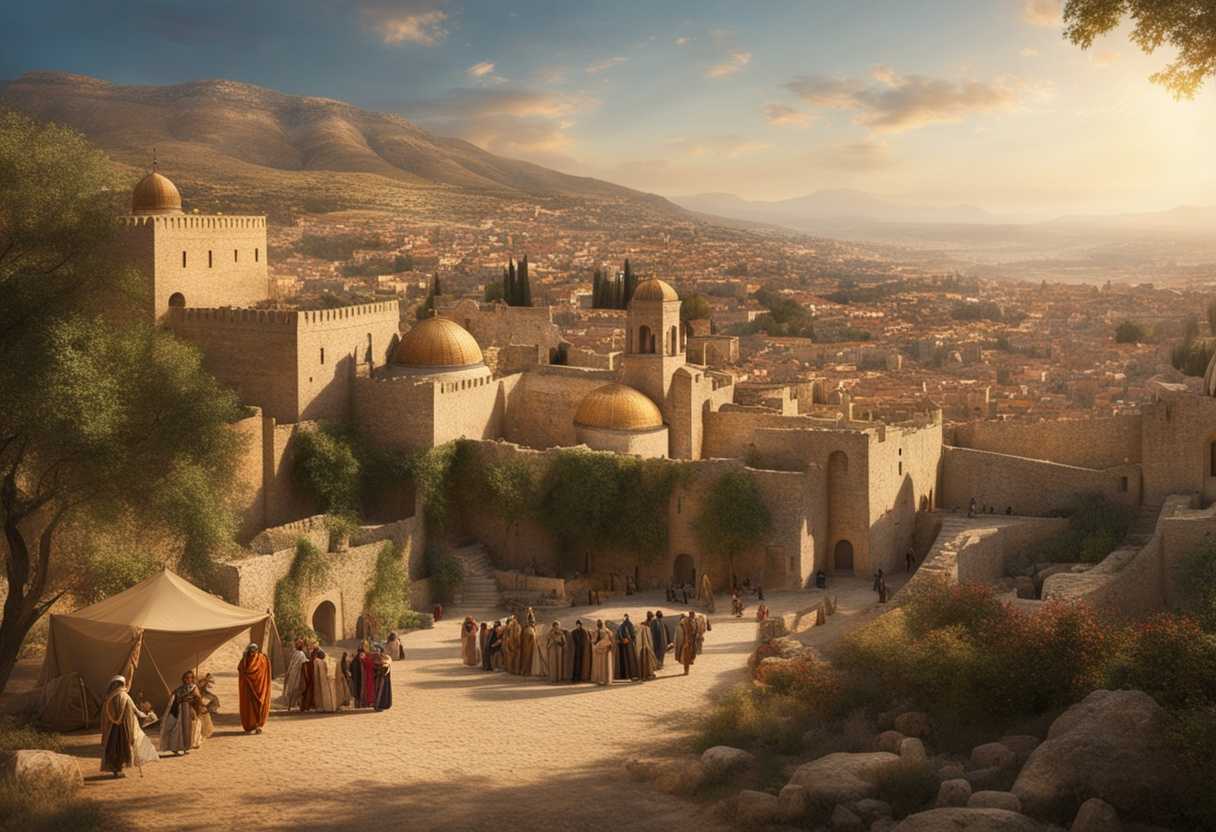
What the Bible Says About the Hittites and Jebusites: Their Meaning and Significance
The Hittites and Jebusites were ancient peoples mentioned in the Bible, representing specific Canaanite tribes inhabiting the land of Canaan before the Israelites. The Hittites are often associated with a powerful empire in Anatolia, while the Jebusites are known for occupying Jerusalem, which was later conquered by King David. Scripture 15 Canaan fathered Sidon his…
-

What the Bible Says About the Meaning of “Serve” in Greek
In Biblical Greek, the term “serve” is often translated from the word “diakoneo,” which means to perform duties or minister to others, often in a context of humility and selflessness. It reflects the act of serving not just as a task but as a form of devotion and love towards God and fellow human beings.…
-

What the Bible Says About Bochim: Understanding Its Meaning and Significance
Bochim, meaning “weeping” in Hebrew, refers to a site mentioned in the Book of Judges (Judges 2:1-5) where the Israelites wept after the Angel of the Lord rebuked them for their disobedience and idolatry. It symbolizes a moment of sorrow and repentance in the history of Israel. Scripture 1 Now the angel of the Lord…
-

What the Bible Says About the Meaning of a Suit
In the Bible, “suit” often refers to a legal case or petition presented before a judge or authority. While the term itself is not frequently used, the concept relates to the process of seeking justice or redress through legal means, as seen in various scripture passages discussing disputes and judgments (e.g., Proverbs 31:9). Scripture 3…
-

What the Bible Says About the Meaning of Enon
Enon is a location mentioned in the Bible, specifically in the Gospel of John (John 3:23), where it is noted as a place with abundant water, suitable for baptisms. The name “Enon” is derived from the Hebrew word meaning “spring” or “fountain.” Scripture 23 John also was baptizing at Aenon near Salim, because water was…
-

What the Bible Says About the Twinkling of an Eye
In the Bible, the phrase “in the twinkling of an eye” appears in 1 Corinthians 15:52, referring to the instantaneous transformation that will occur at the resurrection of the dead and the change of the living believers when Christ returns. It signifies a moment so brief that it emphasizes the immediacy and certainty of the…
-

What the Bible Says About Hiddekel: Meaning and Significance
Hiddekel, often identified with the Tigris River, is one of the four rivers mentioned in Genesis 2:14 that flow from the Garden of Eden. The name “Hiddekel” is thought to mean “rapid” or “swift,” reflecting the river’s fast-flowing nature. Scripture 10 A river flowed out of Eden to water the garden, and there it divided…
-

What the Bible Says About 40 Measures of Water
In the Bible, the phrase “40 measures of water” does not reference a specific concept or teaching directly. However, the number 40 often symbolizes a period of testing, trial, or preparation, as seen in significant biblical events like the 40 days of rain during Noah’s flood and the Israelites’ 40 years in the wilderness. Scripture…
-

What the Bible Says About Machpelah: Its Meaning and Significance
Machpelah is the name of the cave near Hebron that Abraham purchased as a burial site for his wife Sarah, marking it as the first piece of the Promised Land owned by the patriarchs. It symbolizes the enduring covenant between God and Abraham’s descendants, serving as a significant ancestral burial site for future generations. Scripture…
-

What the Bible Says About the Application of Its Meaning
The Bible application refers to the process of interpreting biblical texts and applying their teachings to one’s life and decisions. It emphasizes the relevance of scripture to daily living, guiding moral and ethical behavior according to God’s principles. Scripture 22 But be doers of the word, and not hearers only, deceiving yourselves. 23 For if…