
Category: Definitions
-

What the Bible Says About Being on the Housetop: Understanding Its Meaning
In the Bible, “to be on the housetop” often signifies a place of safety or refuge, as well as a vantage point for observing one’s surroundings. It is mentioned in contexts where urgency is emphasized, such as in Matthew 24:17, where it instructs those on the housetop to not return home, indicating the need to…
-

What the Bible Says About Goshen: Meaning and Significance
In the Bible, Goshen is described as a fertile region in Egypt where the Israelites settled during their time of slavery, as noted in Genesis 47:6. It symbolizes safety and abundance, serving as a place of refuge for God’s chosen people amidst a foreign land. Scripture 9 Hurry and go up to my father and…
-

What the Bible Says About Withering: Understanding Its Meaning
In the Bible, “wither” often refers to something that is drying up or losing vitality, symbolizing decay, judgment, or the consequences of sin (e.g., Isaiah 40:7). It can also represent the temporary nature of life and the fragility of human existence (e.g., Psalm 1:3). Scripture 6 A voice says, “Cry!” And I said, “What shall…
-

What the Bible Says About the Meaning of Kishon
In the Bible, Kishon refers to a river in ancient Canaan, known for its significance in the context of battles, particularly the defeat of Sisera as described in Judges 4 and 5. The name Kishon means “a bending” or “to bend,” reflecting the river’s curving path. Scripture 13 And Sisera called out all his chariots,…
-

What the Bible Says About the Ash Heap: Understanding Its Meaning
In the Bible, the term “ash heap” often symbolizes destruction, mourning, or judgment. It can represent a place of ruin or the consequences of sin, as seen in passages like Job 2:8, where Job sits in ashes to express his grief and despair. Scripture 7 So Satan went out from the presence of the Lord…
-

What the Bible Says About the Meaning of an Orchard
In the Bible, an orchard typically refers to a cultivated area where fruit trees are grown, symbolizing abundance, beauty, and the blessings of God. It is often associated with prosperity and spiritual fruitfulness, as seen in various scriptures, including Song of Solomon 4:13. Scripture 8 And the Lord God planted a garden in Eden, in…
-

What the Bible Says About Cloven: Understanding Its Meaning and Significance
In the Bible, “cloven” typically refers to something that is split or divided, particularly in relation to animal hooves. For example, in Leviticus 11:3, the term is used to describe clean animals that have split hooves, which differentiates them from unclean animals. Scripture 3 Whatever parts the hoof and is cloven-footed and chews the cud,…
-
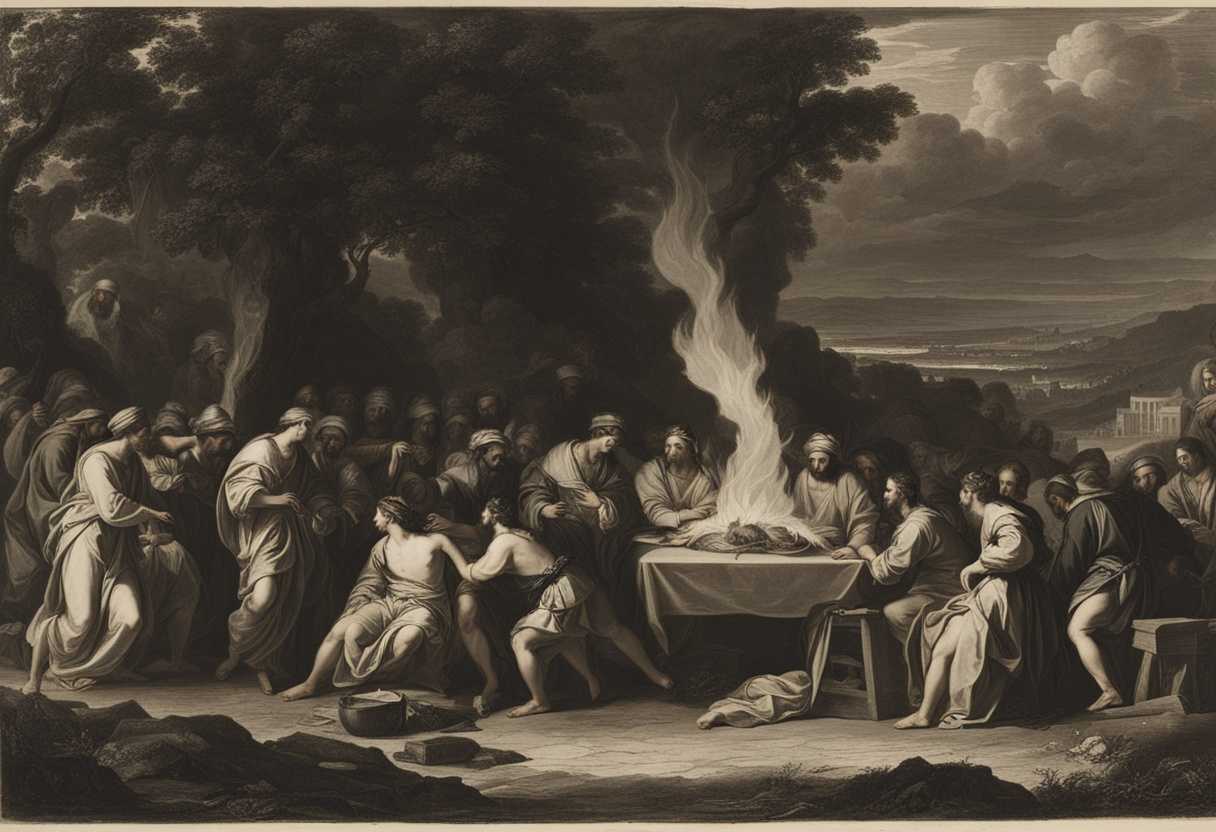
What the Bible Says About the Meaning of Taberah
In the Bible, “Taberah” means “burning” or “kindling” in Hebrew. It refers to a location where the Israelites encamped during their wilderness journey, specifically noted for a fire sent by the Lord as a response to their complaints (Numbers 11:1-3). Scripture 1 And the people complained in the hearing of the Lord about their misfortunes,…
-

What the Bible Says About Fathoms in Matthew
In the Bible, specifically in Matthew 18:12-14, “fathoms” is not explicitly mentioned, but the term generally refers to a measure of depth used in nautical contexts. Figuratively, it can symbolize the depths of understanding or the extent of God’s care for individuals, as expressed in the parable of the lost sheep, highlighting the value of…
-

What the Bible Says About Zeboiim: Meaning and Significance
Zeboiim, mentioned in the Bible, refers to a location associated with the cities of the plain, specifically linked to Sodom and Gomorrah, and is often interpreted as a place of wickedness. In some contexts, it is also described as a term meaning “fighters” or “place of hyenas,” indicating a harsh and inhospitable region. Scripture 19…