
1 Chronicles 10:11-14 is about the consequences of King Saul’s sinful actions and his failure to consult the Lord, resulting in his tragic demise and the passing of the kingdom to David, a man after God’s own heart.
11 But when all Jabesh-gilead heard all that the Philistines had done to Saul,
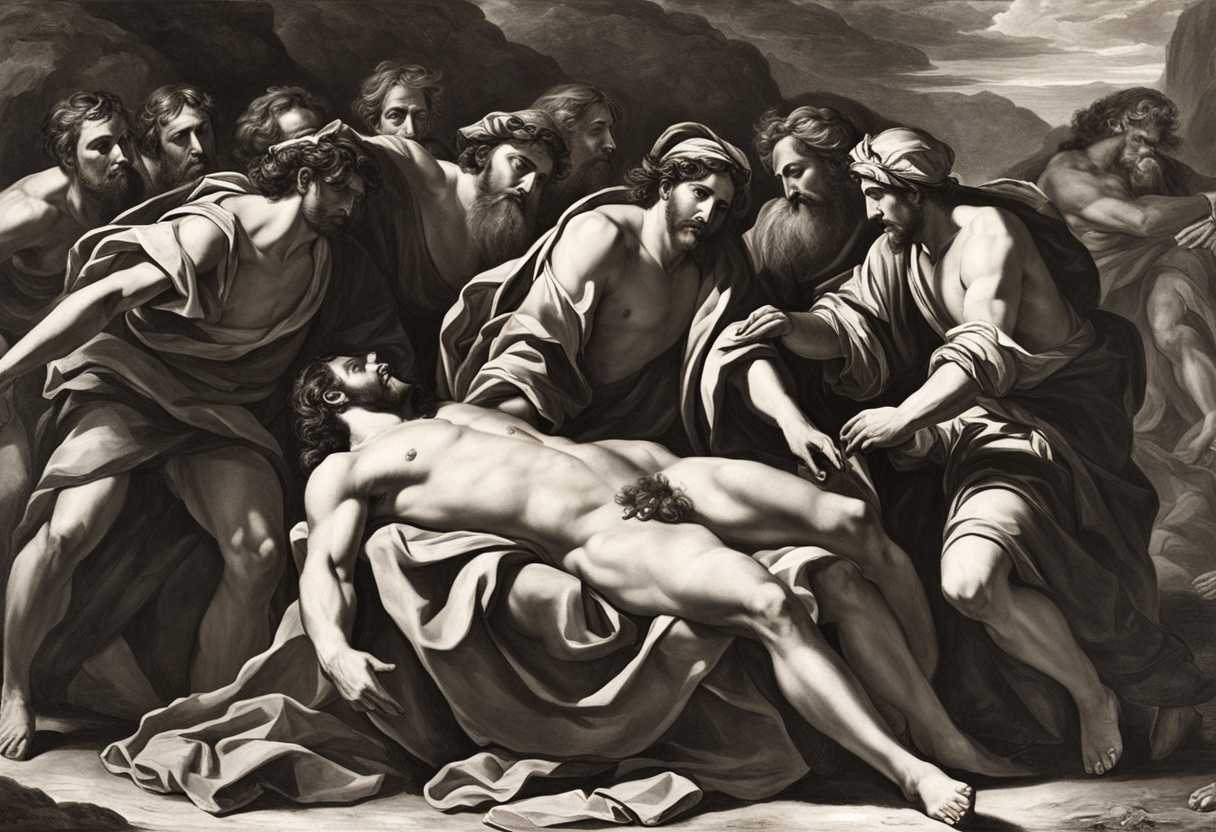
12 all the valiant men arose and took away the body of Saul and the bodies of his sons, and brought them to Jabesh. And they buried their bones under the oak in Jabesh and fasted seven days.
13 So Saul died for his breach of faith. He broke faith with the Lord in that he did not keep the command of the Lord, and also consulted a medium,
14 but he did not seek guidance from the Lord.
Setting the Scene for 1 Chronicles 10:11-14
The scene in 1 Chronicles 10:11-14 takes place after the death of King Saul and his sons in battle against the Philistines on Mount Gilboa. The Philistines had defeated the Israelites, and Saul was critically wounded. Knowing that he would not survive, Saul asked his armor-bearer to kill him to prevent the enemy from capturing and mistreating him. When the armor-bearer refused, Saul took his own life by falling on his own sword.
The aftermath of the battle was grim as the Israelite army fled, and the Philistines took possession of the bodies of Saul and his sons. The Philistines cut off Saul’s head and stripped his armor, sending them as trophies to their idols and throughout their land. The news of Saul’s death and the defeat of the Israelites spread quickly, causing great mourning among the people.
The scene is one of chaos and despair, with the Israelites facing a devastating loss in battle and the tragic end of their king. The setting is a battlefield strewn with fallen soldiers, the air heavy with the sounds of mourning and the stench of death. The once-mighty King Saul lies lifeless, his crown tarnished, and his kingdom in disarray as the Philistines celebrate their victory.
What is 1 Chronicles 10:11-14 about?
This verse highlights the consequences of Saul’s disobedience towards God’s commands. It serves as a cautionary tale, reminding us of the importance of obedience, especially when it comes to following spiritual guidance. Saul’s downfall and death are direct results of his defiance and lack of faith in God’s plan for him. This verse prompts us to reflect on our own actions and choices, urging us to consider the potential outcomes of disobedience and the impact it can have on our lives.
Have you ever felt tempted to go against what you know is right or to neglect your moral compass in favor of your own desires? Saul’s story serves as a powerful reminder of the dangers of straying from the path of righteousness. It prompts us to examine our own faith and obedience, encouraging us to trust in God’s plan and to follow His guidance wholeheartedly. Let Saul’s tragic end be a lesson for us all, reminding us to prioritize obedience and faith in our own lives to avoid similar consequences.
Understanding what 1 Chronicles 10:11-14 really means
The passage in 1 Chronicles 10:11-14 recounts the solemn event of King Saul’s death and the honorable actions of the people of Jabesh Gilead in retrieving and burying his body. This narrative serves as a pivotal moment in Israel’s history, paving the way for David’s ascension to the throne. When all Jabesh Gilead heard of Saul’s demise, it sparked a communal response driven by duty and honor, showcasing the unity and values of the people.
In the face of tragedy, valiant men arose to retrieve Saul’s body, demonstrating bravery and respect for their fallen leader, despite his shortcomings. Their act of taking away Saul’s body symbolized a profound gesture of respect and closure, ensuring that even in death, Saul received a proper burial befitting his position. The phrase “Saul died for his unfaithfulness” serves as a stark reminder of the consequences of disobedience to God, emphasizing the importance of faithfulness and obedience in one’s actions.
Parallel accounts in related biblical passages such as 1 Samuel 31:11-13 and 1 Samuel 15:22-23 further highlight the bravery of the men of Jabesh Gilead and Saul’s disobedience to God. Additionally, 2 Samuel 2:4-7 showcases David’s commendation of the men, reinforcing the themes of honor and respect prevalent in this narrative. These interconnected passages provide a comprehensive view of the events and their significance in shaping Israel’s history.
The timeless lessons from this passage resonate with people today, emphasizing the values of faithfulness, community, and honor. It prompts reflection on the impact of leadership and the legacy individuals leave behind, encouraging a life lived with integrity and respect for others. Just as the people of Jabesh Gilead honored Saul despite his failings, we are reminded of the importance of recognizing the humanity and contributions of others, even amidst challenges and imperfections.
To illustrate the enduring relevance of this narrative, envision a community uniting to honor a flawed yet impactful leader, mirroring the actions of Jabesh Gilead. This collective display of unity and respect can bring healing and closure, illustrating that redemption and honor can emerge from moments of failure. The passage serves as a poignant reminder that in our own lives, we have the opportunity to shape our legacy through faithful actions, communal support, and unwavering respect for others.
In conclusion, 1 Chronicles 10:11-14 imparts valuable insights on faithfulness, community, and honoring others, urging us to consider the legacy we are creating through our actions. It calls us to emulate the virtues displayed by the people of Jabesh Gilead, fostering a culture of integrity, unity, and respect in our interactions with those around us.
What consequences follow when we seek guidance from mediums?
When seeking guidance from mediums, we are turning away from the guidance of God. Instead of relying on the wisdom and direction of the Almighty, we are looking to sources that go against His commands. Consulting mediums or seeking advice from those who claim to communicate with the dead engages us in practices that are explicitly condemned in the Bible.
The consequences of seeking guidance from mediums can lead us down a dangerous path. It can result in us being deceived and misinformed, as mediums do not possess the wisdom or power that comes from God. Furthermore, by engaging in such practices, we are opening ourselves up to dark spiritual influences and exposing ourselves to potential harm. Instead of turning to mediums, we are urged to place our trust in God and seek His guidance through prayer, scripture, and a relationship with Him.
Application
Just like Saul’s downfall, let’s steer clear of seeking guidance from dubious sources. Let’s anchor our faith in God’s wisdom alone. Will you pledge to prioritize seeking God’s direction in every aspect of your life?

Reverend Michael Johnson is an experienced Church Minister with a profound expertise in spirituality and guidance. With a serene presence and a compassionate heart, he has faithfully served his congregation for over 20 years, leading them on a spiritual journey towards inner peace and enlightenment. Reverend Johnson’s extensive knowledge of religious philosophies and profound understanding of human nature have made him a trusted confidant and mentor to many, as he seamlessly weaves his profound wisdom into life teachings. Reverend Johnson’s calming demeanor and empathetic nature continue to uplift and heal souls, nurturing a sense of unity and tranquility within his community.