
1 Kings 10:10 is about the Queen of Sheba visiting King Solomon and being overwhelmed by his wisdom and the grandeur of his kingdom, recognizing the divine favor and prosperity bestowed upon him by God.
10 Then she gave the king 120 talents of gold, and a very great quantity of spices and precious stones. Never again came such an abundance of spices as these that the queen of Sheba gave to King Solomon.
Setting the Scene for 1 Kings 10:10
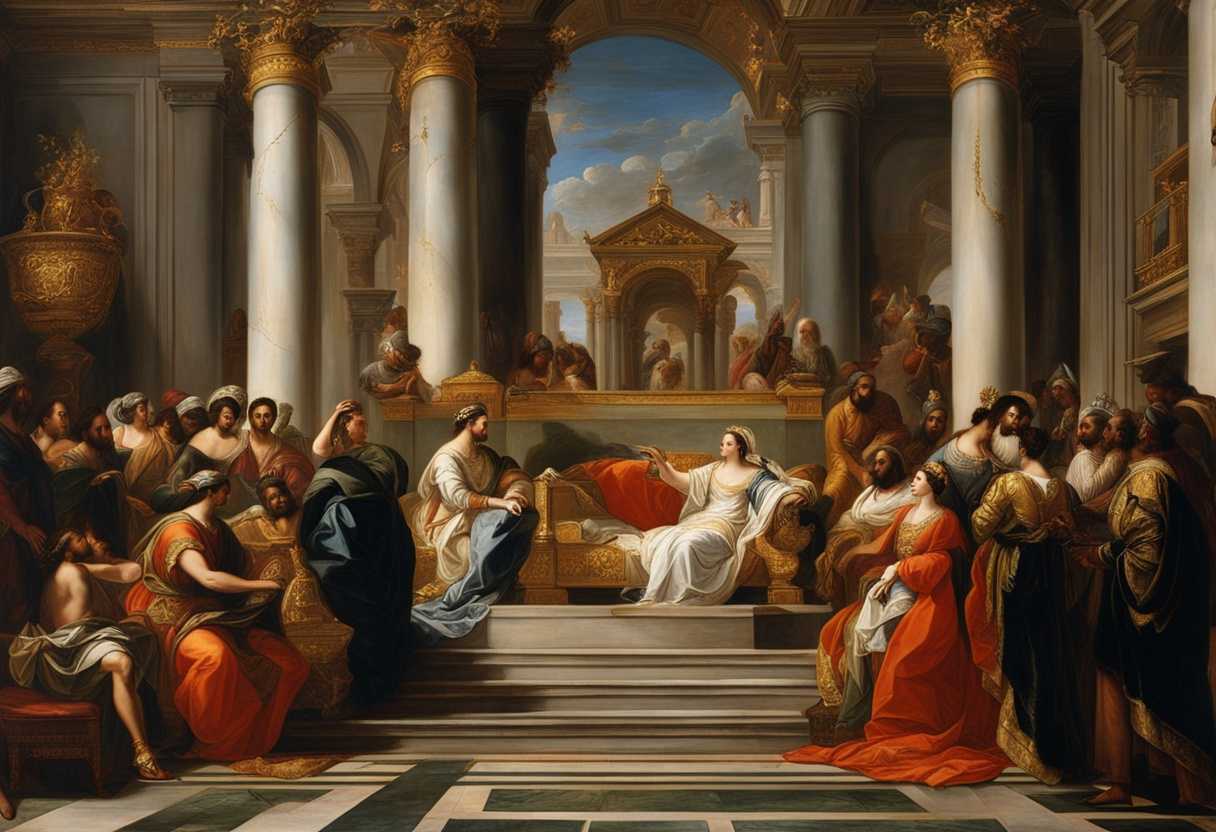
In 1 Kings chapter 10, we find the Queen of Sheba arriving in Jerusalem to test King Solomon with hard questions. The Queen of Sheba, known for her wisdom and wealth, had heard of Solomon’s great wisdom and wanted to see for herself if the rumors were true. She arrived in Jerusalem with a large entourage, including camels carrying spices, gold, and precious stones as gifts for the king.
The scene is set in the grand palace of King Solomon, a magnificent structure adorned with gold and precious stones. As the Queen of Sheba and her entourage are ushered into the throne room, they are met with opulence and splendor. King Solomon, known for his wisdom and wealth, is seated on his throne, surrounded by his courtiers and advisors. The air is filled with the scent of exotic spices brought by the Queen’s caravan, adding to the sense of luxury and extravagance in the room.
As the Queen of Sheba presents her questions to King Solomon, the atmosphere is charged with anticipation. The two engage in a battle of wits, with the Queen testing the limits of Solomon’s wisdom. The exchange is intense and thought-provoking, with both parties showcasing their intellect and knowledge. The meeting between these two legendary figures is a momentous occasion, with the outcome leaving a lasting impression on all who witness it.
What is 1 Kings 10:10 about?
The Queen of Sheba recognizes and praises the wisdom and wealth of King Solomon in this verse, attributing his success to the blessings of God. This moment is a powerful reminder of the importance of acknowledging the source of our blessings and giving credit where it is due. It highlights the wisdom and prosperity that can come from following the guidance and teachings of God.
Have you ever experienced a moment where someone’s success or wisdom left you in awe? It’s important to remember that all good things ultimately come from a higher power, and it’s essential to recognize and acknowledge that. We should also take the time to appreciate and honor the divine guidance in our own lives and the lives of others, just as the Queen of Sheba praised Solomon for his blessings. Cultivating a sense of gratitude and humility leads to even greater blessings and wisdom.
Understanding what 1 Kings 10:10 really means
To provide a structured and comprehensive commentary on 1 Kings 10:10, we will follow these steps:
- Contextual Background: Understand the historical and situational context of the verse.
- Detailed Analysis: Break down the verse into meaningful phrases and explain their significance.
- Cross-Referencing: Refer to other Biblical passages that add further meaning.
- Modern Relevance: Explain why this verse is relevant to contemporary readers.
- Anecdotal Illustration: Use a relatable story to illustrate the verse’s application.
- Conclusion: Summarize the key points and encourage reflection.
Contextual Background
The verse in question comes from the account of the Queen of Sheba’s visit to King Solomon. She brings a lavish gift to Solomon, intrigued by his wisdom and wealth. This event symbolizes the recognition of Solomon’s God-given wisdom by the wider world. It is important to understand the cultural and historical significance of such a visit and the exchange of gifts in ancient times. The Queen of Sheba gives Solomon “a hundred and twenty talents of gold, a very great quantity of spices, and precious stones.” Each of these items carries deep symbolic meaning. Gold represents wealth and honor, spices signify luxury and trade, and precious stones indicate beauty and rarity. Together, these gifts symbolize the utmost respect and admiration for Solomon’s wisdom and prosperity.
Cross-Referencing
This event is mirrored in Matthew 2:11 where the Magi bring gifts of gold, frankincense, and myrrh to Jesus. Both instances reflect the practice of offering valuable gifts to acknowledge divine wisdom and kingship. Additionally, in Proverbs 3:15, wisdom is described as more precious than rubies, emphasizing its unparalleled value.
Modern Relevance
Today, the verse serves as a reminder of the importance of recognizing and honoring wisdom. This passage invites us to value spiritual and intellectual riches in a world often focused on material wealth. It challenges us to consider what we hold precious and how we honor the gifts we receive from God and others. A small-town teacher, despite limited resources, educates and inspires generations of students. One day, a former student, now a successful entrepreneur, returns to express gratitude with a significant donation to the school. This gesture mirrors the Queen of Sheba’s visit to Solomon, illustrating how we can honor wisdom and generosity in our lives.
Conclusion
1 Kings 10:10 highlights the recognition and honoring of divine wisdom through valuable gifts. We can appreciate the deeper meaning of this verse by understanding the historical context, comparing it with other Biblical passages, and reflecting on its modern relevance. Let us remember to value wisdom above material wealth and honor those who impart it in our lives. Reflect on what you hold most precious and how you can show gratitude for the wisdom and guidance you receive.
How can I seek wisdom like the Queen of Sheba?
To seek wisdom like the Queen of Sheba, one must have a humble and inquisitive heart. The Queen of Sheba traveled a great distance to seek wisdom from King Solomon, demonstrating her recognition of his extraordinary wisdom and her desire to learn from it. To seek wisdom like her, one must be willing to recognize and respect wisdom in others, and be eager to learn from them.
Additionally, seeking wisdom like the Queen of Sheba requires a willingness to ask questions and engage in dialogue. The Queen of Sheba did not simply observe King Solomon from afar; she actively engaged in conversation with him, asking him difficult questions and engaging in deep discussions. To seek wisdom like her, one must be willing to engage in meaningful discussions with knowledgeable individuals, seeking answers to important questions and being open to new ideas and perspectives.
Finally, seeking wisdom like the Queen of Sheba involves a genuine thirst for knowledge and a commitment to continuous learning. The Queen of Sheba’s journey to seek wisdom reflects her understanding that wisdom is a valuable and precious commodity worth pursuing. To seek wisdom like her, one must be dedicated to lifelong learning, always seeking to expand one’s knowledge and understanding in order to grow and develop as a wise individual.
Application
Look at the story of the Queen of Sheba and Solomon in 1 Kings 10:10. Just as she recognized Solomon’s wisdom and blessings, let’s aim to build wisdom in our lives by dedicating time to God’s Word and prayer. Show others the light of Christ by how you act every day. Will you commit to seeking wisdom and spreading God’s love in everything you do?

Reverend Michael Johnson is an experienced Church Minister with a profound expertise in spirituality and guidance. With a serene presence and a compassionate heart, he has faithfully served his congregation for over 20 years, leading them on a spiritual journey towards inner peace and enlightenment. Reverend Johnson’s extensive knowledge of religious philosophies and profound understanding of human nature have made him a trusted confidant and mentor to many, as he seamlessly weaves his profound wisdom into life teachings. Reverend Johnson’s calming demeanor and empathetic nature continue to uplift and heal souls, nurturing a sense of unity and tranquility within his community.