
1 Kings 18:1-2 is about the prolonged drought in the land of Israel during the time of Elijah, which was a consequence of the people’s disobedience to God and their idolatry.
1 After many days the word of the Lord came to Elijah, in the third year, saying, “Go, show yourself to Ahab, and I will send rain upon the earth.”
2 So Elijah went to show himself to Ahab. Now the famine was severe in Samaria.
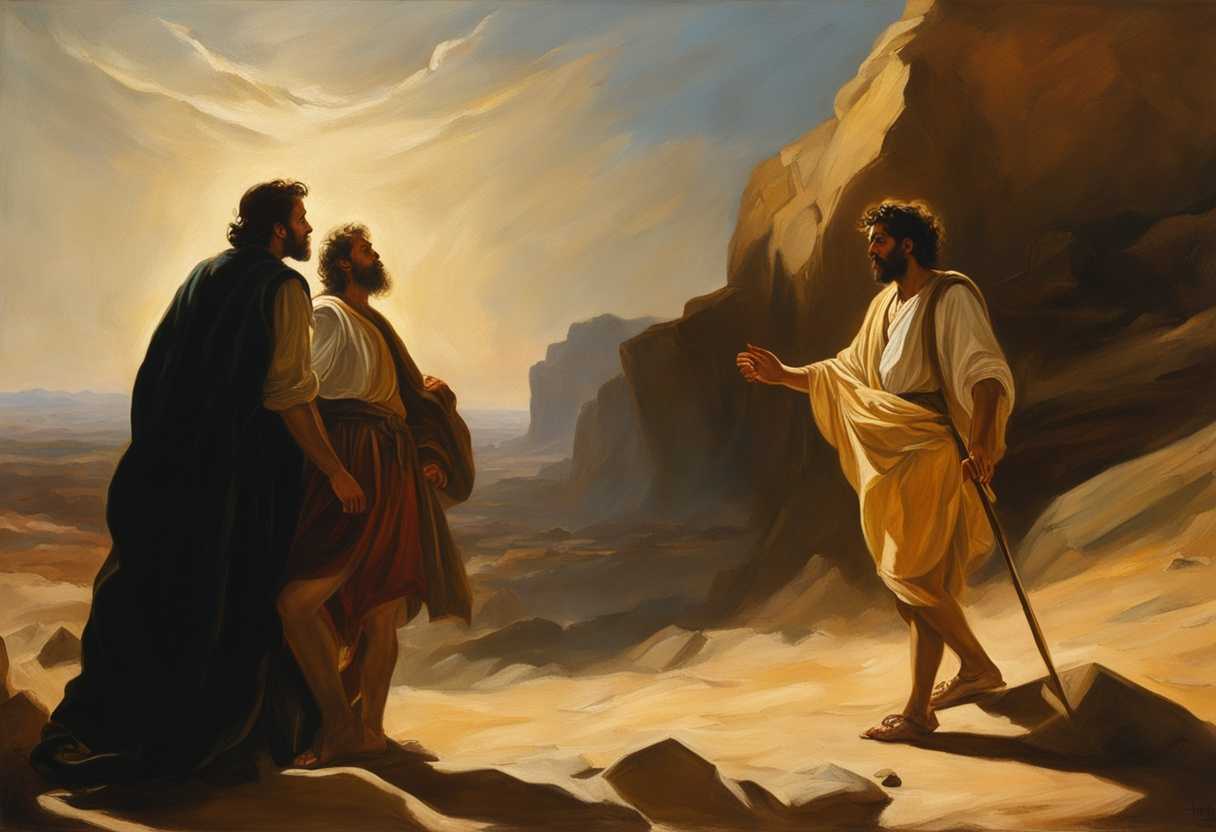
Setting the Scene for 1 Kings 18:1-2
In 1 Kings chapter 18, we find ourselves in the midst of a severe drought that has plagued the land of Israel for three years. The scene is set on Mount Carmel, a prominent mountain in the region overlooking the Mediterranean Sea. The land is dry and barren, with the scorching sun beating down on the parched earth. The people of Israel are suffering, their crops have withered, and their livestock are dying due to the lack of water.
In this dire situation, we find the prophet Elijah standing before King Ahab, who has been searching for Elijah throughout the land to blame him for the drought. Ahab, accompanied by his servants and soldiers, has finally come face to face with the prophet on Mount Carmel. Elijah, a bold and fearless servant of God, challenges Ahab to gather all the people of Israel and the prophets of Baal to Mount Carmel for a showdown to prove the power of the one true God.
As the sun sets over the horizon, casting a golden glow over the rugged terrain, the stage is set for a dramatic confrontation between Elijah, the prophet of God, and the prophets of Baal. The tension is palpable as the people of Israel gather to witness the epic showdown that is about to unfold on Mount Carmel.
What is 1 Kings 18:1-2 about?
God appoints Elijah to deliver an important message to King Ahab in this verse. Elijah is being called upon to confront the king and bring attention to the dire situation of a drought plaguing the land of Israel. This act of sending a messenger embodies the idea of holding those in positions of power accountable for their actions and decisions that can impact the welfare of the people. It also serves as a reminder of the responsibility that comes with having authority and how leaders should be mindful of the well-being of their subjects.
Imagine the bravery and conviction it must have taken for Elijah to approach King Ahab with such a message! This verse presents us with a powerful lesson about standing up for what is just and speaking truth to power, even when it may be uncomfortable or risky. It prompts us to reflect on our own roles in society and how we can advocate for positive change and justice in our communities. Let us be inspired by Elijah’s courage and sense of duty as we delve into this narrative, and let us strive to embody similar qualities in our own lives, especially when faced with challenging circumstances.
Understanding what 1 Kings 18:1-2 really means
The passage in 1 Kings 18:1-2 unfolds against the backdrop of a severe drought in Israel, a consequence of the people’s idolatry and disobedience to God. In this setting, we encounter Elijah, a prophet of God, who receives a divine instruction to confront King Ahab, the ruler seeking to hold him accountable for the prolonged drought. This directive marks the beginning of a pivotal confrontation between Elijah and the prophets of Baal, culminating in a powerful display of God’s sovereignty and faithfulness.
Drawing connections to related passages, such as James 5:17-18 and Deuteronomy 11:16-17, we see a thematic thread emphasizing the significance of prayer, obedience, and the consequences of turning away from God. Elijah’s role as a messenger of God, as seen in 1 Kings 17:1, underscores the gravity of Israel’s sin and the need for repentance.
The relevance of this narrative to contemporary audiences is profound. It challenges us to embody faith and obedience in the face of adversity, mirroring Elijah’s unwavering commitment to God’s commands. Moreover, it serves as a reminder of God’s ultimate sovereignty over nature and history, highlighting His responsiveness to the faithfulness of His people and His desire for repentance and restoration.
Consider a modern-day scenario where a courageous individual, inspired by their faith, stands against societal injustices, facing opposition and danger. Through their steadfastness and adherence to ethical principles, they catalyze positive change and eventual restoration within their community. This narrative echoes Elijah’s bravery and the eventual resolution of the drought, illustrating the transformative power of faith and obedience.
Key phrases within the passage, such as “The word of the Lord came to Elijah,” “Go and present yourself to Ahab,” and “I will send rain on the land,” encapsulate essential themes of divine guidance, obedience in adversity, and God’s promise of restoration. These phrases serve as poignant reminders of the importance of heeding God’s call, even when faced with challenges, and the assurance of His mercy and willingness to bring about renewal.
Reflecting on Elijah’s narrative prompts us to consider our own faith journeys and the impact of our obedience to God’s will. Just as Elijah’s obedience led to transformation in his time, our commitment to God’s guidance can pave the way for renewal and blessings in our lives and communities. May we draw strength and inspiration from Elijah’s story, embracing the call to faithfulness and obedience in our walk with God.
How can we discern God’s timing in our lives?
God’s timing in the story of 1 Kings 18:1-2 ultimately aligns with His perfect will and purposes. One way we can discern God’s timing in our lives is through prayer and seeking guidance from Him. We can better understand God’s will for our lives and recognize when He is calling us to take action or wait patiently by spending time in prayer, reading the Bible, and seeking wise counsel from fellow believers.
Another aspect of discerning God’s timing is having faith and trust in His plans. Even when things may seem unclear or difficult, we can trust that God has a perfect timing for everything in our lives. We can walk in faith and obedience by surrendering our own desires and plans to Him, knowing that He is in control and working all things together for our good. Having a close relationship with God and seeking His will above our own ultimately helps us discern God’s timing. When we align our desires and actions with God’s perfect timing, we can experience His blessings and provisions in ways we could never imagine. Trusting in His timing may require patience and faith, but in the end, we can rest assured that His plans are the best for us.
Application
In the fast-paced world we live in, time is of the essence. When divine opportunities knock on your door, seize them swiftly. Just as in the hustle of your daily responsibilities, respond promptly to God’s guidance without hesitation. Let faith be your compass, guiding you through uncertainty. Will you be like Elijah, acting decisively and faithfully in your journey today?

Reverend Michael Johnson is an experienced Church Minister with a profound expertise in spirituality and guidance. With a serene presence and a compassionate heart, he has faithfully served his congregation for over 20 years, leading them on a spiritual journey towards inner peace and enlightenment. Reverend Johnson’s extensive knowledge of religious philosophies and profound understanding of human nature have made him a trusted confidant and mentor to many, as he seamlessly weaves his profound wisdom into life teachings. Reverend Johnson’s calming demeanor and empathetic nature continue to uplift and heal souls, nurturing a sense of unity and tranquility within his community.