
1 Kings 19:5-7 is about the prophet Elijah feeling overwhelmed and despondent, seeking refuge under a broom tree, where an angel provides him with food and water, demonstrating God’s care and sustenance for His faithful servants in times of despair.
5 Then he lay down under the broom tree and fell asleep.
6 And he looked, and behold, there at his head was a cake baked on hot stones and a jar of water. And he ate and drank and lay down again.
7 And the angel of the Lord came again a second time and touched him and said, “Arise and eat, for the journey is too great for you.”
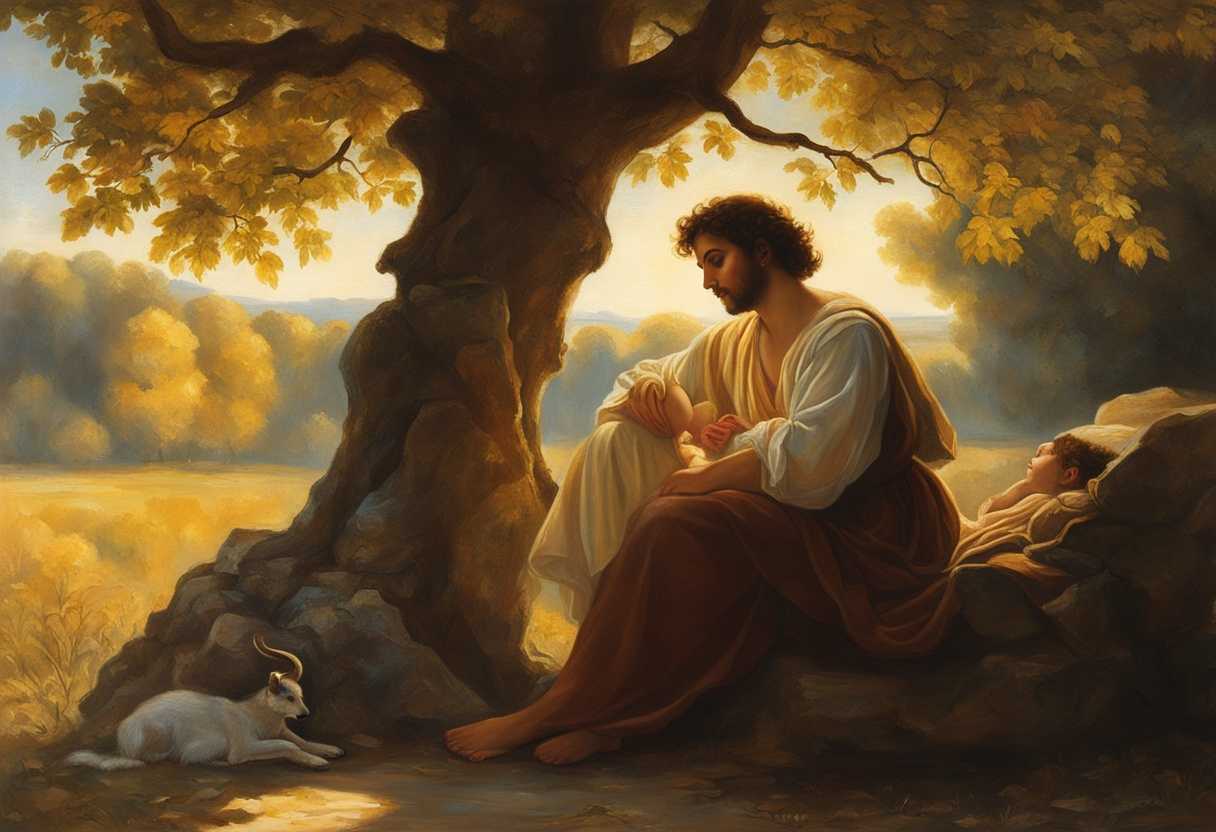
Setting the Scene for 1 Kings 19:5-7
In 1 Kings chapter 19, we find the prophet Elijah in a moment of deep despair and exhaustion. The scene is set on Mount Horeb, also known as Mount Sinai, a place of great significance in biblical history. Elijah, a powerful and zealous prophet of the Lord, had just experienced a great victory over the prophets of Baal on Mount Carmel. However, Queen Jezebel’s threat on his life had sent him fleeing into the wilderness.
As Elijah sits under a broom tree, weary and disheartened, an angel of the Lord appears to him, providing him with food and water. The angel encourages Elijah to eat and drink, for the journey ahead is long. Despite his weariness, Elijah finds the strength to continue on his journey to Mount Horeb, where he seeks refuge and solace in a cave. It is in this moment of vulnerability and solitude that Elijah encounters the presence of the Lord in a powerful way, as God speaks to him in a gentle whisper, reassuring him of His presence and purpose for Elijah’s life.
Surrounded by the rugged beauty of the mountain, with the sound of the wind and the whisper of God’s voice echoing in the cave, Elijah finds comfort and renewal in the midst of his despair. The scene captures a profound moment of divine intervention and personal encounter, reminding us of God’s faithfulness and provision even in our darkest moments.
What is 1 Kings 19:5-7 about?
My dear reader, have you ever felt so weary and disheartened that you could barely take another step forward? Just like Elijah in this verse, perhaps you have faced challenges that have drained you both physically and emotionally. It is in these moments of exhaustion and despair that we may question if we have the strength to carry on.
But do you know what is truly remarkable? Despite Elijah’s weariness, God does not abandon him. Instead, God provides him with sustenance and strength to continue on his journey. This verse serves as a powerful reminder that even in our weakest moments, God’s grace is there to lift us up and renew our spirits.
So, my dear friend, let us take solace in the fact that we are never alone in our struggles. God will sustain us through our trials and lead us to a place of renewal and strength, just as He sustained Elijah. His unwavering love can be trusted, and we can find comfort in the knowledge that He is always there to provide for us, even in our darkest moments.
Understanding what 1 Kings 19:5-7 really means
In the narrative of Elijah, a prophet facing a profound spiritual and emotional crisis following a confrontation with the prophets of Baal, we encounter a pivotal moment in 1 Kings 19:5-7. Fleeing from the threats of Queen Jezebel, Elijah finds himself in the wilderness, overwhelmed by despair and pleading for his life to end. It is in this vulnerable state that we witness a profound display of divine intervention and care as an angel touches him, symbolizing God’s presence and provision in times of deepest need.
The command to “Get up and eat” issued by the angel to Elijah carries a poignant message about the significance of physical sustenance and self-care, even amidst the darkest moments of despair. This directive underscores the importance of attending to our basic needs, recognizing that nourishing our bodies is essential for sustaining us through life’s trials. Moreover, the angel’s acknowledgment that “the journey is too much for you” serves as a poignant reminder of our human limitations and the necessity of relying on divine assistance to navigate the challenges we face.
Drawing parallels with other biblical passages, such as Psalm 23:1-3 and Matthew 11:28, we find a consistent theme of God’s provision of rest and sustenance for His weary children. These verses echo the message of finding solace and rejuvenation in the presence of the Lord, mirroring the care and support extended to Elijah in his moment of desperation. In a world where many grapple with burnout, stress, and feelings of hopelessness, these passages offer a timeless reminder of God’s unwavering presence and provision in our lives.
Translating the lessons from Elijah’s encounter with the angel into contemporary relevance, we are prompted to reflect on the importance of self-care and seeking support during times of distress. Just as the angel ministered to Elijah’s needs, we are encouraged to recognize our vulnerabilities and accept help from others, knowing that God often works through human hands to provide comfort and sustenance. In a modern context, acts of kindness and support from friends and loved ones can serve as tangible manifestations of God’s care, offering hope and strength to those facing overwhelming challenges.
In conclusion, the narrative of Elijah in 1 Kings 19:5-7 serves as a profound reminder of the restorative power of rest, self-care, and divine support. Through this passage, we are reassured of God’s attentiveness to our struggles and His provision for our needs, even in the midst of our darkest moments. By embracing our limitations, seeking help when needed, and trusting in God’s sustaining grace, we can find the resilience to persevere on our journey, just as Elijah found strength to continue his mission.
What can we learn from Elijah’s experience with despair?
From Elijah’s experience with despair, we can learn that even the most faithful and strong individuals may face moments of intense sadness and hopelessness. This can show us that it is important to acknowledge these feelings and seek help or comfort from others when needed. Elijah’s experience also reminds us that physical and emotional self-care are crucial during times of despair. Taking care of our basic needs, such as eating, resting, and seeking solitude for reflection, can help restore a sense of balance and strength during difficult times. Finally, Elijah’s encounter with despair teaches us that it is okay to express our emotions and vulnerabilities to God. We can find solace and guidance in His presence by honestly laying our burdens before Him.
Application
Reflect on Elijah’s exhaustion in 1 Kings 19:5-7. When you feel worn out and ready to quit, remember that just like God provided for Elijah, He will provide for you too. Trust in His strength to carry you through tough times. Will you lean on His support when things get tough?

Reverend Michael Johnson is an experienced Church Minister with a profound expertise in spirituality and guidance. With a serene presence and a compassionate heart, he has faithfully served his congregation for over 20 years, leading them on a spiritual journey towards inner peace and enlightenment. Reverend Johnson’s extensive knowledge of religious philosophies and profound understanding of human nature have made him a trusted confidant and mentor to many, as he seamlessly weaves his profound wisdom into life teachings. Reverend Johnson’s calming demeanor and empathetic nature continue to uplift and heal souls, nurturing a sense of unity and tranquility within his community.