
1 Kings 22:41-50 is about the reign of King Jehoshaphat of Judah, a righteous king who made alliances with the wicked King Ahab of Israel, illustrating the consequences of forming partnerships with those who do not follow God’s ways.
41 Jehoshaphat the son of Asa began to reign over Judah in the fourth year of Ahab king of Israel.
42 Jehoshaphat was thirty-five years old when he began to reign, and he reigned twenty-five years in Jerusalem. His mother’s name was Azubah the daughter of Shilhi.
43 He walked in all the way of Asa his father. He did not turn aside from it, doing what was right in the sight of the Lord. Yet the high places were not taken away, and the people still sacrificed and made offerings on the high places.
44 And Jehoshaphat made peace with the king of Israel.
45 Now the rest of the acts of Jehoshaphat, and his might that he showed, and how he warred, are they not written in the Book of the Chronicles of the Kings of Judah?
46 He put away the male cult prostitutes out of the land and removed all the idols that his fathers had made.
47 There was not a king like him, who turned to the Lord with all his heart and with all his soul and with all his might, according to all the Law of Moses, nor did any like him arise after him.
48 Jehoshaphat made ships of Tarshish to go to Ophir for gold, but they did not go, for the ships were wrecked at Ezion-geber.
49 Then Ahaziah the son of Ahab said to Jehoshaphat, “Let my servants go with your servants in the ships,” but Jehoshaphat was not willing.
50 Jehoshaphat slept with his fathers and was buried with his fathers in the city of David his father, and Jehoram his son reigned in his place.
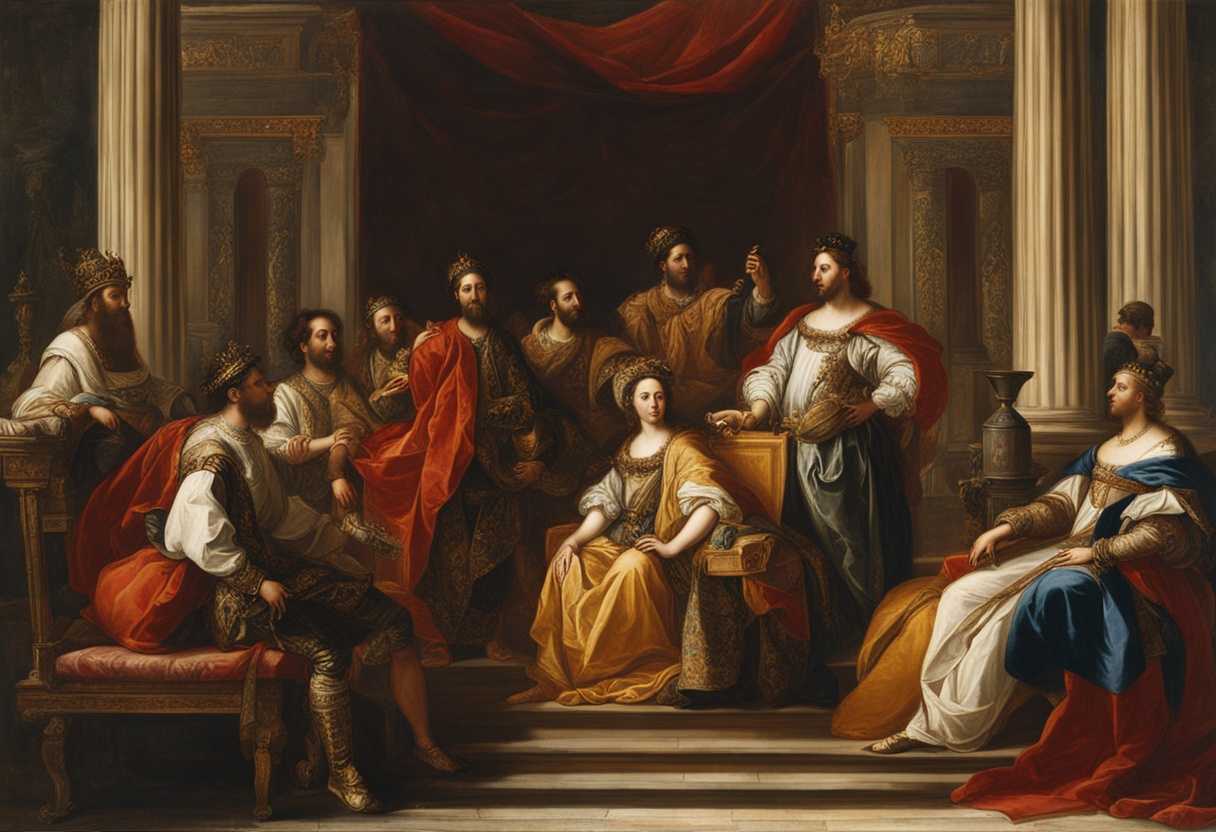
Setting the Scene for 1 Kings 22:41-50
In 1 Kings 22:41-50, we find ourselves in the grand palace of King Ahab of Israel. The scene is set in the opulent throne room, adorned with rich tapestries and golden ornaments. King Ahab, known for his wicked ways, is seated on his throne, surrounded by his courtiers and advisors. Among them is Jehoshaphat, the righteous king of Judah, who has come to visit Ahab.
Ahab and Jehoshaphat are discussing the possibility of going to war against Ramoth Gilead. Ahab’s prophets are urging him to go to battle, promising him victory, while Jehoshaphat wisely suggests seeking the counsel of a prophet of the Lord. Micaiah, a true prophet of God, is summoned to give his advice, despite Ahab’s disdain for him.
The tension in the room is palpable as Micaiah delivers a prophecy of defeat and death for Ahab if he goes to war. Ahab, enraged by the prophecy, orders Micaiah to be imprisoned. However, the events unfold as Micaiah foretold, with Ahab meeting his demise in battle. This scene serves as a powerful reminder of the consequences of ignoring the word of the Lord and the importance of seeking divine guidance in all decisions.
What is 1 Kings 22:41-50 about?
This verse illustrates the consequences of making unwise alliances and choices in life. King Jehoshaphat’s decision to ally with King Ahab, who was known for his unfaithfulness to God, ultimately leads to displeasing God. It serves as a powerful reminder of the importance of staying true to one’s beliefs and values, even when faced with pressure to compromise or take shortcuts.
Think about times in your own life when you may have been tempted to make decisions that went against your principles. What were the outcomes of those choices? Were they aligned with your beliefs, or did they lead to discord and disappointment? Reflecting on this verse can help us be more intentional and discerning in the alliances we form and the paths we choose to take. Let it guide us to make choices that honor our convictions and ultimately lead us closer to God.
Understanding what 1 Kings 22:41-50 really means
In 1 Kings 22:41-50, we delve into the reign of Jehoshaphat, the king of Judah, during a pivotal period in biblical history. Jehoshaphat is portrayed as a ruler who “did what was right in the eyes of the Lord,” emphasizing his commitment to righteousness and obedience to God amidst the tumultuous political landscape of his time. Despite his efforts, the passage also notes that “the high places, however, were not removed,” highlighting the incomplete nature of Jehoshaphat’s reforms and the persistent presence of idolatry in the land. This juxtaposition of righteousness and lingering sin sets the stage for a deeper exploration of faith and obedience.
Jehoshaphat’s alliance with Ahab, the king of Israel, sheds light on the complexities of political relationships and their spiritual implications. While he was at peace with Ahab, this partnership also exposed Judah to the influence of idolatry and ungodly practices. The delicate balance between political alliances and spiritual fidelity serves as a cautionary tale for believers navigating relationships in a secular world.
Drawing parallels to our contemporary lives, Jehoshaphat’s story prompts us to reflect on our own pursuit of righteousness and obedience to God. Just as Jehoshaphat struggled with incomplete obedience, we too face the challenge of overcoming persistent sin or idolatry in our modern contexts. The passage urges us to examine the areas in our lives where we may fall short of God’s commands and to strive for greater devotion and purity in our walk with Him.
In 2 Chronicles 17-20, a more detailed account of Jehoshaphat’s reign unfolds, providing insights into his reforms and military campaigns. This narrative deepens our understanding of Jehoshaphat’s character and the complexities of leadership in a society rife with moral challenges. Additionally, Deuteronomy 12:2-3 underscores God’s command to eradicate high places, offering a backdrop for comprehending the significance of Jehoshaphat’s incomplete reforms.
Proverbs 3:5-6 encourages us to trust in the Lord and lean not on our own understanding, echoing Jehoshaphat’s reliance on God amidst political intrigue and moral dilemmas. The interplay of faith, obedience, and the complexities of human relationships resonates with us today, urging us to seek God’s guidance in all aspects of our lives. As we grapple with the tension between righteousness and sin, may we find solace in the grace of God and the example of Jehoshaphat’s imperfect yet earnest pursuit of God’s will.
Are we seeking God’s guidance in all decisions?
The verse in 1 Kings 22:41-50 serves as a reminder for us to seek God’s guidance in all decisions we make. When we allow God to direct our steps, we are aligning ourselves with His will and purpose for our lives. We can make decisions that honor God and lead to blessings and success by seeking His guidance.
God’s guidance should be sought not just in major decisions, but in all areas of our lives, big or small. When we acknowledge God in all our ways, He promises to direct our paths. This means that we can trust Him to lead us on the right path, guiding us away from potential pitfalls and towards His best for us.
When we seek God’s guidance in all decisions, we demonstrate our trust in Him and our desire to live according to His will. This verse reminds us that God is our ultimate source of wisdom and direction, and when we rely on Him, we can walk in confidence knowing that He is leading us every step of the way.
Application
In our daily hustle, let’s remember to tune into our spiritual GPS just like King Jehoshaphat did. Put God at the steering wheel of your life and watch the blessings flow. Are you ready to steer your life towards God’s destined path and let His guidance lead the way?

Reverend Michael Johnson is an experienced Church Minister with a profound expertise in spirituality and guidance. With a serene presence and a compassionate heart, he has faithfully served his congregation for over 20 years, leading them on a spiritual journey towards inner peace and enlightenment. Reverend Johnson’s extensive knowledge of religious philosophies and profound understanding of human nature have made him a trusted confidant and mentor to many, as he seamlessly weaves his profound wisdom into life teachings. Reverend Johnson’s calming demeanor and empathetic nature continue to uplift and heal souls, nurturing a sense of unity and tranquility within his community.