
1 Samuel 14:24-30 is about King Saul’s rash decision to place a curse on anyone who ate food before evening, which leads to potential disaster as his son Jonathan unknowingly violates the oath and is nearly put to death for breaking the curse.
24 And the men of Israel had been hard pressed that day, so Saul had laid an oath on the people, saying, “Cursed be the man who eats food until it is evening and I am avenged on my enemies.” So none of the people had tasted food.
25 Now when all the people came to the forest, behold, there was honey on the ground.
26 And when the people entered the forest, behold, the honey was dropping, but no one put his hand to his mouth, for the people feared the oath.
27 But Jonathan had not heard his father charge the people with the oath, so he put out the tip of the staff that was in his hand and dipped it in the honeycomb and put his hand to his mouth, and his eyes became bright.
28 Then one of the people said, “Your father strictly charged the people with an oath, saying, ‘Cursed be the man who eats food this day.’” And the people were faint.
29 Then Jonathan said, “My father has troubled the land. See how my eyes have become bright because I tasted a little of this honey.
30 How much more, if the people had eaten freely today of the spoil of their enemies that they found? For now the defeat among the Philistines has not been great.”
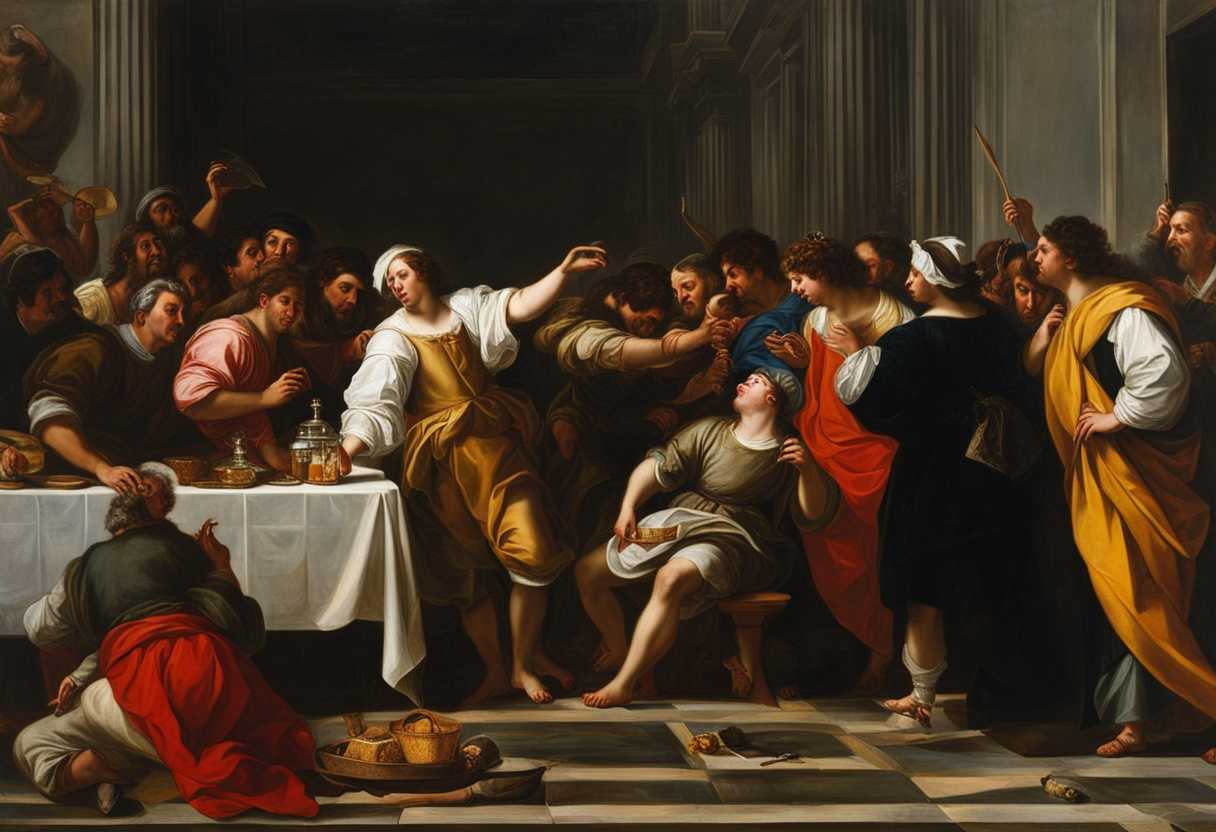
Setting the Scene for 1 Samuel 14:24-30
In 1 Samuel 14:24-30, we find King Saul and his army in the midst of a battle against the Philistines. The scene is set on the outskirts of a dense forest in Geba, a town in the territory of Benjamin. The tension is palpable as the Israelites are vastly outnumbered by their enemies, and fear and uncertainty hang heavy in the air.
Jonathan, Saul’s son, had just initiated a daring attack on the Philistine garrison, resulting in confusion and panic among the enemy ranks. As the battle rages on, Saul, eager to secure victory, declares a rash oath, prohibiting his soldiers from eating until evening to ensure they remain focused on the battle. However, Jonathan, unaware of his father’s decree, eats a bit of honey he finds in the forest, which violates Saul’s command.
The atmosphere is charged with suspense as Saul discovers Jonathan’s transgression and is determined to uphold his oath, even at the cost of his son’s life. The unfolding drama between father and son against the backdrop of the battlefield highlights themes of loyalty, obedience, and the consequences of impulsive decisions.
What is 1 Samuel 14:24-30 about?
Saul’s impulsive decision-making in this verse shows its consequences. Saul makes a rash oath under pressure, setting a difficult condition that no one in his army should eat until evening. Jonathan, unaware of this oath, unknowingly breaks it by eating honey, leading to distress among the soldiers due to Saul’s unreasonable decree. However, despite this setback, Jonathan’s courage and bold actions ultimately lead to a victory for the army. This verse highlights the importance of thoughtful and wise leadership, as well as the impact of impulsive decisions on the outcome of events.
Reflecting on this verse, we can ponder the significance of clear communication, careful consideration of one’s words, and the implications of our actions on others. How often do we make hasty decisions without fully understanding the consequences they may bring? How can we strive to be more deliberate and intentional in our choices, especially when we are in positions of leadership or influence? We should learn from Saul’s mistake and Jonathan’s bravery, seeking to lead with wisdom and foresight in all our endeavors.
Understanding what 1 Samuel 14:24-30 really means
In the midst of a fierce battle between the Israelites and the Philistines, King Saul, driven by his zeal for victory, imposes a strict curse on anyone who dares to eat before evening. This impulsive decision reflects Saul’s desperate attempt to control the outcome of the battle through a rash vow, showcasing the dangers of unchecked leadership. Jonathan, Saul’s son, unknowingly violates his father’s command by eating honey for refreshment, setting the stage for a tense confrontation when Saul uncovers the breach of his oath.
The phrase “Cursed be the man who eats food before evening” encapsulates Saul’s misguided attempt to manipulate the situation, revealing the consequences of impulsive and authoritarian leadership. Jonathan’s ignorance of his father’s charge underscores the importance of clear communication and the unintended repercussions of hasty decisions. Jonathan’s poignant realization that “My father has troubled the land” sheds light on the negative impact of Saul’s ill-conceived command, highlighting the suffering brought upon the people by misguided leadership.
Drawing parallels from other biblical passages, such as Judges 11:30-40 and Matthew 12:1-8, we see recurring themes of the perils of rash vows and the importance of mercy over rigid adherence to rules. Proverbs 19:2 further emphasizes the need for thoughtful decision-making, cautioning against acting impulsively without proper knowledge or consideration.
This narrative serves as a timeless cautionary tale, urging individuals to reflect on the consequences of impulsive decisions that affect others. It underscores the significance of clear communication and the responsibility of leaders to prioritize the well-being of those under their care. In contemporary settings, this lesson resonates in various spheres, from workplace dynamics to family relationships and community governance.
Consider a scenario where a manager enforces a strict no-break policy during a crucial project, aiming to boost productivity but inadvertently causing exhaustion and inefficiency among team members. A parallel can be drawn to Saul and Jonathan’s story, illustrating how well-intentioned yet poorly communicated directives can lead to discord and unintended consequences.
In conclusion, this passage imparts valuable lessons on the importance of wisdom, communication, and compassion in leadership. It prompts introspection on how our decisions impact those around us and encourages us to lead with empathy and understanding. Let us strive to make choices that uplift and support others, ensuring that our actions serve the greater good rather than burdening those we lead.
What does our impulsive actions reveal about our faith?
Our impulsive actions can reveal the strength of our faith in God. Jonathan’s impulsive decision to taste the honey in the story in 1 Samuel 14:24-30 demonstrated his belief that God was with him and would grant him victory over the Philistines. Jonathan’s boldness and courage in taking action without seeking permission from his father, King Saul, showcased his trust in God to guide and protect him.
Our impulsive actions can also showcase our willingness to step out in faith and trust in God’s plan. Jonathan’s decision to act quickly, without overthinking or hesitation, revealed his readiness to follow God’s leading and take risks for the greater good. It is a reminder that sometimes faith requires us to step out of our comfort zones and act boldly in obedience to God’s direction. Our belief in God’s power and provision can ultimately be demonstrated by our impulsive actions. Jonathan’s swift decision to taste the honey symbolized his confidence in God’s ability to provide for him and ensure his success in the face of daunting circumstances. It serves as a powerful example of how our impulsive actions can reflect our unwavering faith in God’s faithfulness and sovereignty.
Application
Embrace the courage of Jonathan in 1 Samuel 14:24-30! Dare to trust in the power of God, just as he did. Let his bravery ignite your own faith in the face of challenges. Take bold steps and believe in the miraculous works that can happen through you! Will you rise to the challenge and act boldly in your faith today?

Reverend Michael Johnson is an experienced Church Minister with a profound expertise in spirituality and guidance. With a serene presence and a compassionate heart, he has faithfully served his congregation for over 20 years, leading them on a spiritual journey towards inner peace and enlightenment. Reverend Johnson’s extensive knowledge of religious philosophies and profound understanding of human nature have made him a trusted confidant and mentor to many, as he seamlessly weaves his profound wisdom into life teachings. Reverend Johnson’s calming demeanor and empathetic nature continue to uplift and heal souls, nurturing a sense of unity and tranquility within his community.