
1 Samuel 14:31-35 is about the consequences of breaking an oath hastily made to God, as Saul’s vow led to the unnecessary burden the people faced with a rash oath that hindered their ability to properly engage in battle on that day.
31 They struck down the Philistines that day from Michmash to Aijalon. And the people were very faint.
32 The people pounced on the spoil and took sheep and oxen and calves and slaughtered them on the ground. And the people ate them with the blood.
33 Then they told Saul, “Behold, the people are sinning against the Lord by eating with the blood.” And he said, “You have dealt treacherously; roll a great stone to me here.”
34 And Saul said, “Disperse yourselves among the people and say to them, ‘Let every man bring his ox or his sheep and slaughter them here and eat, and do not sin against the Lord by eating with the blood.’” So every one of the people brought his ox with him that night and they slaughtered them there.
35 And Saul built an altar to the Lord; it was the first altar that he built to the Lord.
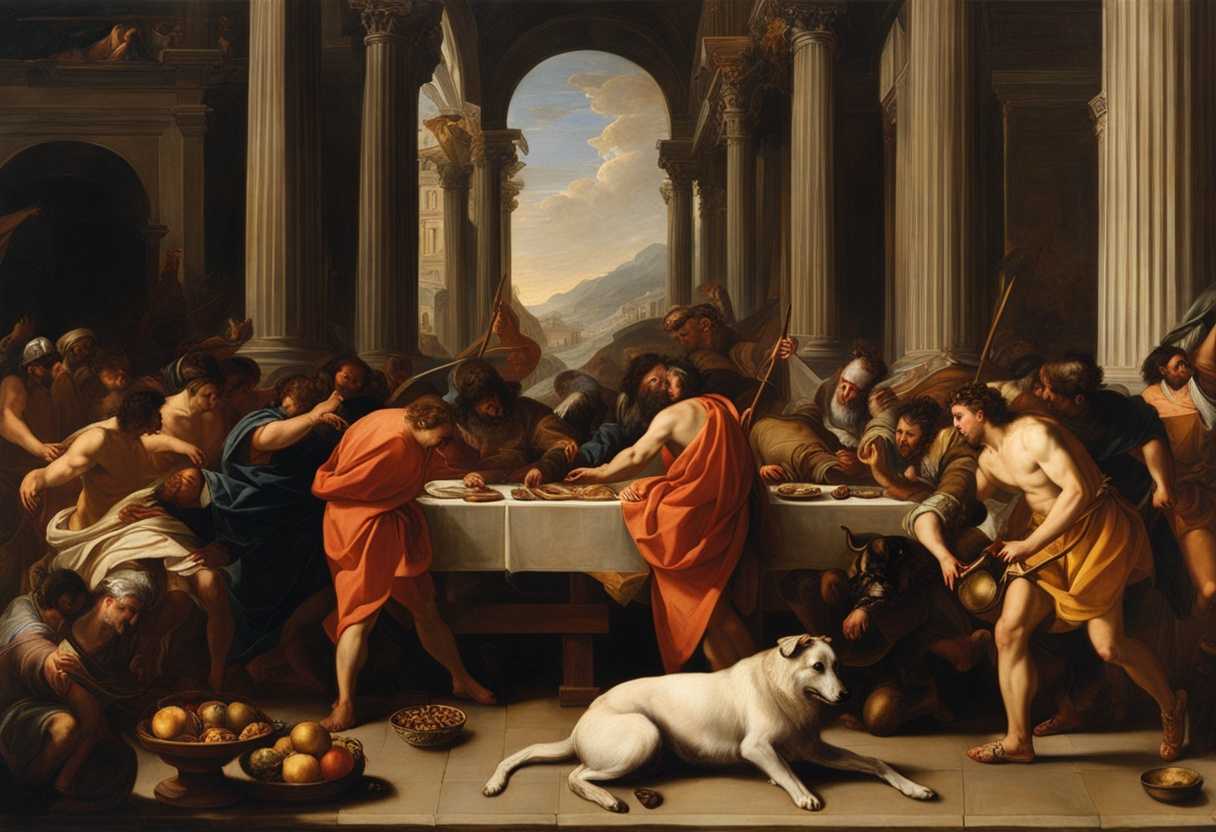
Setting the Scene for 1 Samuel 14:31-35
In 1 Samuel 14:31-35, we find King Saul and his army in the midst of a battle with the Philistines. The scene is chaotic, with the sound of clashing swords and the cries of soldiers filling the air. The Israelites are greatly outnumbered, and fear and uncertainty hang heavy over them.
Amidst the chaos, Jonathan, Saul’s son, had unknowingly broken an oath his father had made, resulting in a curse that caused the men to be faint and weary. Saul, in his desperation to secure victory, had declared a fast for the day, prohibiting the soldiers from eating until evening. However, Jonathan, who had not heard his father’s oath, ate a bit of honey he found in the forest, which refreshed him.
As the day wore on, the soldiers, weakened by hunger, began to eat the spoils of war, consuming the animals they had taken from the Philistines without properly draining the blood. Saul, in his zeal for victory and adherence to the law, ordered a large stone to be brought, and he commanded the soldiers to slaughter the animals on it, ensuring that the blood was drained according to the law of Moses. The scene is one of tension and urgency as Saul seeks to rectify the situation and secure God’s favor in the midst of battle.
What is 1 Samuel 14:31-35 about?
The Israelites engage in behavior that goes against God’s teachings by consuming meat with blood in this verse. This act is specifically forbidden in the law given to the Israelites, as consuming blood was believed to be consuming the life force of the animal. This disobedience highlights the struggle of the Israelites to follow God’s commands consistently and the importance of adhering to the laws set forth by God.
On the other hand, we see Saul taking steps to properly offer sacrifices to God by building an altar. This demonstrates Saul’s desire to honor God through obedience and correct worship practices. Saul shows a commitment to seeking forgiveness and reconciliation with God for any transgressions or mistakes that may have occurred by building the altar. Reflecting on this verse reminds us of the significance of following God’s laws diligently and the importance of seeking repentance and reconciliation when we fall short. It prompts us to examine our own actions and consider whether we are living in alignment with God’s teachings. The contrast between the disobedient Israelites and Saul’s act of building an altar serves as a powerful reminder of the consequences of sin and the grace that comes from seeking forgiveness and making amends.
Understanding what 1 Samuel 14:31-35 really means
In the midst of a fierce battle between the Israelites and the Philistines, a significant victory is achieved, yet the soldiers find themselves bound by King Saul’s strict oath, prohibiting them from eating until evening. The extent of their triumph is emphasized as they strike down the Philistines from Michmash to Aijalon, showcasing their relentless pursuit and unwavering effort. However, the men of Israel are not only physically exhausted but also distressed due to the imposed fast, highlighting the toll it takes on their bodies and spirits.
Desperation sets in as the soldiers, driven by hunger, pounce on the plunder, slaughtering sheep, cattle, and calves on the ground, consuming them with the blood—a clear violation of dietary laws born out of their dire circumstances. Meanwhile, Saul, in a moment of religious significance, builds an altar to the Lord, marking the first time he engages in such an act, perhaps seeking divine favor or forgiveness for the transgressions committed in the heat of battle. This juxtaposition of actions underscores the complexities of human nature and the tension between obedience and necessity.
Drawing parallels from related biblical passages, such as Leviticus 17:10-14, which prohibits consuming blood, and Matthew 12:1-8, where Jesus prioritizes mercy over legalistic interpretations of the Sabbath law, we are reminded of the sacredness of life and the compassionate nature of true adherence to God’s commands. The narrative serves as a cautionary tale against rigid legalism, urging leaders to consider the well-being of their followers and the repercussions of their decrees. It prompts us to reflect on the spirit of the law rather than its mere observance, emphasizing the importance of understanding the underlying principles.
In a contemporary context, one can envision a scenario where a company imposes stringent deadlines on its employees, forbidding breaks until a project is completed. The hunger and exhaustion experienced by the workers may lead to errors or shortcuts, echoing the soldiers’ plight and the unintended consequences of their actions. This analogy underscores the timeless relevance of the passage, urging us to balance adherence to rules with compassion for human needs and circumstances.
Ultimately, this passage invites readers to contemplate the delicate balance between obedience and practicality, urging us to embody compassionate leadership and a deeper comprehension of religious precepts. By delving into the broader context and exploring related scriptures, we can glean a more profound understanding of the message conveyed and its implications for our lives today.
How can we seek God’s guidance before making decisions?
We can seek God’s guidance before making decisions by first approaching Him in prayer and seeking His wisdom. Through prayer, we can express our desires, concerns, and uncertainties to God, asking for His direction and clarity. By humbling ourselves before Him and acknowledging His sovereignty, we invite Him to intervene in our decision-making process.
Additionally, we can seek God’s guidance by consulting His Word, the Bible, which serves as a source of divine wisdom and guidance. The principles and teachings found in the Bible can provide us with insight and direction for the decisions we face. We can make decisions that honor God and are in line with His will by aligning our choices with biblical principles and seeking to glorify Him in all that we do.
Furthermore, seeking guidance from mature and godly mentors or advisors can also be beneficial in discerning God’s will. We can gain valuable perspectives and insights that can help us make informed decisions that are in accordance with God’s plan for our lives by seeking counsel from those who are grounded in their faith and have a deep understanding of Scripture.
Application
Embrace Jonathan’s courage from 1 Samuel 14:31-35, and let it ignite your faith. Just as he took bold steps forward, face uncertainties with bravery and believe in God’s lead. Allow these words to propel you towards unwavering trust in God’s power. Will you dare to step into the unknown, firmly placing your faith in God’s hands?

Reverend Michael Johnson is an experienced Church Minister with a profound expertise in spirituality and guidance. With a serene presence and a compassionate heart, he has faithfully served his congregation for over 20 years, leading them on a spiritual journey towards inner peace and enlightenment. Reverend Johnson’s extensive knowledge of religious philosophies and profound understanding of human nature have made him a trusted confidant and mentor to many, as he seamlessly weaves his profound wisdom into life teachings. Reverend Johnson’s calming demeanor and empathetic nature continue to uplift and heal souls, nurturing a sense of unity and tranquility within his community.