
1 Samuel 16:19-21 is about David being summoned to play the lyre for King Saul in an attempt to soothe his troubled spirit, illustrating the power of music to bring peace and comfort in times of distress.
19 Therefore Saul sent messengers to Jesse and said, “Send me David your son, who is with the sheep.”
20 And Jesse took a donkey laden with bread and a skin of wine and a young goat and sent them by David his son to Saul.
21 And David came to Saul and entered his service. And Saul loved him greatly, and he became his armor-bearer.
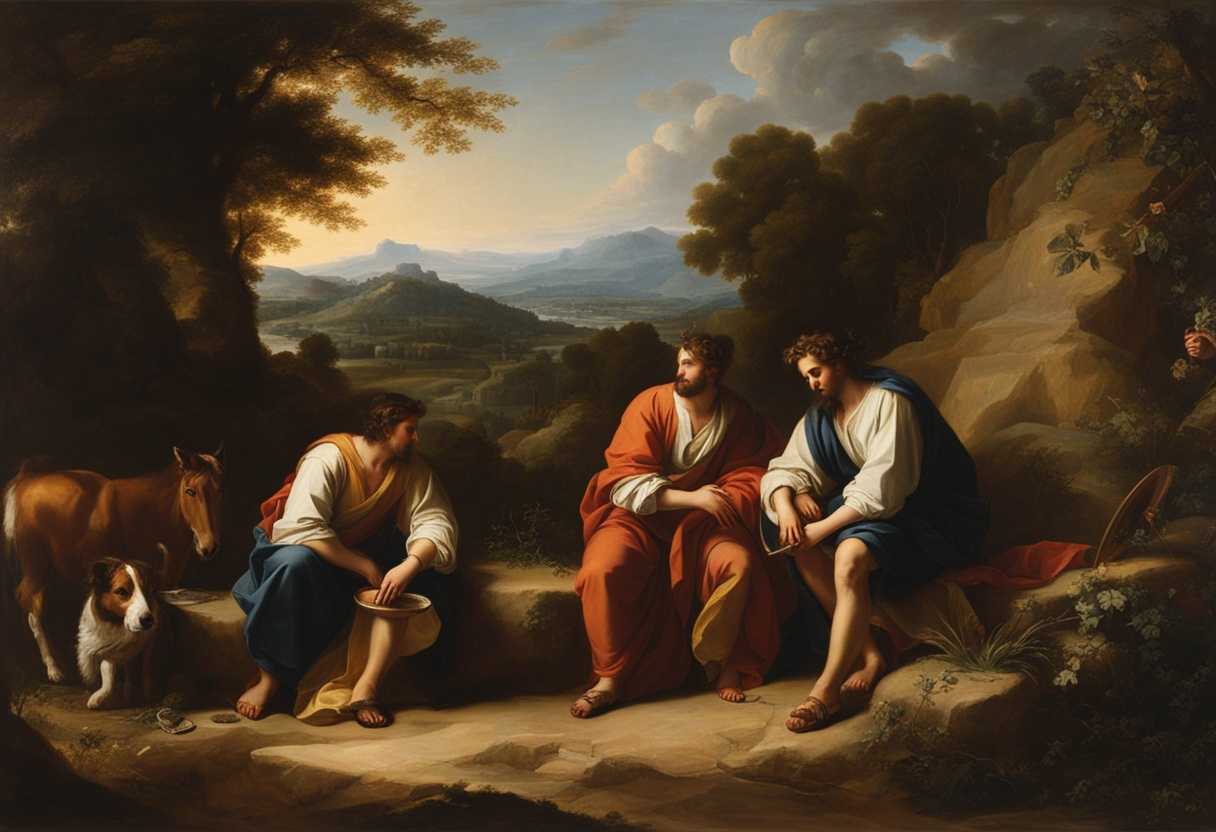
Setting the Scene for 1 Samuel 16:19-21
In 1 Samuel chapter 16, we find the prophet Samuel sent by God to the house of Jesse in Bethlehem to anoint the next king of Israel. Jesse’s sons are brought before Samuel one by one, starting with the eldest, Eliab. As each son passes before Samuel, he is impressed by their appearance, but God tells Samuel that He does not look at the outward appearance but at the heart.
Finally, Jesse sends for his youngest son, David, who was out tending the sheep. When David arrives, the Lord tells Samuel that he is the one to be anointed as the future king of Israel. In this scene, we see Samuel pouring oil on David’s head, anointing him in the presence of his family. David, a young shepherd boy at the time, is chosen by God for a great purpose, despite his humble beginnings. The surroundings are likely simple and rustic, reflecting the rural setting of Bethlehem, with sheep grazing nearby and the family gathered around in anticipation of this significant moment in David’s life.
What is 1 Samuel 16:19-21 about?
Music demonstrates its power to bring comfort and peace in this verse. David uses his talent with the lyre not just to showcase his skills, but to help Saul find relief from his troubles. It shows us the incredible ability of music to transcend words and connect with our emotions on a deeper level. Imagine the scene: David’s skillful fingers plucking the strings of the lyre, producing melodies that resonate with Saul’s soul, offering him solace in a time of distress. It reminds us of the therapeutic value of music in our own lives and how it can bring us solace and serenity in moments of turmoil.
This verse also highlights the importance of empathy and compassion in our interactions with others. Instead of shying away from Saul’s troubled spirit, David chooses to confront it head-on, using his musical talent to offer support and understanding. It serves as a reminder for us to be there for others in times of need, using our own unique abilities and talents to bring comfort and healing. Just like David, we too can make a difference in someone’s life by simply being present and offering our support in times of trouble.
Understanding what 1 Samuel 16:19-21 really means
In the narrative of 1 Samuel 16:19-21, we find ourselves amidst the reign of King Saul in Israel and the introduction of a young shepherd boy named David. Saul, troubled by distressing moments, seeks solace through David’s skillful harp playing. This simple act sets the stage for a profound journey of transformation and divine purpose.
“Send me your son David, who is with the sheep,” Saul requests, shedding light on David’s humble beginnings as a shepherd. This phrase underscores the biblical theme of God choosing the seemingly insignificant to accomplish extraordinary feats, showcasing His sovereignty in unexpected places. David’s arrival at Saul’s court marks the beginning of his transition from a shepherd to a significant figure in biblical history, symbolizing his readiness to serve and obey.
As David enters Saul’s service, the text reveals, “Saul liked him very much, and David became one of his armor-bearers.” This expression of favor from Saul towards David speaks volumes about David’s character and the providential hand of God guiding his path. It serves as a testament to the importance of integrity and humility in gaining favor and opportunities in life.
Drawing parallels from related biblical passages, such as Psalm 78:70-72 and 1 Samuel 17:34-37, we witness David’s journey from tending sheep to leading a nation, highlighting God’s guidance and David’s unwavering integrity. The New Testament verse in Luke 16:10 echoes the principle seen in David’s life, emphasizing the significance of faithfulness in small tasks leading to greater responsibilities.
David’s story resonates with contemporary audiences, offering timeless lessons on humility, service, and God’s providence. It serves as a reminder that greatness often emerges from modest beginnings and a willingness to serve others selflessly. David’s faithfulness in his humble role as a shepherd exemplifies the importance of diligence and trust in God’s plan, even when our current circumstances seem insignificant.
In a modern-day context, envision a young intern starting with mundane tasks at a company, yet excelling with dedication and a positive attitude. Over time, their commitment is recognized, leading to increased responsibilities and eventual leadership roles. This narrative mirrors David’s trajectory from shepherd to king, illustrating how faithfulness and humility can pave the way for significant opportunities and growth.
In conclusion, the passage of 1 Samuel 16:19-21 encourages us to embrace our present circumstances with diligence and humility, knowing that God has a greater purpose for our lives. It prompts reflection on how we can faithfully serve in our current roles, trusting that God sees our efforts and will ultimately lead us to fulfill His divine plan.
What qualities should we look for in a leader?
When looking for qualities in a leader, it is important to consider their character, skills, and attitude. A leader should possess integrity, wisdom, and humility. Integrity ensures that a leader acts honestly and ethically, gaining the trust of those they lead. Wisdom allows a leader to make sound decisions and guide others effectively. Humility helps a leader to be approachable, open to feedback, and willing to serve others selflessly.
Additionally, a leader should have the ability to inspire and motivate those under their guidance. They should lead by example, showing dedication, passion, and perseverance in achieving common goals. A leader should be empathetic, understanding the needs and concerns of their team members, and ready to support and uplift them. A leader can create a positive and thriving environment where individuals can grow and succeed by embodying these qualities.
Application
Just as King Saul sought David’s soothing melody in times of trouble, we too can be a source of comfort to those around us. Let’s harness our unique talents to bring solace to others, spreading light and joy like a gentle melody in a dark room. Why not reach out today and offer a listening ear or a helping hand to someone in need of warmth and kindness?

Reverend Michael Johnson is an experienced Church Minister with a profound expertise in spirituality and guidance. With a serene presence and a compassionate heart, he has faithfully served his congregation for over 20 years, leading them on a spiritual journey towards inner peace and enlightenment. Reverend Johnson’s extensive knowledge of religious philosophies and profound understanding of human nature have made him a trusted confidant and mentor to many, as he seamlessly weaves his profound wisdom into life teachings. Reverend Johnson’s calming demeanor and empathetic nature continue to uplift and heal souls, nurturing a sense of unity and tranquility within his community.