
1 Samuel 1:9-20 is about Hannah’s fervent prayer for a child, her deep sorrow and anguish, and her eventual faith in God’s promise as she is granted the blessing of a son, Samuel, highlighting the power of prayer, faith, and God’s faithfulness in fulfilling his promises.
9 After they had eaten and drunk in Shiloh, Hannah rose. Now Eli the priest was sitting on the seat beside the doorpost of the temple of the Lord.
10 She was deeply distressed and prayed to the Lord and wept bitterly.
11 And she vowed a vow and said, “O Lord of hosts, if you will indeed look on the affliction of your servant and remember me and not forget your servant, but will give to your servant a son, then I will give him to the Lord all the days of his life, and no razor shall touch his head.”
12 As she continued praying before the Lord, Eli observed her mouth.
13 Hannah was speaking in her heart; only her lips moved, and her voice was not heard. Therefore Eli took her to be a drunken woman.
14 And Eli said to her, “How long will you go on being drunk? Put your wine away from you.”
15 But Hannah answered, “No, my lord, I am a woman troubled in spirit. I have drunk neither wine nor strong drink, but I have been pouring out my soul before the Lord.
16 Do not regard your servant as a worthless woman, for all along I have been speaking out of my great anxiety and vexation.”
17 Then Eli answered, “Go in peace, and the God of Israel grant your petition that you have made to him.”
18 And she said, “Let your servant find favor in your eyes.” Then the woman went her way and ate, and her face was no longer sad.
19 They rose early in the morning and worshiped before the Lord; then they went back to their house at Ramah. And Elkanah knew Hannah his wife, and the Lord remembered her.
20 And in due time Hannah conceived and bore a son, and she called his name Samuel, for she said, “I have asked for him from the Lord.”
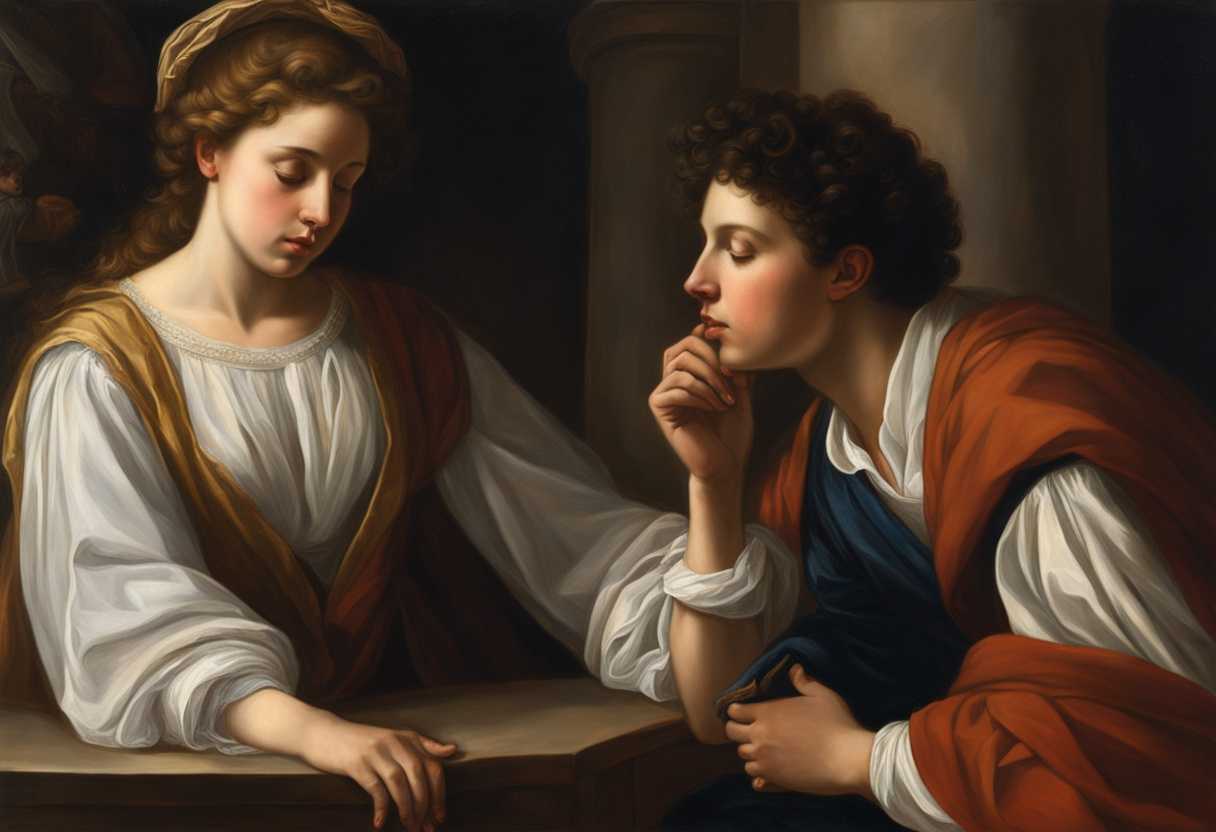
Setting the Scene for 1 Samuel 1:9-20
In 1 Samuel chapter 1, we find Hannah, a woman who is deeply distressed because she has not been able to conceive a child. She is in the tabernacle at Shiloh, pouring out her heart to the Lord in prayer. The scene is set in the tabernacle, a sacred place where people come to worship and seek God’s presence. The tabernacle is a tent-like structure, with a courtyard and an inner sanctuary where the Ark of the Covenant is kept.
Hannah is accompanied by her husband, Elkanah, who is trying to comfort her in her distress. Also present is Eli, the high priest of the tabernacle, who notices Hannah’s intense prayer and assumes she is drunk. However, after Hannah explains her situation to Eli, he blesses her and sends her on her way. The atmosphere is one of solemnity and reverence, as Hannah pours out her heart to God in desperation, seeking a miracle.
The setting is filled with the smell of incense and the sound of prayers being offered up by the worshipers. The flickering light of the oil lamps casts a warm glow over the scene, creating a sense of intimacy and sacredness. As Hannah prays fervently for a child, her faith and determination are palpable, drawing the attention of those around her. This moment in the tabernacle marks the beginning of a significant turn of events in Hannah’s life, as God hears her prayer and grants her the desire of her heart.
What is 1 Samuel 1:9-20 about?
This verse holds a powerful message about faith, commitment, and the fulfilling power of prayers. Hannah’s prayer demonstrates her deep longing for a child and her unwavering faith in God’s ability to fulfill her desires. She shows her gratitude for the gift she is asking for and her understanding of the importance of giving back to the divine source by promising to dedicate her son to the Lord.
Have you ever prayed for something with all your heart, believing in the possibility of its fulfillment? Hannah’s prayer teaches us the beauty of surrendering our wishes to a higher power, trusting in the divine plan, and being willing to make sacrifices in return. Her promise to dedicate her son to the Lord highlights the idea of serving a greater purpose beyond our personal desires and showcases the power of selfless devotion. Let us reflect on Hannah’s prayer and consider the depth of our own faith and the sincerity of our devotion. Are we willing to make sacrifices and commitments in exchange for the blessings we seek? Let Hannah’s example inspire us to pray with unwavering faith, to trust in God’s timing, and to offer our gifts back to the source with gratitude and humility.
Understanding what 1 Samuel 1:9-20 really means
Commentary Structure
- Introduction and Context
- Key Phrases and Their Meanings
- Cross-References to Other Bible Passages
- Relevance to Contemporary Life
- Hannah’s heartfelt plea to God for a child is encountered in this passage. She is deeply distressed because she has been unable to conceive, and her sorrow is compounded by the provocations of Peninnah, her husband’s other wife. This context sets the stage for a profound example of faith and divine intervention. Hannah’s story unfolds in a way that encourages us to explore the themes of prayer, perseverance, and faith. Hannah prayed to the Lord in her deep anguish, weeping bitterly.” This raw expression of emotion highlights the depth of her pain but also her unwavering faith in God’s power to change her situation. Another notable phrase is, “I will give him to the Lord for all the days of his life.” Here, Hannah’s vow signifies her ultimate act of devotion and trust in God, promising that her long-desired son will serve the Lord entirely.
Cross-References to Other Bible Passages
To deepen our understanding, let’s look at a few other passages. Paul encourages believers in Philippians 4:6 to present their requests to God with thanksgiving. Similarly, in the Psalms, David often poured out his heart to God in times of distress (Psalm 62:8). These passages collectively emphasize that God not only hears our prayers but values the honesty and fervency with which we present them. We often face various challenges—be it personal, professional, or relational—in today’s fast-paced world. Hannah’s story reminds us that turning to God in prayer, even in our lowest moments, can bring about profound change. It also teaches us the importance of perseverance in faith. Many people today struggle with issues like infertility, chronic illness, or financial hardship. Hannah’s journey from sorrow to joy serves as a beacon of hope.
Personal Anecdote and Reflection
I recall a time when a close friend was grappling with a severe illness. The doctors were not optimistic, and it felt like hope was slipping away. However, through continuous prayer and unwavering faith, not only did she recover, but her faith grew stronger. Just like Hannah, she experienced a transformation that seemed miraculous. This story and countless others resonate deeply with Hannah’s experience, underscoring the power of faith and prayer. Hannah’s story in 1 Samuel 1:9-20 is a timeless testament to the power of prayer, the importance of faith, and the miracles that can unfold when we devote ourselves to God. Her journey from anguish to joy encourages us to remain steadfast in our faith, trusting that God listens and responds in ways that align with His divine will. What are you facing today that you need to bring before God with the same fervency and faith as Hannah?
What does it mean to pour out our hearts to God?
To pour out our hearts to God means to express our deepest emotions, thoughts, and desires openly and honestly before Him. It involves coming before God with a transparent and vulnerable spirit, laying bare our struggles, fears, joys, and longings in earnest prayer. We acknowledge God’s presence, power, and sovereignty in our lives by pouring out our hearts to Him and entrusting Him with our innermost being, knowing that He cares for us deeply. Hannah exemplifies pouring out her heart to God in the passage from 1 Samuel 1:9-20 as she fervently prays for a child, pouring out her soul before the Lord in distress and anguish. She doesn’t hold anything back but lays her desires and sorrow before God, seeking His intervention and mercy. Through this act of pouring out her heart, Hannah demonstrates faith, humility, and trust in God’s ability to hear her prayers and respond according to His will. Just like Hannah, when we pour out our hearts to God, we show our dependence on Him, our belief in His faithfulness, and our willingness to surrender our desires to His perfect plan.
Application
Look at Hannah’s story in 1 Samuel 1:9-20. Picture her unyielding determination and heartfelt prayers in the face of her deepest struggles. Think about your own life. How earnestly do you bring your dreams and worries to God? Are you ready to open your heart completely, trusting His perfect timing and care? Embrace Hannah’s courage and persistence in your own prayers, believing in God’s unwavering faithfulness. Will you take that step of faith, trusting in God’s plan, and lay all your hopes and challenges before Him?

Reverend Michael Johnson is an experienced Church Minister with a profound expertise in spirituality and guidance. With a serene presence and a compassionate heart, he has faithfully served his congregation for over 20 years, leading them on a spiritual journey towards inner peace and enlightenment. Reverend Johnson’s extensive knowledge of religious philosophies and profound understanding of human nature have made him a trusted confidant and mentor to many, as he seamlessly weaves his profound wisdom into life teachings. Reverend Johnson’s calming demeanor and empathetic nature continue to uplift and heal souls, nurturing a sense of unity and tranquility within his community.