
1 Samuel 21:16 is about the moment where David feigned madness before King Achish of Gath in order to protect himself from harm, illustrating the lengths one may go to when seeking protection and survival in times of distress.
16 And the king said, “You shall surely die, Ahimelech, you and all your father’s house.”
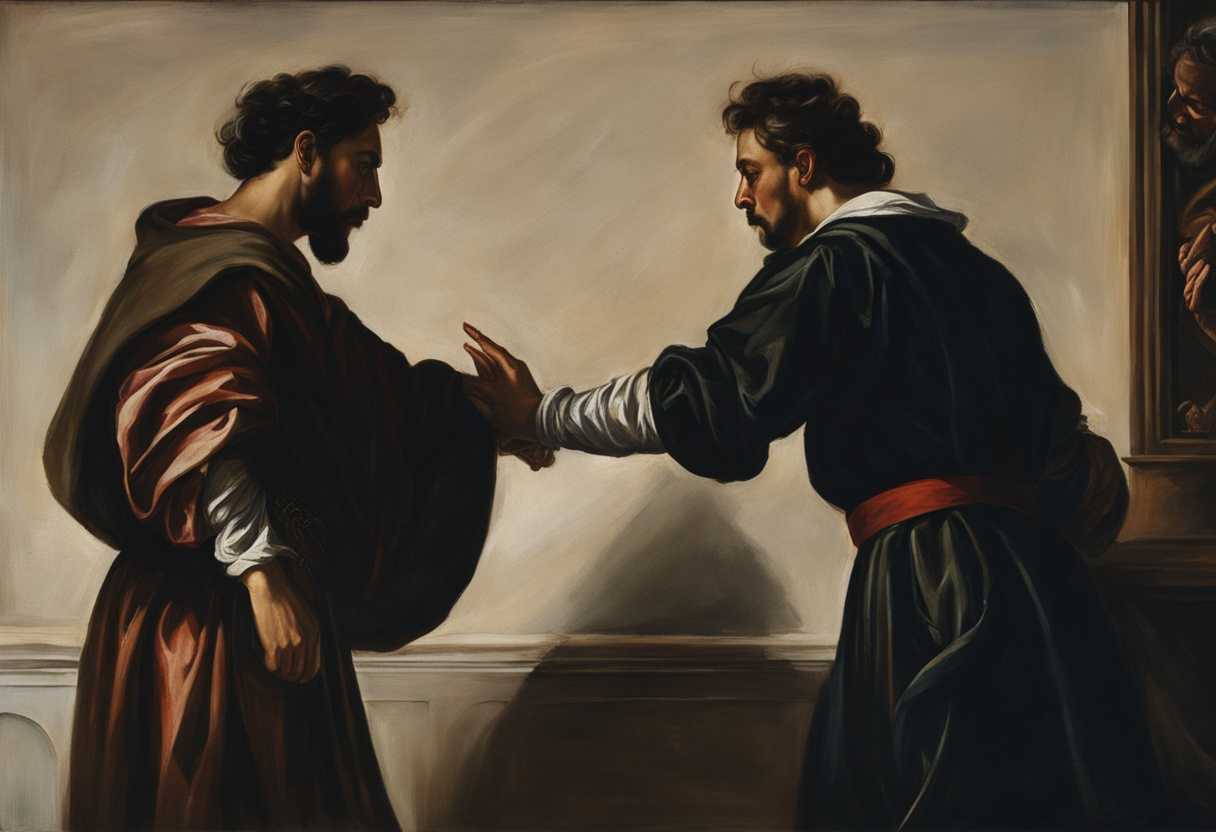
Setting the Scene for 1 Samuel 21:16
In 1 Samuel chapter 21, we find David, who is on the run from King Saul, seeking refuge in the city of Nob. As David arrives in Nob, he is accompanied by a small group of loyal followers who have chosen to stand by him during this tumultuous time. The group is weary from their journey, their faces etched with worry and uncertainty as they seek safety and provisions in this unfamiliar place.
The scene unfolds in the courtyard of the tabernacle in Nob, where Ahimelech the priest greets David and his companions. The air is filled with a sense of tension and apprehension as Ahimelech, unaware of the danger that surrounds David, welcomes him with open arms. The courtyard is bathed in the warm glow of the setting sun, casting long shadows across the ancient stones and giving the scene a sense of both peace and foreboding.
As David and his followers stand before Ahimelech, the weight of their circumstances hangs heavy in the air. The sound of their hushed voices mingles with the soft rustling of the wind through the olive trees, creating a backdrop of quiet urgency. In this moment, David’s faith is tested, and the choices he makes will have far-reaching consequences for both himself and those who have chosen to follow him.
What is 1 Samuel 21:16 about?
David resorts to a clever tactic of feigning madness to escape a dire situation in Gath in this verse. David, a skilled warrior and a man of faith, found himself in a precarious position among the enemies of Israel. Rather than rely solely on his physical strength or military prowess, he used his intellect and ingenuity to deceive his adversaries and secure his safety. This incident serves as a reminder of the importance of quick thinking and adaptability in the face of adversity.
Imagine the level of courage and resourcefulness it must have taken for David to adopt such a risky strategy. He eluded capture and potentially saved his own life by pretending to be mad. This story teaches us the value of creativity and thinking outside the box when confronted with challenges. It illustrates how sometimes unconventional methods can lead to unexpected solutions and outcomes. David’s actions in Gath demonstrate the power of strategic thinking and resilience in the most difficult circumstances.
Understanding what 1 Samuel 21:16 really means
Structure for Commentary:
1. Context and Background
2. Key Phrases and Meanings
3. Cross-References
4. Relevance to Modern Life
5. Anecdote for Illustration
6. Reflection and Application
**1. David is fleeing from King Saul, who is seeking to kill him in 1 Samuel 21:16. David arrives at Nob and interacts with Ahimelech the priest, then flees to Gath, where he encounters King Achish. Fearing for his life, David pretends to be insane. This verse captures King Achish’s reaction to David’s behavior. Understanding this setting is crucial to grasp the gravity of David’s predicament and the significance of his actions.
2. Key Phrases and Meanings
The phrase “acting like a madman” is pivotal. It shows David’s desperation and strategic thinking. David aims to appear non-threatening by feigning insanity, hoping to be dismissed rather than detained or executed. This act of survival speaks volumes about human instinct and the lengths one might go to preserve life.
3. Cross-References
This passage resonates with other biblical instances where individuals employ unconventional methods for survival or deliverance. For example, in Genesis 27, Jacob deceives Isaac to receive his blessing. Similarly, in 2 Corinthians 11:23-27, Paul recounts his own sufferings and the extreme measures he endured for the sake of the gospel. These instances reflect a recurring theme of human ingenuity in the face of adversity.
**4. Many people in today’s world find themselves in situations where they must think quickly and creatively to navigate challenges. Whether it’s finding a job, protecting one’s family, or handling personal crises, the ability to adapt and make strategic decisions is invaluable. David’s experience encourages us to use our wits and faith to overcome difficulties, reminding us that God often works through our actions and decisions.
**5. Maria, a young woman, lost her job unexpectedly. Facing financial hardship, she started a small online business, using her creativity and resourcefulness. Initially, she struggled, but her determination and innovative ideas eventually led her to success. Like David, Maria had to think outside the box and act decisively in a desperate situation.
6. Reflection and Application
Reflect on a time when you had to make a quick decision in the face of uncertainty. How did you navigate the situation? What role did faith play in your decision-making process? This passage invites us to trust in God’s guidance while also using the intellect and resources He has provided us. It’s a call to balance faith and action, recognizing that God can work through our strategic decisions to bring about His purposes. God’s presence guides our steps and helps us navigate life’s complexities, even in moments of desperation, as we examine this verse and its broader implications. How can you apply this understanding to your life today?
What does it mean to be truly humble?
To be truly humble means to have a genuine understanding of one’s own limits, weaknesses, and imperfections. It involves acknowledging that our abilities and accomplishments are not solely a result of our own greatness, but also of the guidance and blessings we receive from a higher power. True humility involves a willingness to learn from others, admitting when we are wrong, and approaching life with a sense of gratitude and reverence.
Being humble also means maintaining a modest and unassuming attitude, putting others before ourselves and avoiding arrogance or self-righteousness. It involves recognizing that all of us are equal in the eyes of God and that true greatness lies in serving others with kindness, compassion, and empathy. True humility ultimately recognizes our own limitations and embraces our humanity with grace and humility.
Application
Imagine your life is a project at work, and faith is your ultimate tool. Just like David standing before King Achish, you face challenges every day. Yet, even in the toughest meetings and family crises, hold on tight to your faith. Trust in God, your unbreakable support system. Will you strengthen your resolve and keep your faith unshakeable, no matter what comes your way?

Reverend Michael Johnson is an experienced Church Minister with a profound expertise in spirituality and guidance. With a serene presence and a compassionate heart, he has faithfully served his congregation for over 20 years, leading them on a spiritual journey towards inner peace and enlightenment. Reverend Johnson’s extensive knowledge of religious philosophies and profound understanding of human nature have made him a trusted confidant and mentor to many, as he seamlessly weaves his profound wisdom into life teachings. Reverend Johnson’s calming demeanor and empathetic nature continue to uplift and heal souls, nurturing a sense of unity and tranquility within his community.