
1 Samuel 26:1 is about David sparing King Saul’s life for a second time, showing mercy and restraint despite having the opportunity to harm him.
1 Then the Ziphites came to Saul at Gibeah, saying, “Is not David hiding himself on the hill of Hachilah, which is on the east of Jeshimon?”
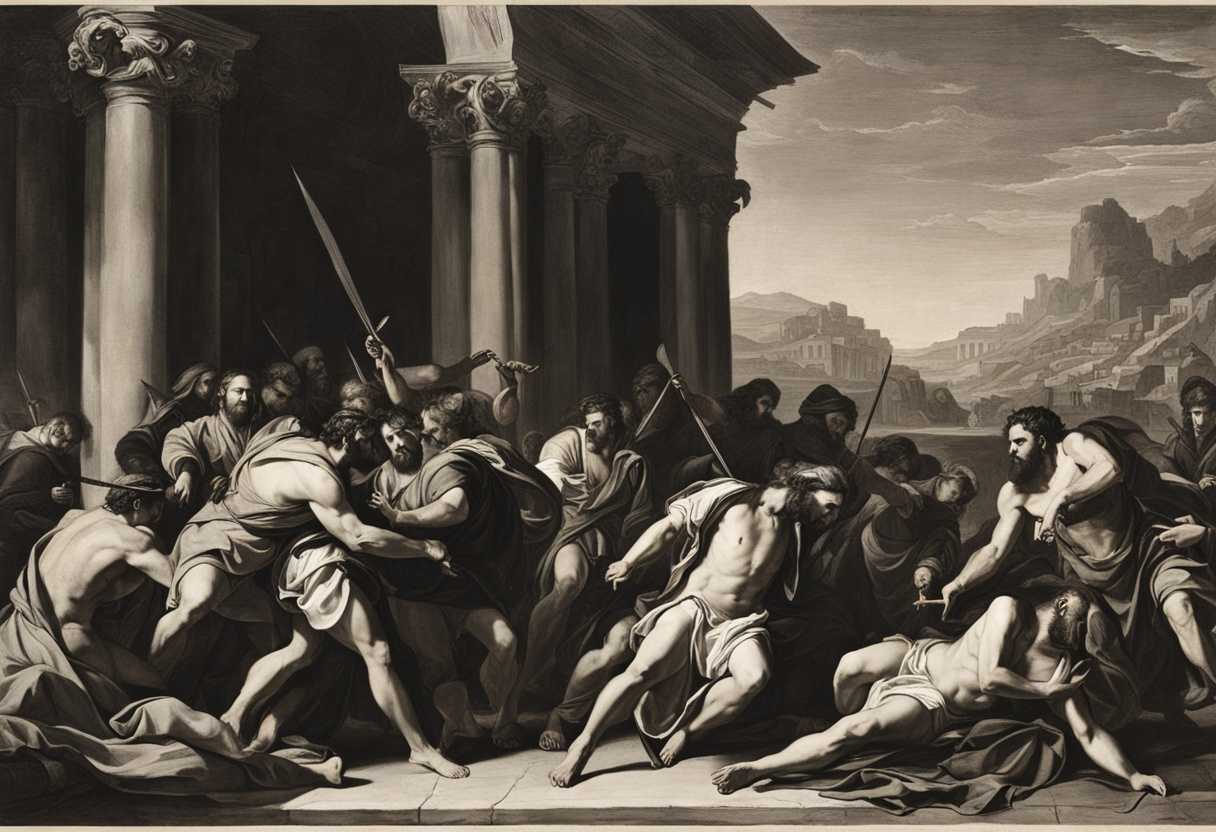
Setting the Scene for 1 Samuel 26:1
In 1 Samuel chapter 26, we find David and his men in the wilderness of Ziph, hiding from King Saul who is seeking to kill David out of jealousy and fear of losing his throne. The rocky terrain of Ziph provides a rugged backdrop to this tense encounter. David, a young shepherd who has been anointed by the prophet Samuel to be the future king of Israel, is on the run with his loyal followers, including his nephew Abishai.
As night falls, David decides to venture into Saul’s camp, which is situated on a hill with the king sleeping at its center. With Abishai by his side, David sneaks past the sleeping guards and takes Saul’s spear and water jug as proof of his proximity to the king. The scene is fraught with danger and suspense as David stands over the sleeping Saul, contemplating his next move. The flickering light of the campfires casts eerie shadows on the faces of the men, highlighting the gravity of the situation and the weight of the decisions being made.
The tension between David’s desire to defend himself and his respect for the anointed king is palpable in the stillness of the night. As the men make their escape, the wilderness of Ziph echoes with the hushed whispers of David and Abishai, their hearts heavy with the burden of the choices they have made in this pivotal moment.
What is 1 Samuel 26:1 about?
We witness a powerful display of mercy and respect for authority in this verse. David has an opportunity to harm King Saul, who is his enemy at this point, but instead, he chooses to spare Saul’s life. This act of mercy is significant as it shows David’s empathy and ability to rise above the desire for revenge or violence. David showcases his moral integrity and respect for the authority that Saul holds as the king by sparing him.
Imagine the strength of character and self-control it takes for someone to show compassion towards their enemy, especially when they have every reason to seek revenge. David’s actions challenge us to consider how we handle conflicts and how we treat those in positions of authority, even when they may have wronged us. Do we react impulsively and seek vengeance, or do we strive to show understanding and forgiveness? David’s decision to spare Saul’s life teaches us the powerful impact of choosing mercy over retaliation, and the importance of respecting those in positions of power, regardless of our personal feelings towards them. Let us reflect on this verse and consider how we can incorporate these values of mercy and respect into our own lives, even in the face of adversity.
Understanding what 1 Samuel 26:1 really means
Structure for Commentary:
1. Introduction and Context
2. Connecting with Other Bible Passages
3. Meaningful Phrases Explained
4. Relevance to Modern Readers
5. Anecdote for Practical Understanding
6. Conclusion and Reflection
Commentary:
-
David once again being pursued by King Saul is found in 1 Samuel 26:1. The Ziphites, residents of the wilderness of Ziph, inform Saul of David’s location, prompting Saul to seek David’s life. This isn’t the first time the Ziphites have betrayed David; similar events transpired in 1 Samuel 23. Understanding the context is crucial, as it highlights the ongoing tension and danger David faced, despite his loyalty to Saul.
-
Connecting with Other Bible Passages:
This narrative of betrayal parallels other biblical stories where God’s chosen individuals face trials and adversaries. For instance, Joseph’s brothers sold him into slavery (Genesis 37), yet God used that betrayal for a greater purpose. Similarly, Jesus was betrayed by Judas (Matthew 26:14-16), which led to the ultimate act of salvation. These connections remind us that God’s plans prevail, even in the face of human treachery. -
Meaningful Phrases Explained:
When the Ziphites say, “Is not David hiding on the hill of Hakilah, which is before Jeshimon?” they pinpoint David’s exact location. This phrase underscores the precision of their betrayal. It’s not a vague hint; it’s a detailed report, reflecting a profound betrayal from those who should be aiding David in his time of need. This detailed betrayal can be seen as a reflection of the thoroughness with which Jesus was betrayed by Judas. -
Relevance to Modern Readers:
Today, many people encounter betrayal in various forms, whether in personal relationships, workplaces, or even within communities. The story of David teaches us resilience and faith. Despite being betrayed, David consistently sought God’s guidance and refrained from taking vengeance into his own hands. It encourages us to trust in God’s justice and timing, even when wronged by others. -
Alex, a dedicated employee, constantly supports and uplifts his colleagues, providing a modern-day example for practical understanding. One day, Alex’s coworker, who Alex thought was a friend, informs their boss of a mistake Alex made, leading to severe consequences. This betrayal cuts deep. However, like David, Alex chooses to respond with integrity, trusting that his consistent good work and faith will ultimately be recognized. Over time, Alex’s trust in doing the right thing pays off, and he is eventually vindicated.
-
Conclusion and Reflection:
Reflecting on this verse, we are reminded of the importance of maintaining integrity and faith in the face of betrayal. David’s story encourages us to trust in God’s plan, even when circumstances seem dire. It challenges us to respond to betrayal not with vengeance, but with a steadfast heart focused on God’s justice. How do we handle betrayals in our lives? Are we able to trust in God’s larger plan and timing? Let us draw strength from David’s example and seek to embody his unwavering faith.
What is the difference between justice and vengeance?
Justice is typically associated with fairness, righteousness, and truth. It involves upholding a standard of what is right and wrong, and ensuring that wrongs are righted. Justice seeks to bring about reconciliation, restoration, and ultimately, peace. On the other hand, vengeance is often driven by a desire for personal retaliation or revenge. It is fueled by anger, hatred, or a need for retribution, without necessarily considering what is fair or right. Vengeance tends to perpetuate cycles of violence and harm, leading to further conflict and destruction. David chooses not to seek vengeance against Saul, despite having the opportunity to do so, as we see the distinction between justice and vengeance play out in the context of the verse. Instead, David demonstrates justice by showing mercy and extending grace to Saul, recognizing that it is not his place to take matters into his own hands. This decision aligns with the principles of justice, as it prioritizes forgiveness, peace, and the greater good over personal vendettas or desires for vengeance. Choosing justice over vengeance ultimately reflects a higher moral standard and a commitment to righteousness.
Application
Picture your busiest workday: stress piling up, deadlines looming, and someone undermines you. How would David handle it? He’d choose forgiveness over revenge. Can you embrace mercy, even when a colleague or family member lets you down? How powerful would our lives be if we led with grace and let go of grudges? In a world full of conflict, isn’t it time to be the peacemaker?

Reverend Michael Johnson is an experienced Church Minister with a profound expertise in spirituality and guidance. With a serene presence and a compassionate heart, he has faithfully served his congregation for over 20 years, leading them on a spiritual journey towards inner peace and enlightenment. Reverend Johnson’s extensive knowledge of religious philosophies and profound understanding of human nature have made him a trusted confidant and mentor to many, as he seamlessly weaves his profound wisdom into life teachings. Reverend Johnson’s calming demeanor and empathetic nature continue to uplift and heal souls, nurturing a sense of unity and tranquility within his community.