
1 Samuel 28:18-19 is about the consequences of seeking guidance from forbidden sources and disobeying God’s commands, leading to the downfall and death of King Saul and his sons in battle the next day.
18 Because you did not obey the voice of the Lord and did not carry out his fierce wrath against Amalek, therefore the Lord has done this thing to you this day.
19 Moreover, the Lord will give Israel also with you into the hand of the Philistines, and tomorrow you and your sons shall be with me. The Lord will give the army of Israel also into the hand of the Philistines.
Setting the Scene for 1 Samuel 28:18-19
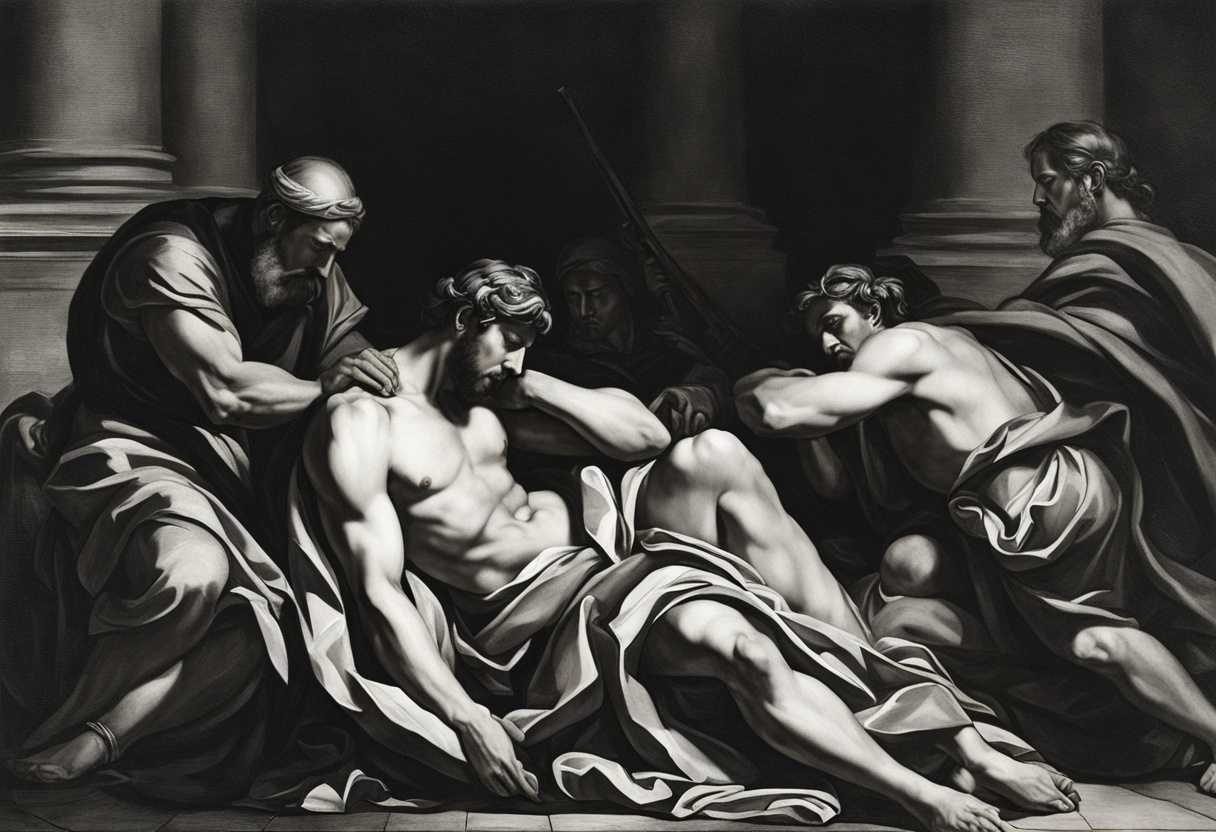
The scene in 1 Samuel 28:18-19 takes place in the land of Endor, a region known for its practice of witchcraft. King Saul, feeling desperate and abandoned by God, seeks out a medium in Endor to summon the spirit of the prophet Samuel, who had passed away. The medium, despite initially being hesitant, eventually agrees to help Saul in this forbidden act.
In this eerie setting, King Saul, accompanied by two of his servants, finds himself in the presence of the medium as she performs her dark arts. The atmosphere is tense and charged with anticipation as they await the appearance of Samuel’s spirit. The flickering light of the candles casts eerie shadows on the walls of the dimly lit room, adding to the sense of foreboding.
As the spirit of Samuel materializes before them, delivering a grim message of impending doom and judgment upon Saul, the weight of the moment hangs heavy in the air. The scene is fraught with tension and a sense of finality as Saul receives the devastating prophecy that his kingdom will soon be torn from him. The encounter serves as a stark reminder of the consequences of turning away from God and seeking guidance through forbidden means.
What is 1 Samuel 28:18-19 about?
This verse showcases the consequences of King Saul’s actions as he seeks guidance from a medium, an act which goes against the laws of God that he is supposed to uphold. Saul is essentially turning away from God’s guidance and seeking answers from a source that is not aligned with His teachings by consulting a medium. The medium’s prediction of Saul’s defeat in battle serves as a grim foreshadowing of the tragic events that are to come. We reflect on this verse, reminding us of the importance of staying faithful to our beliefs and seeking guidance from sources that align with our values and principles. King Saul’s downfall serves as a cautionary tale about the dangers of straying from the path of righteousness and turning to forbidden practices in times of desperation. It prompts us to consider the consequences of our actions and the impact they can have on our lives and those around us. What can we learn from King Saul’s misstep, and how can we ensure that we stay true to our beliefs and values even in the face of uncertainty or adversity?
Understanding what 1 Samuel 28:18-19 really means
In the narrative of 1 Samuel 28:18-19, we witness a pivotal moment where King Saul, in a state of desperation, seeks guidance from the deceased prophet Samuel through a medium. This act of seeking supernatural counsel highlights Saul’s dire circumstances and his deviation from seeking God’s guidance directly. The message conveyed by Samuel to Saul serves as a stark reminder of the repercussions of disobedience to God’s commands. The phrase “Because you did not obey the voice of the Lord” underscores the fundamental importance of obedience in the relationship between humanity and God. Saul’s failure to adhere to God’s instructions not only led to his personal downfall but also had grave consequences for the nation of Israel.
Moreover, the statement “The Lord has done this thing to you this day” emphasizes the direct correlation between Saul’s actions and the ensuing judgment he faces. It serves as a poignant reminder that our choices and actions have tangible consequences, both in the spiritual and earthly realms. The prophecy that “The Lord will also give Israel with you into the hand of the Philistines” forewarns of the impending defeat of Israel under Saul’s leadership, highlighting the gravity of his disobedience and its far-reaching implications.
Drawing parallels from related biblical passages such as 1 Samuel 15:22-23, Deuteronomy 28:15, and Proverbs 16:18, we glean further insights into the themes of obedience, consequences of disobedience, and the dangers of pride and arrogance. These passages collectively reinforce the timeless wisdom found in the Scriptures and provide a broader context for understanding Saul’s tragic fate. The story of Saul serves as a cautionary tale for believers today, reminding us of the importance of steadfast obedience to God’s will and the severe repercussions of deviating from His commands.
In contemporary society, the lessons from Saul’s narrative resonate in various spheres of life. Whether in personal relationships, professional settings, or societal interactions, the principles of integrity, obedience, and ethical conduct remain paramount. Just as Saul’s disobedience led to his downfall, individuals and communities today face consequences when they stray from moral and ethical principles. The anecdote of a business leader facing a critical decision underscores the relevance of these biblical teachings in modern contexts, where short-term gains achieved through unethical means can ultimately result in long-term losses and repercussions.
In conclusion, the verses from 1 Samuel 28:18-19 serve as a poignant reminder of the enduring relevance of biblical principles in guiding our lives. They prompt us to reflect on our actions, choices, and obedience to God’s commands, urging us to align our lives with His will and purpose. As we navigate the complexities of life, may we heed the lessons from Saul’s story and strive to walk in obedience, humility, and integrity, knowing that our decisions carry weighty consequences that extend beyond ourselves.
Can the dead be consulted for guidance?
The verse you mentioned is about King Saul seeking guidance through a medium by summoning the spirit of the deceased prophet Samuel. This act is explicitly condemned in the Bible, as seeking advice or guidance from the dead is considered a form of turning away from God and engaging in practices that are forbidden. The clear message in this verse is that consulting the dead for guidance is not approved by God.
Throughout the Bible, we are consistently reminded to seek guidance and wisdom from God alone. Consulting the dead is considered to be an act of disobedience and a rejection of God’s authority. The focus should always be on seeking God’s will through prayer, studying His Word, and seeking counsel from wise and faithful individuals while relying on the Holy Spirit for guidance. It is important to remember that God is our ultimate source of wisdom and direction, and we should turn to Him in times of need rather than seeking advice from the deceased.
Application
In the chaos of the modern world, it’s easy to seek advice from sources that may lead us astray. But like in the story of 1 Samuel, let’s remember to turn to God for true guidance. Just as we rely on colleagues and loved ones for support in our daily lives, let’s choose to rely on God’s wisdom for the bigger decisions. Will you join me in making a conscious decision to trust in God’s plans and seek His guidance above all else?

Reverend Michael Johnson is an experienced Church Minister with a profound expertise in spirituality and guidance. With a serene presence and a compassionate heart, he has faithfully served his congregation for over 20 years, leading them on a spiritual journey towards inner peace and enlightenment. Reverend Johnson’s extensive knowledge of religious philosophies and profound understanding of human nature have made him a trusted confidant and mentor to many, as he seamlessly weaves his profound wisdom into life teachings. Reverend Johnson’s calming demeanor and empathetic nature continue to uplift and heal souls, nurturing a sense of unity and tranquility within his community.