
1 Samuel 30:16-20 is about the compassion and generosity of David towards his men who were too exhausted to continue the pursuit, emphasizing the importance of unity and care for one another in times of hardship.
16 And when he had taken him down, behold, they were spread abroad over all the land, eating and drinking and dancing, because of all the great spoil they had taken from the land of the Philistines and from the land of Judah.
17 And David struck them down from twilight until the evening of the next day, and not a man of them escaped, except four hundred young men, who mounted camels and fled.
18 David recovered all that the Amalekites had taken, and David rescued his two wives.
19 Nothing was missing, whether small or great, sons or daughters, spoil or anything that had been taken. David brought back all.
20 David captured all the flocks and herds, and his men drove them before the other livestock, and said, “This is David’s spoil.”
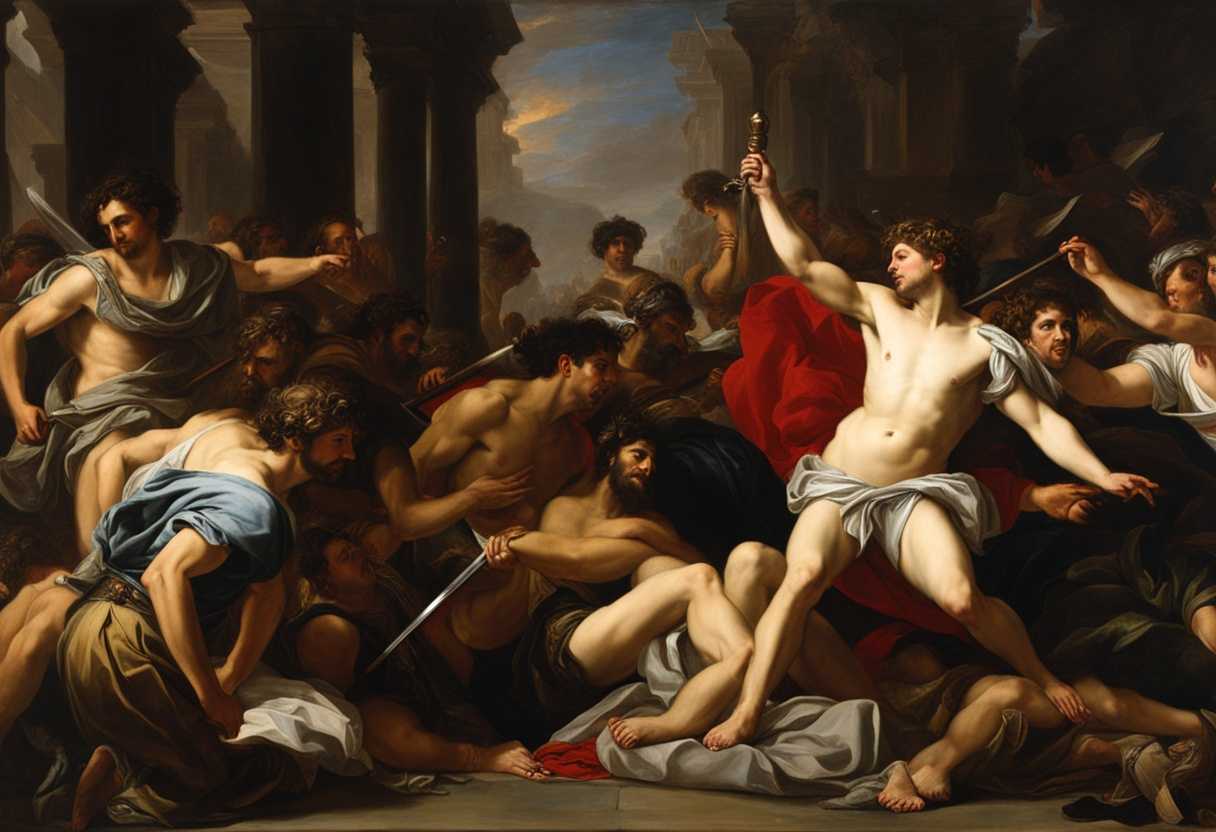
Setting the Scene for 1 Samuel 30:16-20
In 1 Samuel chapter 30, we find David and his men returning to their camp in Ziklag after being rejected by the Philistine commanders. As they approach their home, they are met with a devastating sight. The Amalekites had raided the camp, burned it to the ground, and taken captive all the women and children, including David’s two wives, Ahinoam and Abigail.
Filled with grief and anger, David and his men set out in pursuit of the Amalekites. After a grueling journey, they come upon an Egyptian servant left behind by the raiding party. This man leads them to the Amalekite camp, where they launch a surprise attack under the cover of darkness. In a fierce battle, David and his men successfully defeat the Amalekites, rescuing all the captives and recovering all the plunder that had been taken.
The scene is one of desperation, determination, and ultimately, deliverance. David’s faith and leadership are tested as he faces the loss of his loved ones and the betrayal of his own people. Through courage and reliance on God, David emerges victorious, demonstrating his unwavering commitment to his people and his unwavering trust in the Lord.
What is 1 Samuel 30:16-20 about?
A profound lesson in leadership and community is seen in this verse. David’s act of recovering all that was taken and then sharing the spoils with everyone demonstrates qualities of generosity and unity. It showcases a leader who not only fights for the well-being of his people but also ensures that everyone benefits from the victory. Individuals can easily become self-centered or focused solely on their own gains in times of struggle or loss. David’s actions remind us of the importance of being inclusive and looking out for the collective good of a community.
Reflect on how you can apply these principles in your own life. Are there situations where you can show generosity towards others, just like David did? How can you promote unity and inclusivity in your own circles, whether at school, work, or in your community? Let David’s example inspire you to not only achieve personal victories but also to uplift those around you and share the rewards of success. True leadership is not just about winning battles but about creating a supportive and thriving community for all.
Understanding what 1 Samuel 30:16-20 really means
In 1 Samuel 30:16-20, we witness a pivotal moment in David’s life as he faces the devastating aftermath of the Amalekites’ attack on Ziklag. The scene is set with David and his men returning to find their city destroyed and their families taken captive. In the midst of despair, David turns to the Lord for guidance, and he is instructed to pursue the Amalekites. What follows is a remarkable display of courage, faith, and ultimately, restoration.
The phrase “David recovered everything the Amalekites had taken” holds profound significance beyond mere physical possessions. It symbolizes a deeper restoration—a spiritual and emotional healing that comes from God’s intervention. The completeness conveyed by “nothing was missing” underscores the all-encompassing nature of God’s provision and protection in our lives. As David diligently ensures that “everything” is brought back, we see his role not just as a warrior but as a shepherd, safeguarding the well-being of his people.
Drawing parallels from related biblical passages, such as Psalm 23:1-3, we are reminded of God’s role as a restorer and provider. Joel 2:25 speaks to God’s promise to restore what has been lost, echoing the theme of renewal and redemption. In John 10:10, the promise of abundant life through Christ resonates with the idea of restoration and fullness that David experiences in recovering all that was taken from him.
The timeless relevance of this narrative is evident in our modern lives. Just as David found restoration in his time of loss, we too can find hope in God’s ability to restore what has been broken or taken from us. Whether it be fractured relationships, failing health, or shattered peace of mind, the story of David serves as a beacon of hope for those seeking renewal and healing.
David’s actions also serve as a poignant reminder of the importance of leadership and responsibility. As he took charge to pursue the Amalekites and ensure the safety of his people, we are called to emulate his example in caring for those entrusted to our care. In a world filled with challenges and uncertainties, the qualities of courage, faith, and leadership displayed by David are virtues worth embodying.
In closing, let us reflect on the enduring message of 1 Samuel 30:16-20—a testament to God’s faithfulness, the power of restoration, and the call to leadership and responsibility. May we find inspiration in David’s journey of loss and redemption, trusting in God’s guidance as we navigate our own paths towards healing and wholeness.
How can we show kindness to those who help us?
One way we can show kindness to those who help us is by acknowledging and appreciating their efforts. This can be done through expressing gratitude, whether through words of thanks, a kind gesture, or a small gift. Showing genuine appreciation for the assistance we receive not only validates the other person’s actions but also strengthens the bond between us.
Another way to demonstrate kindness to those who help us is by reciprocating their kindness in some way. This could involve offering our own assistance when they are in need, being there to support them through their challenges, or simply being a good friend. We not only show kindness but also build a mutually supportive relationship based on care and empathy by showing that we are willing to give back and be there for them just as they were for us.
Additionally, we can honor those who help us by speaking well of them to others and recognizing their contributions publicly. We not only show kindness to them directly but also elevate their status in the eyes of others by acknowledging their role in our lives and the positive impact they have had. This can be a powerful way to show appreciation and kindness to those who have helped us along the way.
Application
Let’s embody the spirit of David and his men by extending a helping hand to those in our midst who are in need. Just as they selflessly aided the weary Egyptian servant, let’s draw from their example and offer our support to those who are struggling. A small gesture of kindness or assistance can have a profound impact on someone’s life. Will you be part of this mission to spread compassion and generosity in our modern world today?

Reverend Michael Johnson is an experienced Church Minister with a profound expertise in spirituality and guidance. With a serene presence and a compassionate heart, he has faithfully served his congregation for over 20 years, leading them on a spiritual journey towards inner peace and enlightenment. Reverend Johnson’s extensive knowledge of religious philosophies and profound understanding of human nature have made him a trusted confidant and mentor to many, as he seamlessly weaves his profound wisdom into life teachings. Reverend Johnson’s calming demeanor and empathetic nature continue to uplift and heal souls, nurturing a sense of unity and tranquility within his community.