
1 Samuel 5:3-5 is about the capture of the Ark of the Covenant by the Philistines, resulting in their idol Dagon falling before the presence of the Lord and experiencing destruction as a sign of God’s power and superiority over false gods.
3 And when the people of Ashdod rose early the next day, behold, Dagon had fallen face downward on the ground before the ark of the Lord. So they took Dagon and put him back in his place.
4 But when they rose early on the next morning, behold, Dagon had fallen face downward on the ground before the ark of the Lord, and the head of Dagon and both his hands were lying cut off on the threshold. Only the trunk of Dagon was left to him.
5 So neither the priests of Dagon nor any who come into Dagon’s house tread on the threshold of Dagon in Ashdod to this day.
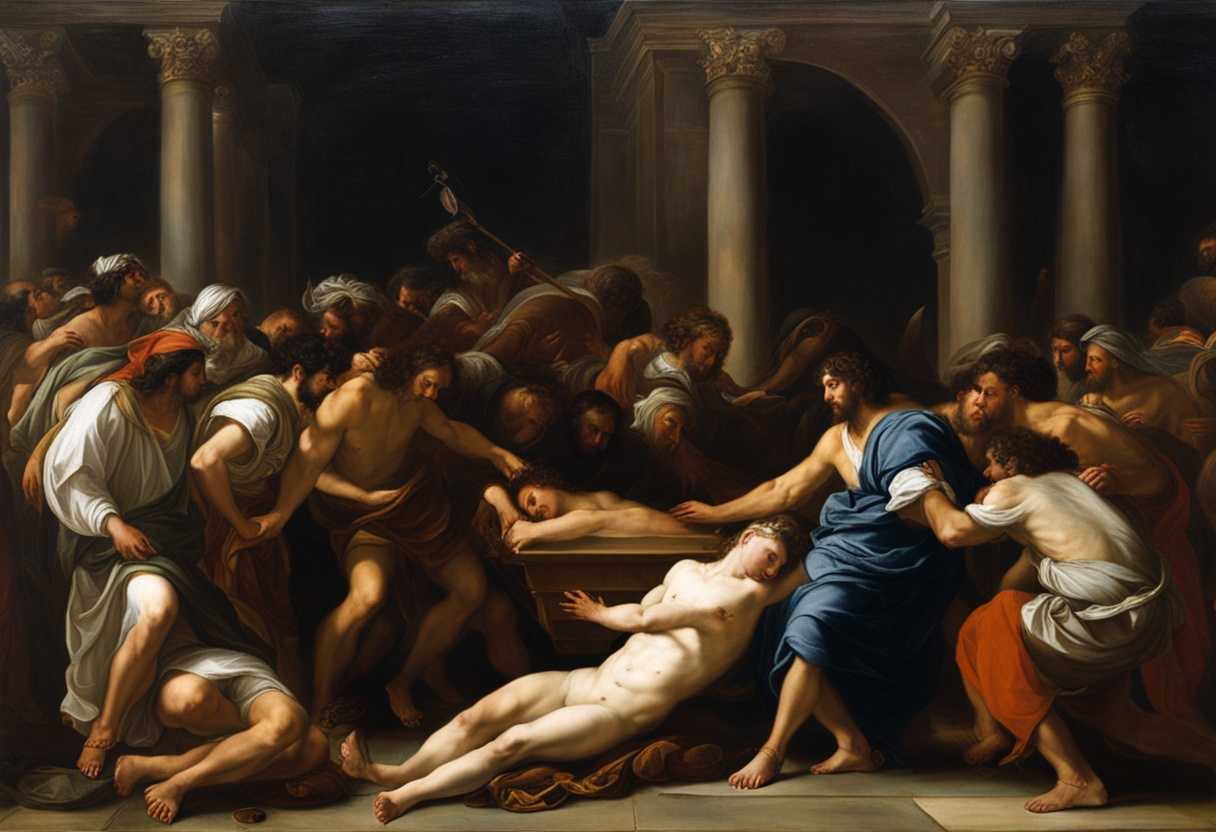
Setting the Scene for 1 Samuel 5:3-5
In 1 Samuel chapter 5, we find the Philistines in possession of the Ark of the Covenant after defeating the Israelites in battle. The Philistines place the Ark in the temple of their god Dagon in the city of Ashdod as a trophy of their victory. The scene is set in the grand temple of Dagon, a large and imposing structure adorned with intricate carvings and statues.
The Philistine priests, including Hophni and Phinehas, are present in the temple, reveling in their triumph over the Israelites. They are joined by the people of Ashdod, who have come to witness the glory of their god Dagon and the defeat of their enemies. The atmosphere is one of celebration and arrogance as the Philistines believe they have vanquished the God of Israel.
As the scene unfolds, the unexpected happens – the statue of Dagon is found fallen on its face before the Ark of the Covenant. This event shocks and terrifies the Philistines, signaling the beginning of God’s judgment upon them for their arrogance and disrespect. The surroundings are filled with tension and fear as the Philistines grapple with the power and presence of the God of Israel in their midst.
What is 1 Samuel 5:3-5 about?
We witness a powerful display of the supremacy of the Lord over the false idols of the Philistines in this verse. The Philistines’ idol, Dagon, has been revered and worshipped by them, yet when confronted with the presence of the Ark of the Lord, it falls before it. This moment serves as a clear symbol of the superiority and authority of God over all other entities. It highlights the futility of placing faith in man-made idols and the ultimate powerlessness of these constructs in the face of the true divine force. Reflect on the implications this verse has on your own life. Are there any figurative idols that you hold in high regard, whether they be material possessions, societal expectations, or personal desires? How does this verse challenge you to reevaluate where you place your trust and devotion? Do aspects of your life need to bow down before the sovereignty of God, just as Dagon fell before the Ark of the Lord? Take this moment to examine your heart and realign your priorities in accordance with the ultimate supremacy of the Lord.
Understanding what 1 Samuel 5:3-5 really means
In 1 Samuel 5:3-5, we witness a profound display of divine power and sovereignty as the Ark of the Covenant, symbolizing the presence of the God of Israel, is placed in the temple of Dagon, the Philistine god. The following morning, the statue of Dagon is found fallen on its face before the Ark, a clear sign of the supremacy of the one true God over false idols. This event is not a mere coincidence but a deliberate demonstration of God’s authority, as the statue of Dagon continues to fall and eventually breaks apart, symbolizing the complete powerlessness and defeat of false gods before the Almighty.
The phrase “Dagon had fallen on his face on the ground before the ark of the Lord” encapsulates the undeniable superiority of the God of Israel over the Philistine deity. It serves as a stark reminder that no other gods can stand before the one true God, as reiterated in Exodus 20:3, “You shall have no other gods before me.” This biblical principle emphasizes God’s exclusive claim to worship and highlights His unrivaled position in the lives of His people.
Furthermore, the imagery of “The head of Dagon and both his hands were broken off” reinforces the message of God’s ultimate authority and the insignificance of false gods. This visual representation of Dagon’s defeat echoes the sentiment expressed in Philippians 2:10, “That at the name of Jesus every knee should bow, in heaven and on earth and under the earth,” emphasizing the universal recognition of God’s supremacy.
The relevance of this passage extends beyond its historical context, resonating with contemporary audiences in a world where idolatry takes various forms. While modern society may not worship physical statues, idolatry manifests in the prioritization of material possessions, success, or relationships above God. This narrative challenges us to reflect on the idols in our lives and reaffirm God’s rightful place as the center of our worship and devotion.
Consider a scenario where an individual places unwavering trust in their career, viewing it as the source of their identity and security. When faced with job loss or setbacks, their world crumbles, mirroring the fall of Dagon. This anecdote illustrates the fragility of placing faith in transient pursuits and underscores the enduring stability found only in God. Just as the Philistines witnessed the defeat of their god, this individual learns the invaluable lesson that true security and fulfillment can only be found in God, who remains unshakeable amidst life’s uncertainties.
In conclusion, the narrative in 1 Samuel 5:3-5 serves as a poignant reminder of God’s unmatched authority and the emptiness of idolatry. It prompts us to evaluate our allegiances and ensure that God occupies the highest place in our hearts. Let us heed this timeless lesson, acknowledging God’s supremacy in every aspect of our lives and guarding against the allure of false gods that promise but ultimately fail to deliver true fulfillment and security.
What happens when we prioritize idols over God?
When we prioritize idols over God, we are essentially placing our trust and allegiance in something created by human hands rather than in the Creator Himself. Idols are representations of false gods or material possessions that we may value more than our relationship with God. This can lead to spiritual emptiness and distance from the true source of love, grace, and guidance in our lives.
God is a jealous God who desires our wholehearted devotion and worship. He wants us to place Him first in our lives and to seek His will above all else. When we prioritize idols over God, we are failing to honor and obey Him, which goes against His commandments and can hinder our spiritual growth and connection with Him. It is important for us to constantly examine our hearts and make sure that we are not allowing anything or anyone to take the place of God in our lives.
Application
In the fast-paced world we live in, it’s easy to get caught up in the chaos of work and family. But just like the Philistines faced consequences for their disrespect, let’s make a conscious effort to honor and revere God in everything we do. Take a moment to reflect on your relationship with Him. Are you giving Him the respect and reverence He deserves? Let’s strive to show our gratitude to God daily. Will you commit to honoring Him wholeheartedly in your life?

Reverend Michael Johnson is an experienced Church Minister with a profound expertise in spirituality and guidance. With a serene presence and a compassionate heart, he has faithfully served his congregation for over 20 years, leading them on a spiritual journey towards inner peace and enlightenment. Reverend Johnson’s extensive knowledge of religious philosophies and profound understanding of human nature have made him a trusted confidant and mentor to many, as he seamlessly weaves his profound wisdom into life teachings. Reverend Johnson’s calming demeanor and empathetic nature continue to uplift and heal souls, nurturing a sense of unity and tranquility within his community.