
1 Samuel 7:1-4 is about the people of Israel repenting from idol worship, gathering together to seek the Lord, and Samuel leading them in a spiritual renewal by turning their hearts back to God.
1 And the men of Kiriath-jearim came and took up the ark of the Lord and brought it to the house of Abinadab on the hill. And they consecrated his son Eleazar to have charge of the ark of the Lord.
2 From the day that the ark was lodged at Kiriath-jearim, a long time passed, some twenty years, and all the house of Israel lamented after the Lord.
3 Then Samuel said to all the house of Israel, “If you are returning to the Lord with all your heart, then put away the foreign gods and the Ashtaroth from among you and direct your heart to the Lord and serve him only, and he will deliver you out of the hand of the Philistines.”
4 So the people of Israel put away the Baals and the Ashtaroth, and they served the Lord only.
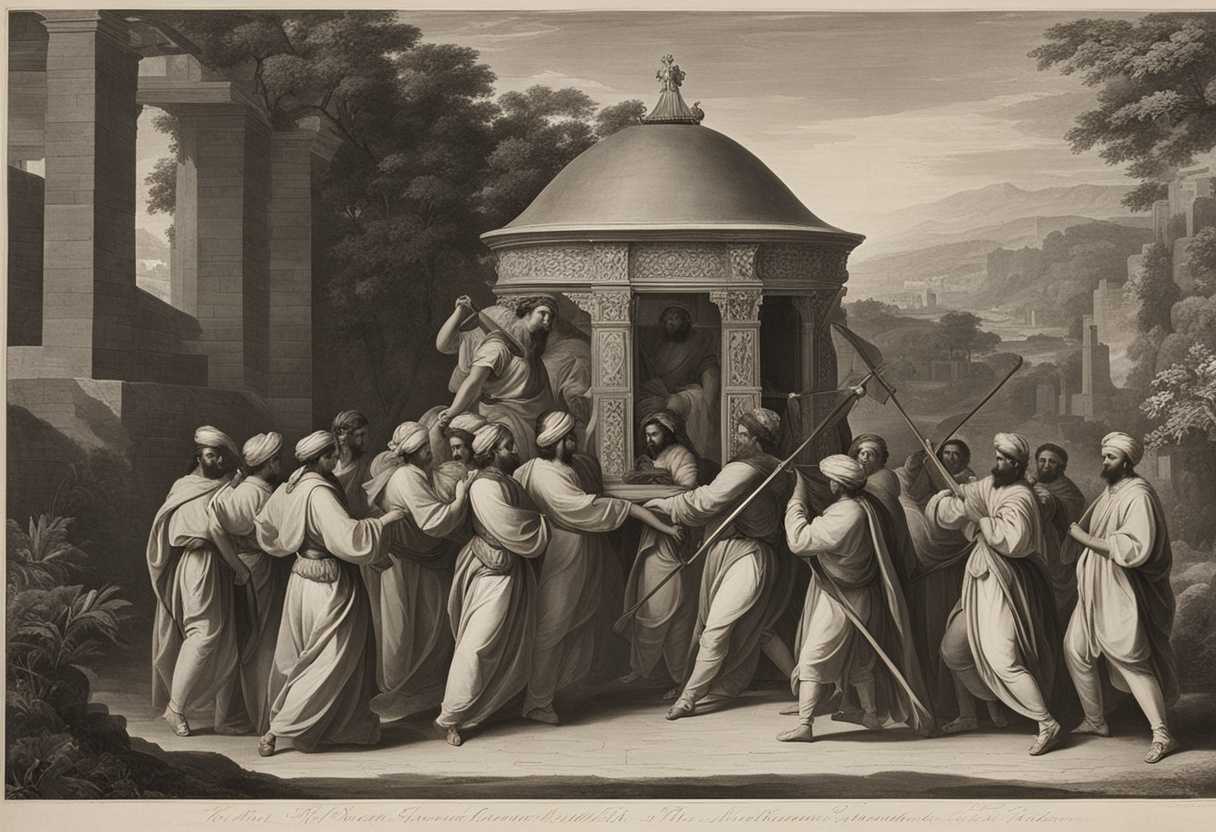
Setting the Scene for 1 Samuel 7:1-4
The scene in 1 Samuel chapter 7 opens with the Israelites gathered at Mizpah, a significant location in the Bible where important events often took place. The people had come together in repentance and seeking the Lord after years of idolatry and disobedience. Samuel, the prophet and judge of Israel, was leading the assembly, calling the people to turn away from their false gods and commit themselves to the Lord.
The atmosphere at Mizpah was one of solemnity and humility as the Israelites poured out water as a symbol of their repentance before the Lord. Samuel, with his authority as a prophet, was guiding the people through this process of spiritual renewal and reconciliation with God. The surroundings were likely simple yet profound, with the people gathered in a circle, their faces reflecting a mixture of remorse and hope as they listened to Samuel’s words.
The scene at Mizpah was a pivotal moment for the Israelites, marking a turning point in their relationship with God. Through Samuel’s leadership and the people’s genuine repentance, they were preparing their hearts for a renewed commitment to the Lord and a fresh start in their journey of faith.
What is 1 Samuel 7:1-4 about?
A powerful example of repentance and returning to the Lord is seen in this verse. The people of Israel, under the guidance of Samuel, choose to forsake their idols and turn back to their true Creator. This act of repentance signifies a profound shift in their hearts and minds, as they acknowledge their wrongdoings and seek forgiveness from God. We reflect on this verse, reminding ourselves of the importance of repentance in our own lives. Just like the people of Israel, we may sometimes stray from God’s path and turn to idols or false beliefs. However, through genuine repentance and a sincere desire to seek the Lord, we can experience a transformative change in our relationship with Him.
So let us ask ourselves: Are there any idols or distractions in our lives that we need to turn away from? Are we willing to follow Samuel’s example and lead others in returning to the Lord? Let the people of Israel and their repentant hearts inspire us, and let us strive to always seek God’s presence in our lives.
Understanding what 1 Samuel 7:1-4 really means
In 1 Samuel 7:1-4, we are presented with a pivotal moment in Israel’s history, where the Ark of the Covenant, a symbol of God’s presence, is returned by the Philistines to the Israelites. The men of Kiriath Jearim, recognizing the significance of the Ark, take it up and bring it to a place of honor. This act reflects the reverence and responsibility the Israelites had towards God’s presence among them. It serves as a reminder of the importance of acknowledging and honoring God in our lives, recognizing His sovereignty and holiness.
Samuel, the prophet, seizes this moment to call the house of Israel to genuine repentance and wholehearted devotion to the Lord. His words echo through the ages, challenging us to examine our own hearts and turn away from anything that hinders our relationship with God. The call to “return to the Lord with all your hearts” is a timeless invitation for us to reevaluate our priorities, to realign our lives with God’s will, and to seek Him wholeheartedly.
The command to “put away the foreign gods and the Ashtoreths from among you” resonates with us today as a call to abandon idolatry in all its forms. Just as the Israelites were urged to rid themselves of false gods and worship the one true God, we are reminded to examine our lives and remove anything that competes with our loyalty to God. This challenges us to reflect on the idols in our own lives – whether they be material possessions, relationships, or personal ambitions – and to choose to serve God alone.
“Direct your heart to the Lord and serve him only” encapsulates the essence of exclusive devotion and loyalty to God. In a world filled with distractions and competing priorities, this command stands as a beacon, guiding us to focus our hearts and lives solely on God. It prompts us to reevaluate where we invest our time, energy, and affections, urging us to prioritize our relationship with God above all else.
The relevance of this passage extends beyond ancient Israel to our lives today. It serves as a timeless call to repentance, exclusive devotion, and spiritual leadership. Just as Samuel led the Israelites in turning back to God, we are called to be leaders in our communities, guiding others towards a deeper relationship with God. This passage challenges us to be accountable to one another, to support and encourage each other in our faith journeys, and to prioritize God above all else in our lives.
In conclusion, 1 Samuel 7:1-4 invites us to reflect on our own lives, to identify and remove anything that hinders our relationship with God, and to commit ourselves wholeheartedly to Him. It urges us to seek genuine repentance, to prioritize exclusive devotion to God, and to embrace our role as spiritual leaders in our communities. May we heed the call of this passage, turning our hearts towards the Lord and serving Him alone with unwavering loyalty and devotion.
How can we rid ourselves of idols?
To rid ourselves of idols, we must first put away the foreign gods and Ashtoreths from among us. This involves actively identifying and removing any idols or false gods that have taken residence in our lives. This process requires honesty, introspection, and a willingness to confront the things that have taken the place of God in our hearts.
Secondly, we should direct our hearts to the Lord and serve Him only. We can diminish the allure and power of idols in our lives by focusing on God and seeking to deepen our relationship with Him. This shift in focus requires intentional effort and a conscious decision to prioritize God above all else.
Lastly, we must prepare our hearts and commit to serving the Lord wholeheartedly. This involves genuine repentance for our idolatry, a determination to turn away from it, and a steadfast resolve to faithfully follow and serve God alone. Through a combination of identifying, removing, focusing on God, and committing ourselves to Him, we can rid ourselves of idols and establish God as the sole rightful object of our worship and devotion.
Application
Examine your heart, for idols may have snuck in unnoticed, diverting your attention from the truth. Reflect, just as the Israelites did, clearing out all that hinders your relationship with the Almighty. It’s time to rid yourself of these distractions and wholeheartedly embrace the path God laid out for you. Will you have the courage to cleanse your life of false gods and dedicate yourself entirely to the divine purpose meant for you?

Reverend Michael Johnson is an experienced Church Minister with a profound expertise in spirituality and guidance. With a serene presence and a compassionate heart, he has faithfully served his congregation for over 20 years, leading them on a spiritual journey towards inner peace and enlightenment. Reverend Johnson’s extensive knowledge of religious philosophies and profound understanding of human nature have made him a trusted confidant and mentor to many, as he seamlessly weaves his profound wisdom into life teachings. Reverend Johnson’s calming demeanor and empathetic nature continue to uplift and heal souls, nurturing a sense of unity and tranquility within his community.