
1 Samuel 8:1-22 is about Israel’s request for a king to rule over them despite Samuel warning them about the potential consequences and explaining that God is meant to be their king.
3 Yet his sons did not walk in his ways but turned aside after gain. They took bribes and perverted justice.
2 The name of his firstborn son was Joel, and the name of his second, Abijah; they were judges in Beersheba.
3 Yet his sons did not walk in his ways but turned aside after gain. They took bribes and perverted justice.
4 Then all the elders of Israel gathered together and came to Samuel at Ramah
5 and said to him, “Behold, you are old and your sons do not walk in your ways. Now appoint for us a king to judge us like all the nations.”
6 But the thing displeased Samuel when they said, “Give us a king to judge us.” And Samuel prayed to the Lord.
7 And the Lord said to Samuel, “Obey the voice of the people in all that they say to you, for they have not rejected you, but they have rejected me from being king over them.
8 According to all the deeds that they have done, from the day I brought them up out of Egypt even to this day, forsaking me and serving other gods, so they are also doing to you.
9 Now then, obey their voice; only you shall solemnly warn them and show them the ways of the king who shall reign over them.”
10 So Samuel told all the words of the Lord to the people who were asking for a king from him.
11 He said, “These will be the ways of the king who will reign over you: he will take your sons and appoint them to his chariots and to be his horsemen and to run before his chariots.
12 He will appoint for himself commanders of thousands and commanders of fifties, and some to plow his ground and to reap his harvest, and to make his implements of war and the equipment of his chariots.
13 He will take your daughters to be perfumers and cooks and bakers.
14 He will take the best of your fields and vineyards and olive orchards and give them to his servants.
15 He will take the tenth of your grain and of your vineyards and give it to his officers and to his servants.
16 He will take your male servants and female servants and the best of your young men and your donkeys, and put them to his work.
17 He will take the tenth of your flocks, and you shall be his slaves.
18 And in that day you will cry out because of your king, whom you have chosen for yourselves, but the Lord will not answer you in that day.”
19 But the people refused to obey the voice of Samuel. And they said, “No! But there shall be a king over us,
20 that we also may be like all the nations, and that our king may judge us and go out before us and fight our battles.”
21 And Samuel heard all the words of the people, and he repeated them in the ears of the Lord.
22 And the Lord said to Samuel, “Obey their voice and make them a king.” Samuel then said to the men of Israel, “Go every man to his city.”
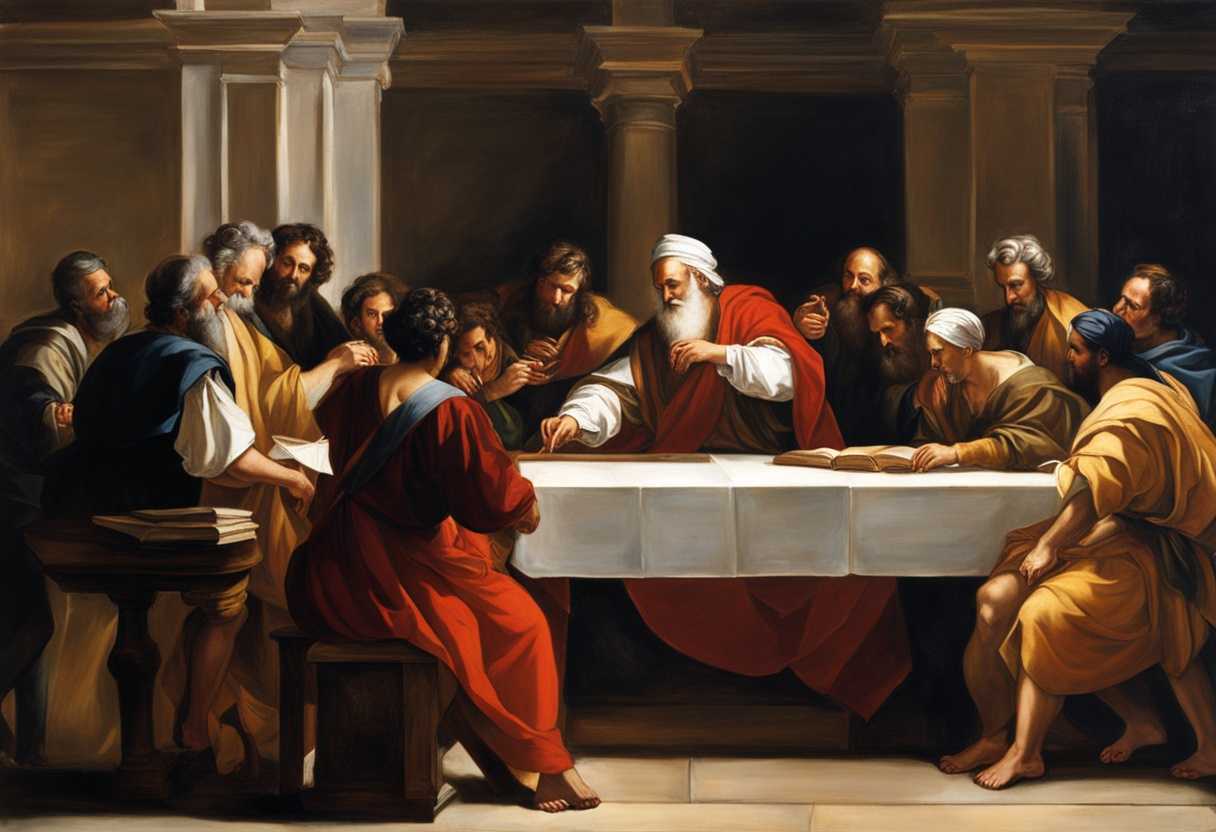
Setting the Scene for 1 Samuel 8:1-22
The scene in 1 Samuel 8:1-22 takes place in the land of Israel during the time of the prophet Samuel. The people of Israel have gathered together in the town of Ramah to express their desire for a king to rule over them. The elders of Israel approach Samuel, who has been serving as a judge and leader of the nation, and request a king to lead them, just like the other nations around them.
Samuel is taken aback by their request, as he sees it as a rejection of God’s kingship over Israel. He warns the people of the consequences of having a human king, such as conscription into the king’s army, heavy taxation, and loss of freedom. Despite Samuel’s warnings, the people insist on having a king to rule over them.
The scene is filled with tension and uncertainty as Samuel consults with God about the people’s request. Ultimately, God instructs Samuel to grant the people’s request for a king, but also warns them of the hardships they will face under a human ruler. The scene sets the stage for the anointing of Saul as the first king of Israel and foreshadows the struggles and challenges that will come with the monarchy.
What is 1 Samuel 8:1-22 about?
Israel in this verse expresses a desire for an earthly king to rule over them, instead of continuing to be led by God. This reflects a turning away from their faith and a desire to conform to the ways of other nations. The Israelites are essentially putting their trust in human leaders rather than in the divine guidance they have received thus far by rejecting God as their ruler. This decision symbolizes a shift towards self-reliance and a lack of faith in God’s plan for them. We must consider the implications of choosing earthly power over divine guidance as we reflect on this verse. Are we also tempted to seek security and leadership from human sources, rather than placing our trust in God’s wisdom and providence? The Israelites’ choice serves as a powerful reminder for us to constantly evaluate where we are placing our trust and whether we are prioritizing our faith in God above all else. Let us be mindful of the potential consequences of rejecting God as our ultimate leader and instead seek to align our will with His divine purpose for our lives.
Understanding what 1 Samuel 8:1-22 really means
The passage in 1 Samuel 8:1-22 recounts the pivotal moment when the Israelites, dissatisfied with the leadership of Samuel and desiring a king like other nations, request a human ruler to govern them. Samuel warns them of the implications of such a decision, but the people persist in their demand. God, acknowledging their rejection of His kingship, instructs Samuel to appoint a king as they wish. This narrative sheds light on the tension between human desires for tangible leadership and divine sovereignty.
The phrase “Appoint for us a king to judge us like all the nations” encapsulates the Israelites’ yearning to conform to worldly standards rather than trusting in God’s unique plan for them. By seeking a king, they demonstrate a lack of faith in God’s direct rule and succumb to the allure of human governance. God’s assertion that “They have not rejected you, but they have rejected me from being king over them” underscores the deeper spiritual implications of their request, highlighting the ultimate rejection of divine authority in favor of human leadership.
Samuel’s warning about the future king’s demands, such as conscripting their sons for service, serves as a cautionary tale about the potential loss of freedom and burdens that come with human rulers. This serves as a stark contrast to the ideal of divine kingship, where God’s rule is just and merciful. The passage resonates with related biblical texts like Deuteronomy 17:14-20, which outlines guidelines for a king in Israel to ensure alignment with God’s will, and Judges 8:23, where Gideon refuses kingship, affirming God’s rightful place as the ruler of Israel.
In contemporary society, the temptation to prioritize human leadership over divine guidance remains prevalent. People often seek immediate solutions and tangible figures to lead them, neglecting the wisdom and sovereignty of God. The passage from 1 Samuel serves as a poignant reminder to prioritize spiritual discernment over societal pressures and norms. It prompts introspection on where individuals may be placing their trust in human solutions rather than seeking God’s guidance in their lives.
To illustrate this timeless struggle, consider a community that opts for a new CEO to lead their organization, believing in the power of human leadership to address all their challenges. Despite warnings about potential drawbacks, they proceed with their decision. Over time, they realize that the new leader’s choices, while effective in some aspects, have led to unforeseen difficulties and a departure from their core values. This narrative mirrors the Israelites’ experience, emphasizing the importance of seeking God’s wisdom over relying solely on human leadership.
In conclusion, the passage from 1 Samuel 8:1-22 serves as a poignant reflection on the consequences of prioritizing human desires over divine guidance. It urges readers to examine their own tendencies to seek worldly solutions instead of trusting in God’s plan. By contemplating the Israelites’ choice for a king, individuals are encouraged to reevaluate their reliance on human leadership and reaffirm their commitment to seeking God’s wisdom in all aspects of life.
Is our desire for power aligned with God’s will?
The passage from 1 Samuel shows that the desire for power conflicts with God’s will. The people of Israel wanted a king to rule over them, despite God warning them of the consequences of having a human monarch. God knew that a king would lead to oppression, exploitation, and a loss of freedom for the people. Despite the warnings, the people insisted on having a king to rule over them, seeking power and authority in a way that was not aligned with God’s plan for them.
This desire for power, when not aligned with God’s will, can lead to negative consequences. Seeking power for selfish reasons can lead to oppression, inequality, and a lack of justice. It is important to remember that true power comes from God, and seeking power for personal gain can lead us away from God’s intended path for us. Instead of pursuing power for our own desires, we should seek to align our ambitions with God’s will, using any power or influence we have to bring about His Kingdom on earth.
Application
Pause for a moment and think about the decisions you face, like choosing between work assignments or managing family demands. This is your chance to lean on God’s wisdom instead of chasing superficial solutions. Prioritize your relationship with Him, just as you would make time for loved ones. When life’s distractions beckon, stay true to your faith. Are you ready to trust God’s direction and let Him guide your steps?

Reverend Michael Johnson is an experienced Church Minister with a profound expertise in spirituality and guidance. With a serene presence and a compassionate heart, he has faithfully served his congregation for over 20 years, leading them on a spiritual journey towards inner peace and enlightenment. Reverend Johnson’s extensive knowledge of religious philosophies and profound understanding of human nature have made him a trusted confidant and mentor to many, as he seamlessly weaves his profound wisdom into life teachings. Reverend Johnson’s calming demeanor and empathetic nature continue to uplift and heal souls, nurturing a sense of unity and tranquility within his community.