
1 Timothy 1:1 is about Paul identifying himself as an apostle and emphasizing his authority and message from God in his letter to Timothy.
1 Paul, an apostle of Christ Jesus by command of God our Savior and of Christ Jesus our hope,
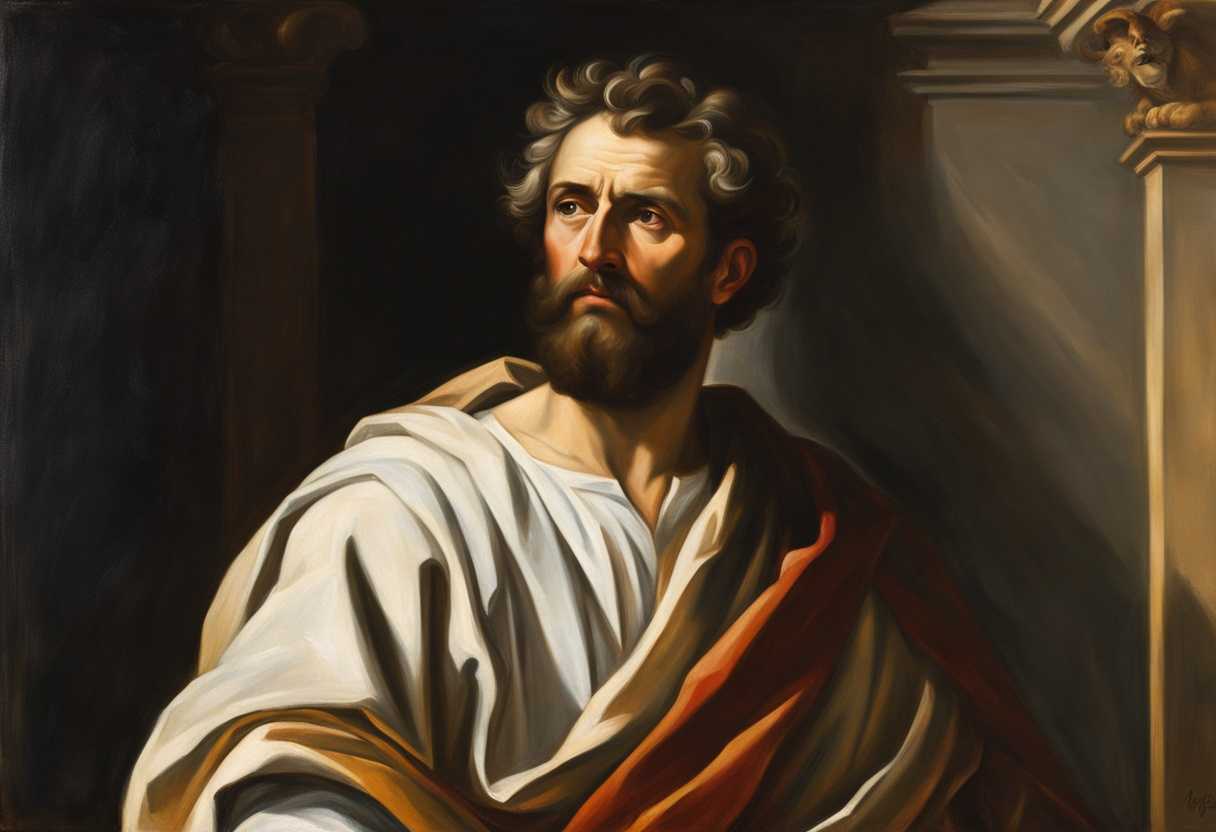
Setting the Scene for 1 Timothy 1:1
In the bustling city of Ephesus, a group of believers has gathered in a dimly lit room for a bible study session. The room is adorned with flickering oil lamps, casting a warm glow on the faces of those present. The air is filled with the scent of burning incense, creating a sense of reverence and peace. The group is a diverse mix of individuals, ranging from seasoned elders to young converts, all eager to delve into the teachings of the apostle Paul.
Among the attendees is Timothy, a young and zealous disciple of Paul who has been entrusted with the task of shepherding the church in Ephesus. His earnest demeanor and passion for spreading the gospel are evident as he listens intently to the words being shared. Also present are several elders from the church, their weathered faces reflecting years of faithful service to the Lord. As they discuss the importance of sound doctrine and the dangers of false teachings, a sense of unity and purpose fills the room.
The flickering flames of the oil lamps dance against the walls, casting shadows that seem to come alive with each flicker. The group is engrossed in the discussion, their voices rising and falling in animated conversation. As they study the words of Paul in 1 Timothy chapter 1, a sense of reverence and awe fills the room, reminding them of the weight of the message they carry and the importance of guarding the truth of the gospel.
What is 1 Timothy 1:1 about?
Paul is introducing himself as an apostle of Christ in this verse, one who has been chosen and sent out specifically by God. Paul emphasizes that his mission and authority come directly from God by stating that he is an apostle “by the command of God our Savior.” This declaration not only establishes Paul’s credibility and authority as a messenger of Christ but also underscores the divine origin of his ministry.
Have you ever felt unsure about your purpose or calling in life? You too can find reassurance in knowing that God has a unique plan for your life, just as Paul was confident in his role as an apostle because it was ordained by God. You can walk confidently in your own calling, just as Paul did, by seeking guidance from God and allowing His command to shape your actions. Trust in God’s plan and purpose for your life because He is our ultimate Savior and source of direction.
Understanding what 1 Timothy 1:1 really means
Commentary Structure:
1. Introduction to the Verse
2. Context within the Bible
3. Key Phrases and Their Meanings
4. Relevance to Modern Life
5. Anecdote for Illustration
6. Paul identifies himself as an apostle of Christ Jesus by the command of God in this verse. This short yet profound introduction sets the tone for the entire letter to Timothy, establishing Paul’s authority and divine mission.
Context within the Bible:
Paul’s letters often start with a similar self-identification, which is crucial in understanding his role and the gravity of his message. Paul underscores the divine backing of his teachings by affirming that God commands his apostleship. This is consistent with other epistles, such as Galatians 1:1, where Paul emphasizes he is an apostle “not from men nor through man, but through Jesus Christ and God the Father.”
Key Phrases and Their Meanings:
– “Apostle of Christ Jesus”: This phrase signifies that Paul is a messenger specifically chosen and sent by Jesus. His teachings carry the weight of divine authority. God commands Paul, highlighting that his mission is not self-appointed but divinely ordained. It reinforces the legitimacy and seriousness of his message.
– “Our Savior and of Christ Jesus our hope”: These titles remind readers of the foundational beliefs of Christianity—salvation through Jesus and the hope that his resurrection brings.
Relevance to Modern Life:
Today, this verse reminds us of the importance of divine calling and purpose. Each of us has a unique calling from God, just as Paul was called to be an apostle. This can manifest in various forms—service, leadership, teaching, or compassion. It prompts us to seek and fulfill our own God-given purpose with the same dedication Paul had. A modern-day missionary who feels called to serve in a remote part of the world can be considered for illustration. Despite challenges and doubts, they find strength in the conviction that their mission is commanded by God. Like Paul, their work becomes a beacon of hope and faith for those they serve. This real-life application shows how divine purpose can drive significant, positive change.
Reflective Questions:
– Have you ever felt a divine calling in your life, similar to how Paul describes his?
– How do you recognize and respond to what you believe is God’s purpose for you? You can be a bearer of hope and faith in your community, just as Paul was to the early Christians. We can better understand and embrace our own roles in God’s larger plan by contemplating these questions and reflecting on Paul’s example.
What does it mean to be an apostle?
To be an apostle means to be someone who has been commissioned and sent out with a specific mission or message. An apostle is an envoy or messenger who acts with authority on behalf of the one who sent them. Paul refers to himself as an apostle of Christ Jesus by the command of God our Savior and of Christ Jesus our hope in 1 Timothy 1:1.
This designation as an apostle carries weight and authority, implying a close relationship with God and a direct commission from Him. Apostles were chosen by Jesus during his time on earth and played a significant role in spreading the teachings of Christianity and establishing churches. They were chosen not by human authority or merit, but by divine calling and purpose.
Therefore, to be an apostle involves a deep sense of responsibility to faithfully transmit the teachings of Jesus, to establish and nurture the church, and to defend the faith. Apostles were foundational in the early Christian church, and their role was crucial in laying the groundwork for the spread of Christianity.
Application
Think of 1 Timothy 1:1 as a call to step up at work or home. You’ve been given a role, a place where you can make a difference. Will you show humility and courage in your everyday actions to inspire others? Can you let your life be a beacon of grace and strength? It’s time to rise and lead—are you ready for the challenge?

Reverend Michael Johnson is an experienced Church Minister with a profound expertise in spirituality and guidance. With a serene presence and a compassionate heart, he has faithfully served his congregation for over 20 years, leading them on a spiritual journey towards inner peace and enlightenment. Reverend Johnson’s extensive knowledge of religious philosophies and profound understanding of human nature have made him a trusted confidant and mentor to many, as he seamlessly weaves his profound wisdom into life teachings. Reverend Johnson’s calming demeanor and empathetic nature continue to uplift and heal souls, nurturing a sense of unity and tranquility within his community.