
1 Chronicles 5:11-17 is about the descendants of Gad and Reuben who were skilled warriors and brave fighters, reflecting the importance of courage and strength in defending and preserving the chosen people of God.
11 The sons of Gad lived over against them in the land of Bashan as far as Salecah:
12 Joel, Shemaiah his son, Gog his son, Shimei his son,
13 And their kinsmen of their fathers’ houses: Michael, Meshullam, Sheba, Jorai, Jacan, Zia and Eber, seven.
14 These were the sons of Abihail the son of Huri, son of Jaroah, son of Gilead, son of Michael, son of Jeshishai, son of Jahdo, son of Buz.
15 The sons of Gad lived over against them in the land of Bashan as far as Salecah:
16 And they lived in Gilead, in Bashan and in its towns, and in all the pasturelands of Sharon to their limits.
17 All of them were enrolled by genealogies in the days of Jotham king of Judah, and in the days of Jeroboam king of Israel.
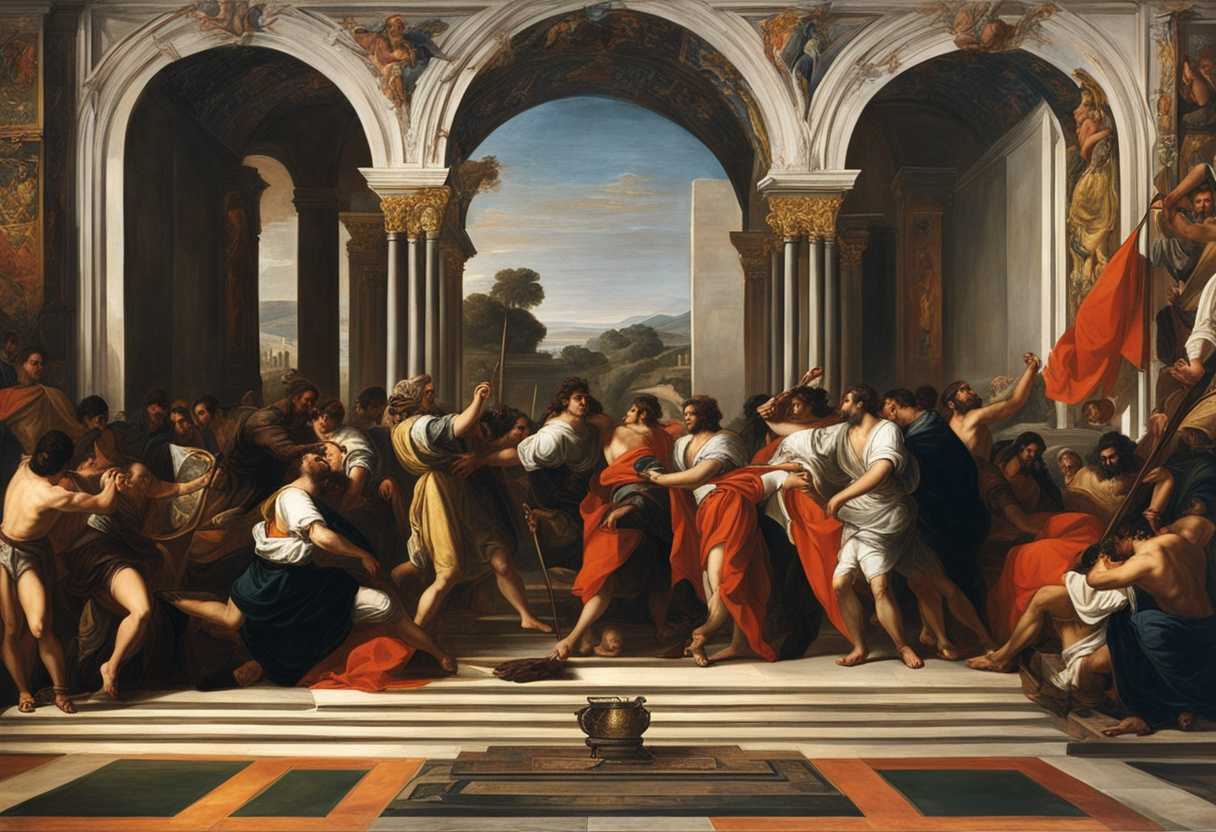
Setting the Scene for 1 Chronicles 5:11-17
In 1 Chronicles chapter 5, we find a scene set in the land of Gilead, on the eastern side of the Jordan River. The descendants of Gad, Reuben, and the half-tribe of Manasseh had settled in this region because it was suitable for their livestock. The land was vast and fertile, with rolling hills and lush pastures stretching as far as the eye could see.
In this particular passage, we see a group of valiant warriors from the tribes of Gad and Reuben, along with the half-tribe of Manasseh, gathered together for battle. These men were skilled in combat and were known for their bravery on the battlefield. They were led by prominent leaders such as Jozabad, Jediael, and Michael, who were all experienced commanders.
As they stood on the plains of Gilead, preparing for battle, the sun cast a golden hue over the landscape, illuminating the armor and weapons of the warriors. The air was filled with a sense of determination and unity as they strategized and prayed together before heading out to face their enemies. The scene was a testament to the strength and unity of these tribes, ready to defend their land and their people with unwavering courage.
What is 1 Chronicles 5:11-17 about?
God’s favor towards the descendants of Gad, Reuben, and Manasseh during battle shows its powerful and protective nature in this verse. The specific mention of these three tribes highlights the importance and significance of divine assistance during times of conflict and struggle. It signifies that when we are aligned with God’s will and purpose, we can experience his favor and intervention in our lives, especially in moments of uncertainty and danger.
Imagine being part of these tribes, facing the challenges and dangers of war, and feeling the assurance of God’s favor surrounding you. We are reminded that God’s favor is not limited by circumstances or limitations, just as these tribes were assured of God’s support in battle. It is a powerful reminder that we are never alone in our struggles and that God is always with us, guiding and protecting us through every trial and tribulation. So, let this verse encourage us to trust in God’s favor and seek his presence in all aspects of our lives, knowing that he will always stand by our side, just like he did for the descendants of Gad, Reuben, and Manasseh.
Understanding what 1 Chronicles 5:11-17 really means
The passage in 1 Chronicles 5:11-17 delves into the genealogies and settlements of the tribes of Gad, Reuben, and the half-tribe of Manasseh, providing a historical account of their leaders, territories, and military prowess. It serves as a testament to the significance of heritage, lineage, and the fulfillment of God’s promises to the tribes of Israel. Within this narrative, phrases like “The sons of Gad lived next to them in the land of Bashan as far as Salecah” highlight the geographical positioning of the tribe of Gad, showcasing their proximity to other tribes and the delineation of their land boundaries. Moreover, the mention of individuals as “heads of their fathers’ houses” underscores the leadership roles and familial responsibilities within the tribe, emphasizing the importance of family and clan leadership in maintaining order and heritage.
Drawing parallels to modern contexts, this passage resonates with the contemporary value of understanding our roots, honoring familial duties, and acknowledging the contributions of those who lead with courage and integrity. It prompts reflection on the significance of heritage, leadership, and community in our lives today. Furthermore, the reference to these individuals as “mighty men of valor, famous men, and heads of their fathers’ houses” speaks to their esteemed reputation, valor, and leadership qualities, signifying their importance in both military and social spheres. This serves as a reminder of the timeless virtues of courage, reputation, and leadership that are still relevant in our societal frameworks.
In exploring related biblical passages such as Joshua 13:24-28 and Numbers 32:1-5, we gain further insights into the historical and territorial contexts of the tribes of Gad and Reuben, deepening our understanding of their settlements and roles within the broader narrative of Israel’s history. These connections provide a richer tapestry of the biblical account, shedding light on the complexities of tribal territories and the interactions between different groups. The interconnectedness of these tribes and their shared history underscore the importance of cooperation, mutual support, and communal bonds, echoing themes of unity and collaboration that remain pertinent in our interconnected world today.
To illustrate the enduring relevance of this passage, consider a modern family business passed down through generations. The current leaders, akin to the “heads of their fathers’ houses,” bear the weight of preserving the legacy, ensuring the business’s prosperity, and upholding the ancestral values. Their leadership, reminiscent of the “mighty men of valor,” is pivotal for the success and reputation of the business, mirroring the biblical emphasis on heritage, leadership, and community. In conclusion, 1 Chronicles 5:11-17, though rooted in history, imparts timeless lessons on the importance of heritage, leadership, and community, urging us to honor our past, lead with integrity, and support one another in our collective journey.
How can we maintain unity in times of conflict?
We can maintain unity in times of conflict by remembering the importance of communication and understanding. We should strive to communicate openly and listen with empathy to one another’s perspectives during times of conflict, just as the tribes of Israel communicated with one another and worked together to overcome enemies. This can help prevent misunderstandings and bridge gaps that may arise.
Additionally, remembering our common goals and values can help us stay unified during challenging times. The tribes of Israel united to protect their land and families, demonstrating that a shared purpose can bring people together despite differences. We can maintain unity and work towards common goals even in the midst of conflict by focusing on what unites us rather than what divides us.
Finally, it is important to practice forgiveness and show grace towards one another during times of conflict. We should strive to forgive and move forward together, just as the tribes of Israel forgave one another for past mistakes and worked towards reconciliation. We can foster unity and peace in the face of conflict by letting go of grudges and showing compassion and understanding.
Application
Stand strong in your faith like the Reubenites, Gadites, and Manasseh did in their battles. Seek God wholeheartedly for guidance and strength. Courageously hold onto His promises, even through tough times. Are you ready to stand unwavering in your faith and seek God’s guidance in every aspect of your life?

Reverend Michael Johnson is an experienced Church Minister with a profound expertise in spirituality and guidance. With a serene presence and a compassionate heart, he has faithfully served his congregation for over 20 years, leading them on a spiritual journey towards inner peace and enlightenment. Reverend Johnson’s extensive knowledge of religious philosophies and profound understanding of human nature have made him a trusted confidant and mentor to many, as he seamlessly weaves his profound wisdom into life teachings. Reverend Johnson’s calming demeanor and empathetic nature continue to uplift and heal souls, nurturing a sense of unity and tranquility within his community.