
1 Corinthians 11:23-24 is about Paul recounting the Last Supper where Jesus instituted the practice of communion, symbolizing the sacrificial nature of His death and emphasizing the unity of believers as partakers in His body and blood.
23 For I received from the Lord what I also delivered to you, that the Lord Jesus on the night when he was betrayed took bread,
24 and when he had given thanks, he broke it, and said, “This is my body, which is for you. Do this in remembrance of me.”
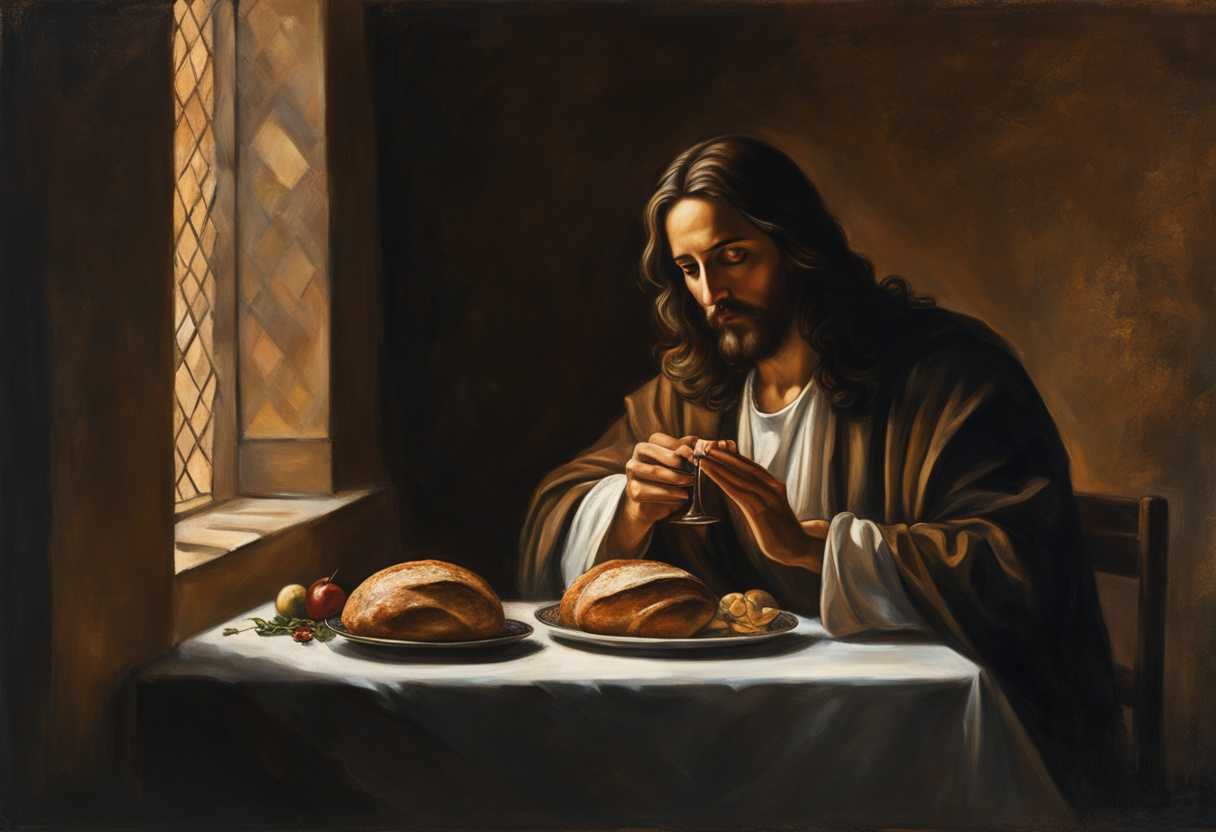
Setting the Scene for 1 Corinthians 11:23-24
The scene in 1 Corinthians 11:23-24 takes place during a gathering of early Christians in the city of Corinth. The room is dimly lit by oil lamps, casting a warm glow on the faces of those present. The air is filled with the scent of incense, creating a sense of reverence and solemnity. The room is adorned with simple wooden furniture, and a large table is set in the center, covered with bread and wine.
Among those gathered are the apostle Paul, who is leading the meeting, and a diverse group of believers from different backgrounds and social statuses. They have come together to share a meal and participate in the Lord’s Supper, a sacred ritual instituted by Jesus Christ during the Last Supper. As Paul speaks, his words are filled with passion and conviction, urging the believers to remember the sacrifice of Christ and to partake of the bread and wine in a worthy manner.
The atmosphere is one of unity and fellowship, as the believers come together to worship and honor their Lord. The room is filled with a sense of anticipation and awe as they prepare to partake of the bread and wine, symbols of Christ’s body and blood. In this moment, they are reminded of the central message of the Christian faith – the sacrificial love of Jesus Christ and the call to live in unity and love with one another.
What is 1 Corinthians 11:23-24 about?
Let’s delve into the profound meaning behind this verse. When Paul recounts Jesus instituting the Lord’s Supper, he is highlighting a crucial moment in Christian faith. The Lord’s Supper, also known as communion, serves as a powerful symbol of Jesus’ sacrifice for believers. It is a tangible reminder of Jesus’ immense love and the ultimate price He paid for our sins.
Now, imagine sitting at the table with Jesus and His disciples, witnessing the bread broken and the wine shared. It is a poignant moment of connection with Jesus, a moment where His sacrifice becomes real and personal to each believer. Through partaking in the Lord’s Supper, we not only remember Jesus’ sacrifice but also reaffirm our faith and commitment to following Him.
So, as you reflect on this verse, think about the significance of the Lord’s Supper in your own spiritual journey. How does partaking in communion deepen your connection to Jesus? How does it remind you of His incredible love and sacrifice for you? Allow the symbolism of the bread and wine to strengthen your faith and draw you closer to the heart of Christ.
Understanding what 1 Corinthians 11:23-24 really means
To provide a structured commentary on 1 Corinthians 11:23-24, let’s break it down into the following parts: context, key phrases, supporting passages, relevance today, and an anecdote for better understanding.
Context
Paul wrote 1 Corinthians to address various issues within the Corinthian church, one of which was their approach to the Lord’s Supper. This particular verse recounts the institution of the Lord’s Supper, emphasizing its significance and the manner in which it should be observed. Paul aims to remind the Corinthians of the sacredness of this practice. Paul says in this passage, “For I received from the Lord what I also passed on to you.”” This phrase underscores that the instructions concerning the Lord’s Supper are not Paul’s own but are directly from Jesus. It establishes the authority and authenticity of the message.
Another important phrase is, “This is my body, which is for you; do this in remembrance of me.” Jesus’s body, symbolized by the bread, is given for us, highlighting the sacrificial nature of His love. The command to “do this in remembrance of me” calls us to continually reflect on and commemorate His sacrifice. Jesus Himself institutes the Lord’s Supper in Luke 22:19-20. This passage parallels Paul’s account and reinforces the importance of remembering Jesus’s sacrifice. Additionally, Hebrews 10:10 speaks of how we have been sanctified through the offering of Jesus’s body once for all, which ties directly to the meaning behind the bread in the Lord’s Supper.
Relevance Today
Why is this relevant today? The act of participating in the Lord’s Supper serves as a purposeful pause, a moment to remember the foundation of our faith in a fast-paced world filled with distractions. It’s a communal act that binds believers together in unity and grounds us in the core of Christian doctrine: Jesus’s sacrificial love.
Anecdote
To illustrate, consider a busy professional who attends church every Sunday. Despite the hectic week, this person finds solace in the act of communion. It’s a moment of reflection and gratitude, bringing peace amidst chaos. The simple act of taking the bread and cup becomes a powerful reminder of Jesus’s enduring presence and love. 1 Corinthians 11:23-24 calls us to remember Jesus’s sacrifice every time we partake in the Lord’s Supper. The passage emphasizes the sacredness of this practice, handed down from Jesus Himself, and invites us to reflect deeply on the love and unity it represents. Such moments of remembrance in today’s fragmented world are invaluable, anchoring us in our faith and bringing us together as a community. How often do you take time to truly reflect on the significance of the Lord’s Supper in your own life?
How should we approach the Lord’s Supper reverently?
When approaching the Lord’s Supper, we should do so with reverence and understanding of its significance. It is a time to remember and reflect on the sacrifice of Jesus Christ, who gave His body and blood for the forgiveness of our sins. We should partake in the bread and the cup with a humble and grateful heart, recognizing the love and grace that was poured out for us on the cross.
We should also approach the Lord’s Supper with a spirit of unity and love towards our fellow believers. We are reminded of our common bond in Christ and the community of faith we belong to as we share in this remembrance together. Therefore, we should strive to be at peace with one another, seeking reconciliation and forgiveness where needed, so that we may partake in this sacred meal in a manner that honors and pleases the Lord. We should prepare our hearts and minds, examine ourselves, and confess any sin so that we may partake in a manner that is worthy and reverent, bringing glory to God.
Application
Think about how you dedicate your time and effort to your job and family. Now consider the ultimate sacrifice Jesus made for you, symbolized in the simple bread and wine. This act is not just a ritual, but a powerful moment of connection and gratitude. Will you honor this sacrifice and partake in communion with a heart full of devotion?

Reverend Michael Johnson is an experienced Church Minister with a profound expertise in spirituality and guidance. With a serene presence and a compassionate heart, he has faithfully served his congregation for over 20 years, leading them on a spiritual journey towards inner peace and enlightenment. Reverend Johnson’s extensive knowledge of religious philosophies and profound understanding of human nature have made him a trusted confidant and mentor to many, as he seamlessly weaves his profound wisdom into life teachings. Reverend Johnson’s calming demeanor and empathetic nature continue to uplift and heal souls, nurturing a sense of unity and tranquility within his community.