
1 Corinthians 11:23-25 is about the significance of the Last Supper as a commemoration of Jesus Christ’s sacrifice and a call for believers to remember His sacrifice with reverence and gratitude.
23 For I received from the Lord what I also delivered to you, that the Lord Jesus on the night when he was betrayed took bread,
24 and when he had given thanks, he broke it, and said, “This is my body, which is for you. Do this in remembrance of me.”
25 In the same way also he took the cup, after supper, saying, “This cup is the new covenant in my blood. Do this, as often as you drink it, in remembrance of me.”
Setting the Scene for 1 Corinthians 11:23-25
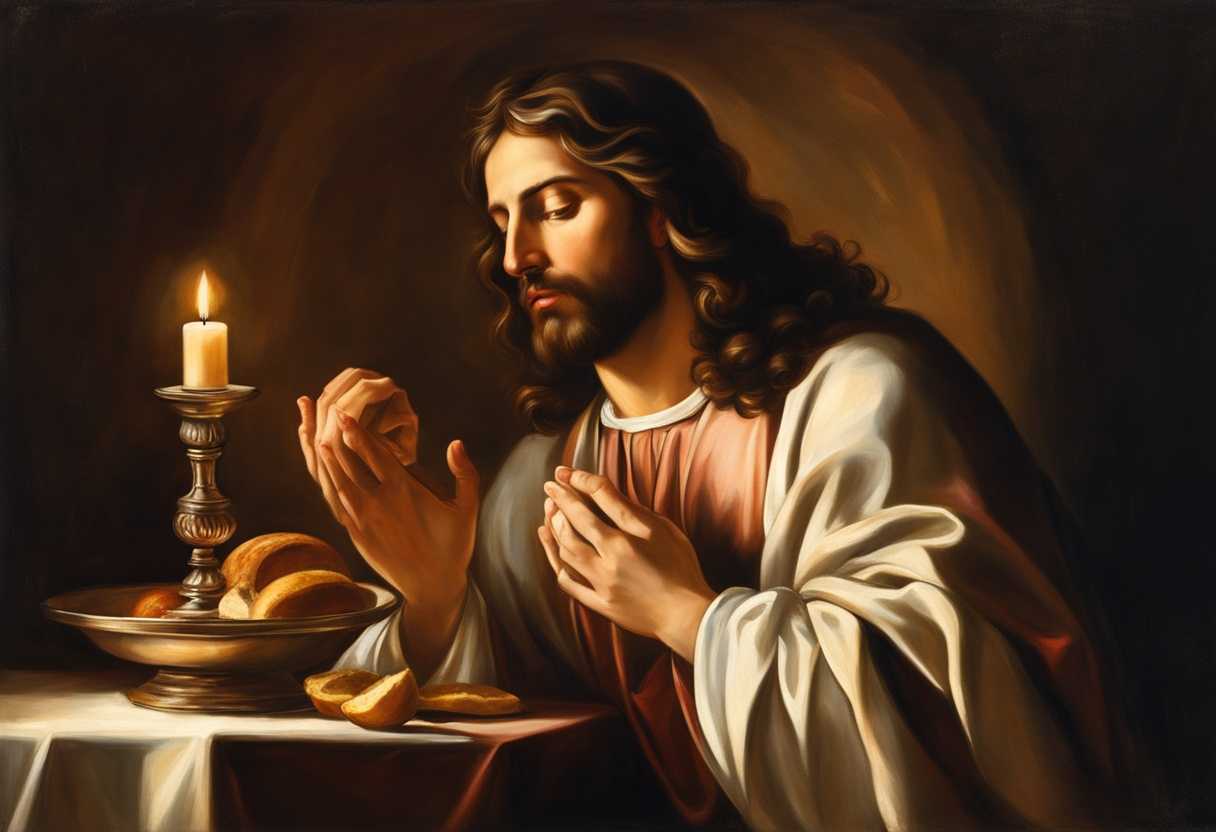
The scene in 1 Corinthians 11:23-25 takes place during a gathering of early Christians in the city of Corinth. The room is dimly lit by oil lamps, casting a warm glow on the faces of those present. The air is filled with the scent of incense, creating a sense of reverence and solemnity. The group is seated around a simple wooden table, covered with a white cloth.
Among those gathered are the apostle Paul, who is leading the meeting, and several members of the Corinthian church. They have come together to share a meal and participate in the Lord’s Supper, a sacred ritual instituted by Jesus during the Last Supper. The atmosphere is one of anticipation and reflection as Paul begins to recount the events of that fateful night when Jesus took bread, gave thanks, and broke it, saying, “This is my body, which is for you; do this in remembrance of me.”
As Paul continues to speak, the room falls silent, the only sound being the soft crackling of the oil lamps. The members of the Corinthian church listen intently, their hearts stirred by the significance of the words being spoken. In that moment, they are transported back in time to the upper room where Jesus shared this meal with his disciples, and they feel a deep connection to their Lord and Savior.
What is 1 Corinthians 11:23-25 about?
Ah, the profound significance of this verse! Here, Paul is reminding us of the incredible moment when Jesus shared the Last Supper with His disciples and instituted the practice of communion. We, as followers of Christ, are called to remember and honor the sacrifice He made for us on the cross by partaking in communion regularly.
Through this act, we not only remember Jesus’ sacrifice but also actively participate in the ongoing story of redemption. Communion serves as a tangible reminder of the love and grace that Jesus poured out for us, and it deepens our connection with Him and with our fellow believers. It is a sacred moment where we reflect on the profound meaning of Christ’s death and resurrection, and recommit ourselves to living out our faith with humility and gratitude.
So, as you partake in communion, remember the significance of this act. Reflect on the tremendous love of Christ and the ultimate sacrifice He made for you. Let this moment strengthen your faith, renew your commitment to following Jesus, and remind you of the profound grace that has been extended to you.
Understanding what 1 Corinthians 11:23-25 really means
Let’s break down 1 Corinthians 11:23-25 step by step, exploring its deeper meanings and relevance to our lives today.
Structure
- Introduction and Context
- Detailed Examination of Key Phrases
- Cross-References with Other Biblical Passages
- Relevance to Modern Life
- Anecdote for Practical Understanding
- Conclusion and Reflection
Introduction and Context
Paul’s first letter to the Corinthians addresses various issues within the early Christian community. He offers instructions on the Lord’s Supper in this passage. Paul emphasizes the importance of this ritual, recounting Jesus’ words and actions during the Last Supper. This passage serves as a foundational text for the Christian practice of Communion.
Detailed Examination of Key Phrases
-
“The Lord Jesus, on the night he was betrayed, took bread”: This sets the scene during the Last Supper and highlights the gravity of the moment, knowing that betrayal was imminent. Jesus’ actions were done in full awareness of what was to come, underscoring His sacrifice.
-
“This is my body, which is for you; do this in remembrance of me”: Here, Jesus establishes the bread as a symbol of His body. The phrase “for you” indicates the personal and communal aspect of His sacrifice, inviting believers to participate in this remembrance.
-
“This cup is the new covenant in my blood”: Jesus introduces a new covenant, replacing the old Mosaic covenant. The use of “new covenant” signifies a fresh start, sealed by His blood, offering redemption and a direct relationship with God.
Cross-References with Other Biblical Passages
-
Matthew 26:26-28: These verses also recount the Last Supper, providing a parallel narrative. They reinforce the significance of Jesus’ words and actions, highlighting the establishment of the new covenant.
-
Jeremiah 31:31-34: This Old Testament prophecy foretells the new covenant, where God promises to write His law on the hearts of His people. It underscores the transformative nature of Jesus’ sacrifice. Christians in today’s world find the Lord’s Supper to be a vital practice, reminding them of Jesus’ sacrifice and their commitment to live in accordance with His teachings. It serves as a moment of reflection, gratitude, and unity within the Christian community. The concept of remembrance encourages us to continually align our lives with the principles of love, forgiveness, and service.
Anecdote for Practical Understanding
Imagine a family gathering to celebrate a significant milestone. Each member brings a dish that represents their unique contribution to the family. They recount memories, express gratitude, and reaffirm their bonds as they share the meal. Similarly, the Lord’s Supper is a spiritual gathering where believers come together to remember Jesus’ sacrifice, express gratitude, and reaffirm their commitment to one another and to God.
Conclusion and Reflection
Reflecting on 1 Corinthians 11:23-25, we see the profound significance of the Lord’s Supper. It is a powerful reminder of Jesus’ sacrificial love, the establishment of a new covenant, and our call to live in remembrance of Him. Let us partake in Communion with reverence, gratitude, and a renewed commitment to embody Christ’s love in our daily lives. Consider how you can deepen your faith and strengthen your connection to the Christian community through this ritual. What steps can you take to live in remembrance of Jesus more fully?
What does it mean to partake in communion?
Partaking in communion involves remembering the sacrifice of Jesus Christ through the symbolic act of consuming bread and wine. It serves as a way for believers to reflect on Jesus’ death on the cross, his blood shed for the forgiveness of sins, and his body broken for the salvation of humanity. Christians affirm their faith in Christ’s atoning work and express gratitude for the gift of salvation by participating in this sacrament.
Communion also serves as a unifying practice for believers as they come together to partake in the Lord’s Supper. It symbolizes the shared belief in Jesus Christ as Lord and Savior, as well as the unity of the church body. The act of partaking in communion is a solemn yet celebratory occasion that reminds Christians of their identity as a community of faith joined together by the redemptive work of Christ. It is a time for introspection, repentance, and renewal of commitment to follow Christ faithfully. Partaking in communion is a deeply spiritual practice that nourishes the soul and strengthens the believer’s relationship with God. It is a sacred moment that invites believers to draw near to God, to seek forgiveness and reconciliation, and to experience spiritual nourishment through the symbols of Christ’s body and blood. Through the act of communion, Christians are reminded of the central message of the gospel – that Jesus Christ died for our sins, offering redemption and eternal life to all who believe.
Application
Think of the Lord’s Supper as a family dinner that rebuilds broken bridges and strengthens our bonds. When you sit at the table, remember Christ’s sacrifice as the ultimate act of love that binds us together. With humility, reflect on your heart and use this moment to reconnect with God. In life’s race, how will you embrace this call to deepen your faith and unity?

Reverend Michael Johnson is an experienced Church Minister with a profound expertise in spirituality and guidance. With a serene presence and a compassionate heart, he has faithfully served his congregation for over 20 years, leading them on a spiritual journey towards inner peace and enlightenment. Reverend Johnson’s extensive knowledge of religious philosophies and profound understanding of human nature have made him a trusted confidant and mentor to many, as he seamlessly weaves his profound wisdom into life teachings. Reverend Johnson’s calming demeanor and empathetic nature continue to uplift and heal souls, nurturing a sense of unity and tranquility within his community.