
Matthew 26:26-28 is about Jesus instituting the sacrament of the Eucharist during the Last Supper, symbolizing his body and blood offered for the redemption of humanity.
26 Now as they were eating, Jesus took bread, and after blessing it broke it and gave it to the disciples, and said, “Take, eat; this is my body.”
27 And he took a cup, and when he had given thanks he gave it to them, saying, “Drink of it, all of you,
28 for this is my blood of the covenant, which is poured out for many for the forgiveness of sins.
Setting the Scene for Matthew 26:26-28
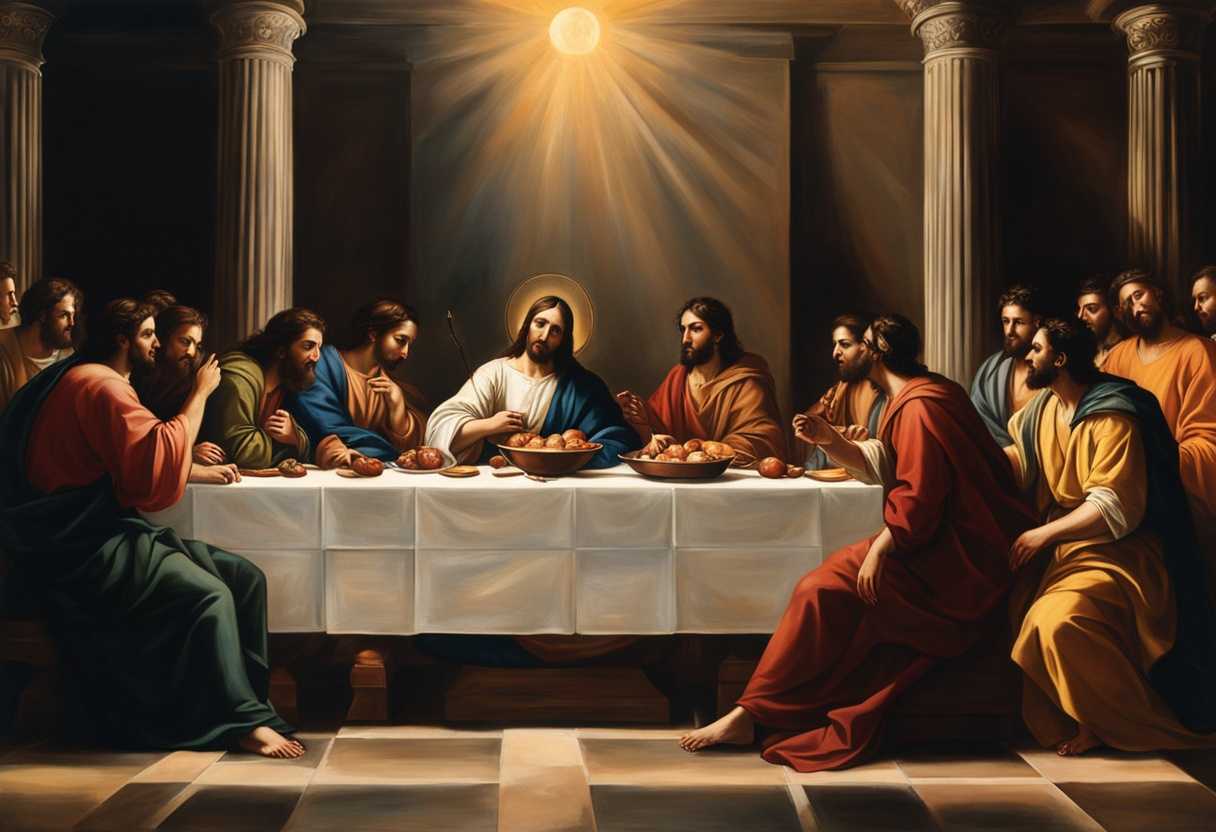
In Matthew chapter 26, we find Jesus sharing a significant moment with his disciples during the Last Supper. The scene is set in an upper room in Jerusalem, where Jesus and his twelve disciples gather to share a final meal before his crucifixion. The room is dimly lit by oil lamps, casting a warm glow over the group as they recline around a low table laden with bread and wine.
The disciples present include Peter, James, John, Andrew, Philip, Thomas, Bartholomew, Matthew, James the son of Alphaeus, Thaddaeus, Simon the Zealot, and Judas Iscariot. They have followed Jesus throughout his ministry, witnessing his miracles and teachings. As they partake in the Passover meal, Jesus takes bread, blesses it, breaks it, and gives it to his disciples, symbolizing his body that will be broken for them. He then takes a cup of wine, gives thanks, and shares it with them, symbolizing his blood that will be shed for the forgiveness of sins.
In this poignant moment, Jesus establishes the sacrament of communion, instructing his disciples to remember him through the bread and wine. This intimate gathering foreshadows the sacrifice Jesus is about to make for humanity’s salvation, emphasizing the depth of his love and the significance of his impending death and resurrection.
What is Matthew 26:26-28 about?
This verse captures the pivotal moment when Jesus establishes the practice of the Lord’s Supper, also known as communion or the Eucharist. Through this simple act of breaking bread and sharing the cup, Jesus signifies his upcoming sacrifice on the cross, where his body will be broken and his blood shed for the redemption of humanity. It serves as a profound reminder of the ultimate sacrifice Jesus made for us all, bridging the gap between God and humanity through his death and resurrection.
Have you ever paused to reflect on the profound symbolism behind the Lord’s Supper? It is a powerful visual representation of Jesus’ sacrificial love and the new covenant he offers us. When we partake in communion, we are not only remembering Christ’s death and resurrection but also reaffirming our faith and commitment to follow him. We gather around the table to share in this sacred meal with hearts full of gratitude, reverence, and a deep sense of awe for the incredible gift of salvation we have received through Christ’s sacrifice.
Understanding what Matthew 26:26-28 really means
In the poignant setting of the Last Supper, a moment pregnant with significance, Jesus shares a final meal with His disciples before the impending crucifixion. These verses from Matthew 26:26-28 hold a pivotal place in Christian theology, laying the foundation for the practice of Communion or the Eucharist. As Jesus takes the bread, gives thanks, breaks it, and offers it to His disciples, each action carries profound symbolism. The act of taking the bread symbolizes Jesus’ voluntary offering of Himself, while giving thanks reflects gratitude and acknowledgment of God’s provision. The breaking of the bread signifies Jesus’ body being broken for the sake of humanity, with the declaration, “This is my body,” pointing to the bread as a symbol of His ultimate sacrifice.
Moving on to the cup, Jesus takes it, gives thanks once more, and instructs His disciples to drink from it. This symbolic act of taking the cup represents the establishment of a new covenant through Jesus’ blood. By inviting all to partake in this act, Jesus emphasizes the inclusivity of the new covenant. The phrase, “My blood of the covenant,” underscores the sacrificial nature of His blood that seals this new agreement, poured out for many for the forgiveness of sins. This forgiveness of sins lies at the core of Christian belief, highlighting the central themes of redemption and grace that permeate the Christian faith.
These verses find resonance in other biblical passages, such as 1 Corinthians 11:23-26, where Paul emphasizes the importance of the Lord’s Supper in remembering Jesus’ sacrifice. In John 6:53-58, Jesus speaks of the spiritual significance of consuming His flesh and blood for eternal life. The connection to Exodus 24:8, where the old covenant was sealed with sacrificial blood, serves as a prelude to the new covenant sealed in Jesus’ blood.
Today, the act of partaking in Communion serves as spiritual nourishment, sustaining the believer’s spirit just as physical food sustains the body. It fosters a sense of community and unity among believers, reminding them of their shared faith and the sacrifice that binds them together. Communion also prompts believers to remember Jesus’ sacrifice and reflect on their own lives, fostering a deeper spiritual introspection.
Imagine a family gathering where a shared meal strengthens bonds and creates a sense of belonging. Similarly, Communion acts as a spiritual family meal, uniting believers and reminding them of their shared faith and the sacrificial love that unites them. Phrases like “Take and eat; this is my body,” “Drink from it, all of you,” and “Poured out for many for the forgiveness of sins” encapsulate the profound meaning and purpose behind Jesus’ sacrifice, inviting believers to internalize His love and grace.
In conclusion, these verses from Matthew 26:26-28 serve as a poignant reminder of Jesus’ love and sacrifice, calling believers to remember, reflect, and unite in their faith. In a world where division and forgetfulness can easily take hold, the message of Communion remains relevant, offering a timeless invitation to partake in the spiritual feast of remembrance and unity.
What does it mean to truly partake in communion?
To truly partake in communion means to take the bread, representing the body of Christ, and the cup, representing His blood, with a deep understanding and reverence for the sacrificial act of Jesus on the cross. It is a symbolic act of remembering and acknowledging the ultimate sacrifice that Jesus made for our sins, and a moment to reflect on His love and grace. Participating in communion with a sincere heart and a mind focused on the significance of the elements reminds us of the unity we share as believers in Christ and the eternal blessings that come from His sacrifice.
Partaking in communion also involves a personal introspection, as the act signifies a renewal of our commitment to follow Christ and live a life that reflects His teachings. It is a time to confess our sins, seek forgiveness, and recommit ourselves to walking in obedience to God’s will. Through communion, we are invited to receive the spiritual nourishment and strength that comes from remembering the sacrificial love of Jesus, enabling us to live out our faith with a renewed sense of purpose and devotion.
Application
Think about your daily grind and family responsibilities. Christ’s sacrifice, symbolized by breaking bread and sharing the cup, parallels our constant giving. Let His act stir a profound gratitude in you. The next time you take communion, feel the true depth of that connection. What will you do today to honor and respond to this ultimate sacrifice?

Reverend Michael Johnson is an experienced Church Minister with a profound expertise in spirituality and guidance. With a serene presence and a compassionate heart, he has faithfully served his congregation for over 20 years, leading them on a spiritual journey towards inner peace and enlightenment. Reverend Johnson’s extensive knowledge of religious philosophies and profound understanding of human nature have made him a trusted confidant and mentor to many, as he seamlessly weaves his profound wisdom into life teachings. Reverend Johnson’s calming demeanor and empathetic nature continue to uplift and heal souls, nurturing a sense of unity and tranquility within his community.