
1 Corinthians 11:23-28 is about the Lord’s Supper, instructing believers to remember Jesus’ sacrifice through the shared bread and cup, and to examine themselves before partaking in a manner that honors his sacrifice.
23 For I received from the Lord what I also delivered to you, that the Lord Jesus on the night when he was betrayed took bread,
24 and when he had given thanks, he broke it, and said, “This is my body, which is for you. Do this in remembrance of me.”
25 In the same way also he took the cup, after supper, saying, “This cup is the new covenant in my blood. Do this, as often as you drink it, in remembrance of me.”
26 For as often as you eat this bread and drink the cup, you proclaim the Lord’s death until he comes.
27 Whoever, therefore, eats the bread or drinks the cup of the Lord in an unworthy manner will be guilty concerning the body and blood of the Lord.
28 Let a person examine himself, then, and so eat of the bread and drink of the cup.
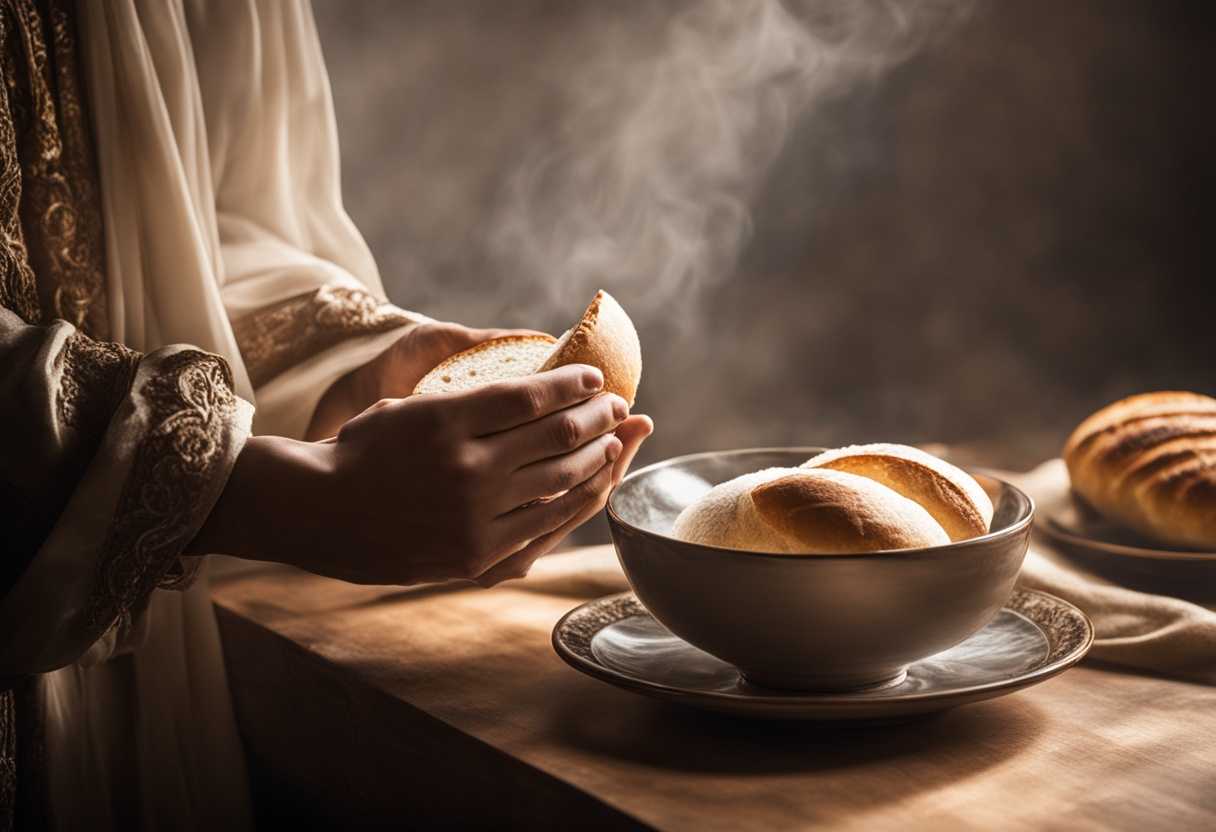
Setting the Scene for 1 Corinthians 11:23-28
The scene in 1 Corinthians 11:23-28 takes place during a gathering of early Christians in the city of Corinth. The room is dimly lit by oil lamps, casting a warm glow on the faces of those present. The air is filled with the scent of incense, creating a sense of reverence and solemnity. The room is adorned with simple wooden furniture, and a large table is set in the center with bread and wine placed on it.
Among those gathered are the apostle Paul, who is leading the meeting, and several members of the Corinthian church. They have come together to share a meal and participate in the Lord’s Supper, a sacred ritual instituted by Jesus during the Last Supper. The atmosphere is one of deep spiritual reflection and unity as they remember the sacrifice of Christ and partake in the bread and wine symbolizing his body and blood.
As Paul speaks to the group, he recounts the words of Jesus, reminding them of the significance of the bread and wine they are about to partake in. He emphasizes the importance of approaching the table with reverence and self-examination, recognizing the solemnity of the occasion. The room is filled with a sense of awe and humility as the believers prepare to partake in this sacred act of remembrance and communion.
What is 1 Corinthians 11:23-28 about?
Dear reader, in this verse, the apostle Paul emphasizes the importance of approaching the Lord’s Supper with deep respect and introspection. Paul highlights the need for believers to examine themselves before participating, urging sincere reflection on their faith, actions, and relationship with God. This self-examination allows individuals to acknowledge any sin or shortcomings in their lives and seek forgiveness and reconciliation with God before partaking in this sacred meal.
Imagine standing before the altar, preparing to receive the body and blood of Christ. How would you approach this moment? Paul’s words remind us that the act of communion is not merely a ritual but a profound spiritual experience that requires humility, repentance, and gratitude. Through self-examination, we can come before God with a pure heart, ready to receive His grace and renew our commitment to follow Him faithfully. Let us approach the Lord’s Supper with reverence and a sincere desire to deepen our relationship with our Savior, heeding Paul’s instruction.
Understanding what 1 Corinthians 11:23-28 really means
The Apostle Paul’s words to the Corinthian church in 1 Corinthians 11:23-28 carry a weighty message about the observance of the Lord’s Supper. In this passage, Paul sets the stage for believers to understand the solemnity and significance of partaking in this sacred act. As we delve into the key phrases of this passage, we uncover layers of meaning that point to the sacrificial nature of Jesus’ body and the establishment of a new covenant through His blood. These phrases serve as poignant reminders of Christ’s ultimate sacrifice and the call for believers to remember His redemptive work.
Drawing parallels with other biblical passages such as Matthew 26:26-28, Luke 22:19-20, John 6:53-58, and Hebrews 9:15, we see a cohesive narrative of Jesus instituting the Lord’s Supper, emphasizing remembrance, and shedding light on the significance of His blood as the mediator of the new covenant. These passages provide a broader context for understanding the depth of meaning behind the Lord’s Supper and its connection to Jesus’ sacrificial death.
The relevance of the Lord’s Supper extends beyond historical accounts, resonating with believers today in various ways. It prompts spiritual reflection, urging individuals to assess their relationship with God and seek repentance where needed. Moreover, the communal aspect of partaking in the Lord’s Supper fosters unity among believers, reminding them of their shared faith and purpose in Christ. This act of remembrance also stirs anticipation for Jesus’ return, infusing hope and purpose into the hearts of believers.
To illustrate the significance of the Lord’s Supper, consider a family gathering for a special celebration, where each member shares memories and expresses gratitude. Similarly, the Lord’s Supper serves as a time for the Christian family to gather, reflect on Jesus’ sacrifice, and express gratitude for His unwavering love and commitment to humanity. It is a moment of unity, remembrance, and thanksgiving that strengthens the bonds within the body of Christ.
In conclusion, the Lord’s Supper stands as a profound act of worship that beckons believers to remember, examine themselves, and boldly proclaim their faith. It is a sacred time to reflect on the sacrificial love of Jesus, renew our commitment to Him, and deepen our connections with fellow believers. May we approach the Lord’s Supper with reverence, gratitude, and a renewed sense of purpose, honoring the sacrifice of Christ and anticipating His glorious return.
Are we partaking in communion with reverence and understanding?
Paul emphasizes the importance of approaching communion with reverence and understanding in 1 Corinthians 11:23-28. Communion is a sacred act that symbolizes the sacrifice of Jesus Christ on the cross for the forgiveness of sins. Believers who partake in communion are called to remember and reflect on the significance of Christ’s sacrifice and the new covenant it established.
Paul warns against partaking in communion in an unworthy manner, which includes not discerning the body and blood of Christ. This means failing to recognize the significance and holiness of the elements being partaken. Approaching communion without proper reverence and understanding can result in spiritual harm and judgment. Therefore, believers are urged to examine themselves, repent of sin, and approach communion with humility, gratitude, and a deep sense of awe for the sacrifice of Christ.
Application
Imagine taking a moment away from your hectic workday or family responsibilities to deeply connect with something greater. Like a team meeting or a heartfelt conversation, approaching communion with reverence requires focus and honesty. Reflect on your actions and seek to mend any broken ties, just as you would in your personal and professional relationships. Honor the sacrifice that transforms us by taking this seriously. Are you ready to embrace this moment with the respect and self-awareness it deserves?

Reverend Michael Johnson is an experienced Church Minister with a profound expertise in spirituality and guidance. With a serene presence and a compassionate heart, he has faithfully served his congregation for over 20 years, leading them on a spiritual journey towards inner peace and enlightenment. Reverend Johnson’s extensive knowledge of religious philosophies and profound understanding of human nature have made him a trusted confidant and mentor to many, as he seamlessly weaves his profound wisdom into life teachings. Reverend Johnson’s calming demeanor and empathetic nature continue to uplift and heal souls, nurturing a sense of unity and tranquility within his community.