
1 Corinthians 1:18-31 is about the paradoxical nature of God’s wisdom and power, which transcends and confounds human understanding, exemplified through the foolishness of the cross as a symbol of salvation for believers, highlighting God’s choice of the weak and despised to shame the strong and wise, ultimately pointing to the exaltation of the Lord as the source of true wisdom, righteousness, sanctification, and redemption.
18 For the word of the cross is folly to those who are perishing, but to us who are being saved it is the power of God.
19 For it is written, “I will destroy the wisdom of the wise, and the discernment of the discerning I will thwart.”
20 Where is the one who is wise? Where is the scribe? Where is the debater of this age? Has not God made foolish the wisdom of the world?
21 For since, in the wisdom of God, the world did not know God through wisdom, it pleased God through the folly of what we preach to save those who believe.
22 For Jews demand signs and Greeks seek wisdom,
23 but we preach Christ crucified, a stumbling block to Jews and folly to Gentiles,
24 but to those who are called, both Jews and Greeks, Christ the power of God and the wisdom of God.
25 For the foolishness of God is wiser than men, and the weakness of God is stronger than men.
26 For consider your calling, brothers: not many of you were wise according to worldly standards, not many were powerful, not many were of noble birth.
27 But God chose what is foolish in the world to shame the wise; God chose what is weak in the world to shame the strong;
28 God chose what is low and despised in the world, even things that are not, to bring to nothing things that are,
29 so that no human being might boast in the presence of God.
30 And because of him you are in Christ Jesus, who became to us wisdom from God, righteousness and sanctification and redemption,
31 so that, as it is written, “Let the one who boasts, boast in the Lord.”
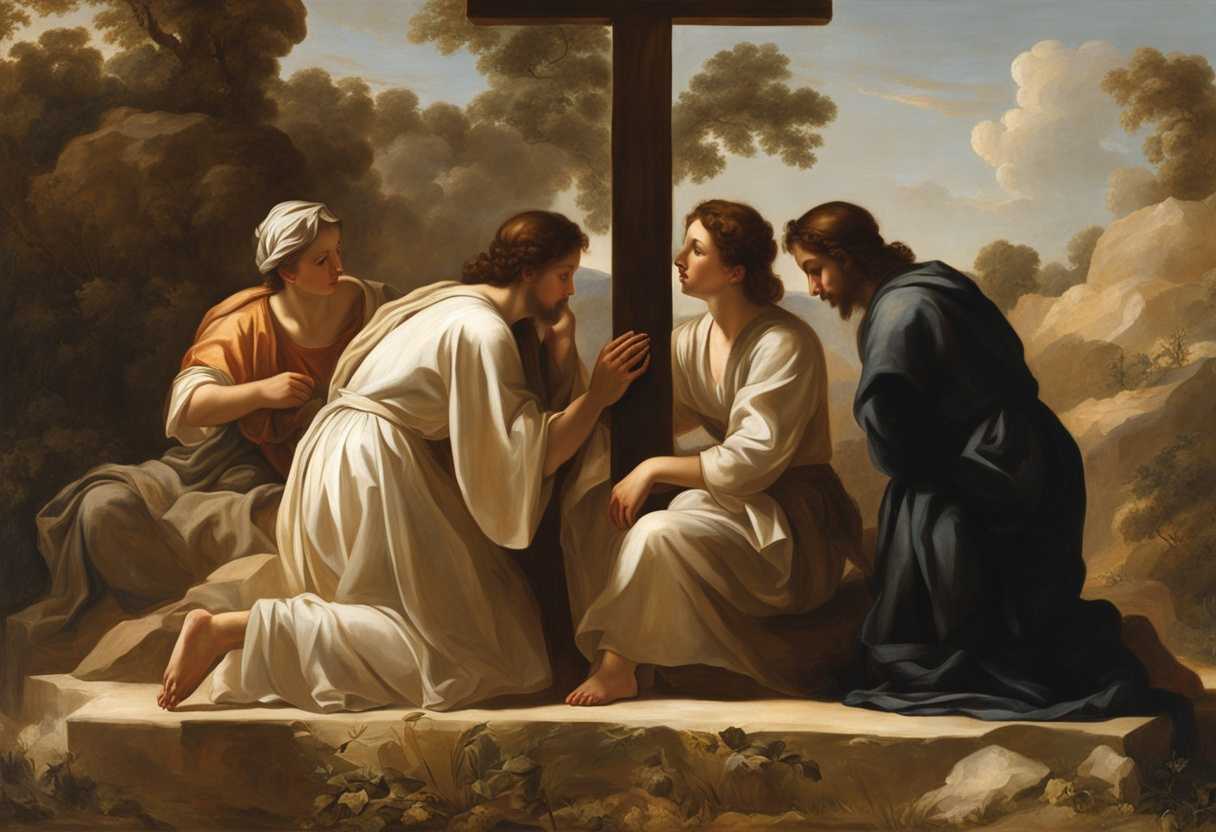
Setting the Scene for 1 Corinthians 1:18-31
The scene in 1 Corinthians 1:18-31 takes place in the city of Corinth, a bustling hub of trade and culture in ancient Greece. The apostle Paul is writing a letter to the Corinthian church, addressing the divisions and conflicts that have arisen among the believers. The room is dimly lit by oil lamps, casting a warm glow on the parchment as Paul’s words flow from his heart and mind.
Around Paul are gathered various members of the Corinthian church – Chloe, Stephanas, Fortunatus, Achaicus, and others whose names are not mentioned but whose presence is felt. They have come together to hear Paul’s words read aloud, seeking guidance and wisdom in the midst of their struggles. The room is filled with a mix of emotions – frustration, confusion, hope, and a deep longing for unity among the believers.
As Paul speaks, his voice carries the weight of authority and love, urging the Corinthians to set aside their worldly wisdom and embrace the foolishness of the cross. He reminds them that God’s ways are not the world’s ways, and that true wisdom comes from God alone. The scene is charged with tension and anticipation as the believers grapple with Paul’s challenging words, knowing that their faith will be tested and refined in the crucible of unity and humility.
What is 1 Corinthians 1:18-31 about?
This verse from the Bible emphasizes the superiority of God’s wisdom over human wisdom. It serves as a reminder that no matter how knowledgeable or wise we may think we are, God’s wisdom transcends ours in every way. We are encouraged to rely on God rather than on our own understanding by acknowledging the greatness of His wisdom.
Boasting only in the Lord signifies humility and recognition of God’s sovereignty. It serves as a call to redirect our pride and confidence from ourselves to God, the ultimate source of wisdom and power. We acknowledge that all the wisdom and knowledge we possess ultimately come from Him by boasting in the Lord, and we can truly achieve greatness through Him.
So, as you reflect on this verse, consider the implications it has on your own life. Are you relying on your own wisdom or boasting in the Lord? Let this verse be a reminder to stay humble, seek God’s wisdom above all else, and give glory and praise to Him for all that you know and achieve.
Understanding what 1 Corinthians 1:18-31 really means
Structure for Commentary:
- Introduction to the Passage
- Key Phrases and Their Meanings
- Related Biblical Passages
- Relevance to Modern Life
- Anecdote for Illustration
- Paul addresses the division among the Corinthians and emphasizes the power and wisdom of God as revealed through the message of the cross in 1 Corinthians 1:18-31. This passage contrasts human wisdom with divine wisdom, highlighting how God’s plan often subverts human expectations.
Key Phrases and Their Meanings:
One of the most striking phrases in this passage is “the message of the cross is foolishness to those who are perishing, but to us who are being saved it is the power of God.” Here, Paul highlights the paradox of the Christian gospel. To the worldly-wise, the idea of salvation through a crucified Messiah seems absurd. However, for believers, it represents the ultimate demonstration of God’s power and love.
Another important phrase is “God chose the foolish things of the world to shame the wise.” This speaks to God’s tendency to use what the world considers weak or insignificant to accomplish His purposes. This principle is seen throughout Scripture, such as in the story of David and Goliath or the calling of the disciples, many of whom were simple fishermen.
Related Biblical Passages:
The themes in this passage echo other parts of the Bible. For example, Isaiah 55:8-9 says, “For my thoughts are not your thoughts, neither are your ways my ways,” declares the LORD. This underscores the idea that God’s wisdom surpasses human understanding.
Additionally, James 2:5 reminds us, “Has not God chosen those who are poor in the eyes of the world to be rich in faith and to inherit the kingdom he promised those who love him?” These passages together emphasize that God’s values often turn worldly values upside down. Paul’s message in today’s society, where success is often measured by wealth, power, and prestige, calls for a re-evaluation of our priorities. It challenges us to see beyond the superficial and to recognize the deeper, often hidden ways in which God is at work. This passage invites us to trust in God’s wisdom, even when it seems counterintuitive. Maria, a young woman, felt called to serve in a remote village. Her friends and family thought she was wasting her potential, but she felt a deep conviction that this was God’s will for her. Over time, her work brought education, healthcare, and hope to the village. What seemed like foolishness to her peers became a testimony to God’s power and wisdom.
Conclusion and Reflection:
Paul’s message in 1 Corinthians 1:18-31 is a timeless reminder that God’s ways are not our ways. It challenges us to trust in the power of the cross and to see the value in what the world often dismisses. Reflect on this passage and consider how God might be calling you to embrace His wisdom over worldly wisdom. What “foolish” thing might He be asking you to trust in today? Contemplating these questions opens us to the transformative power of God’s wisdom in our lives.
How can we embrace God’s wisdom over worldly wisdom?
We can embrace God’s wisdom over worldly wisdom by recognizing the fundamental difference between the two. God’s wisdom, as highlighted in the verse, often appears foolish to the world, but it is ultimately far more profound and meaningful than the wisdom of the world. This perspective shift requires us to value spiritual insight and discernment above the superficial and temporary knowledge that the world offers.
When we seek God’s wisdom, we are guided by eternal truths and principles that transcend the fleeting trends and opinions of society. We acknowledge His sovereignty and trust in His plan for our lives by prioritizing God’s wisdom, even when it may not make sense from a worldly standpoint. This choice allows us to tap into a deeper understanding of our purpose and the world around us, leading to fulfillment and direction that worldly wisdom can never provide. We choose to rely on God’s wisdom as we navigate through the complexities of life, which offers clarity, peace, and a steadfast foundation in the midst of uncertainty. We position ourselves to experience true fulfillment and live in accordance with His divine plan by aligning our thoughts and actions with His wisdom, rather than being swayed by the ever-changing standards of the world.
Application
In the hustle of work and family life, pause and think about the wisdom that truly guides you. 1 Corinthians 1:18-31 teaches us that God’s wisdom often defies our logic, yet it holds the real power of salvation. Instead of clinging to our own understanding, let’s trust in God’s seemingly foolish yet transformative message. Will you humble yourself and trust in the wisdom of the cross today?

Reverend Michael Johnson is an experienced Church Minister with a profound expertise in spirituality and guidance. With a serene presence and a compassionate heart, he has faithfully served his congregation for over 20 years, leading them on a spiritual journey towards inner peace and enlightenment. Reverend Johnson’s extensive knowledge of religious philosophies and profound understanding of human nature have made him a trusted confidant and mentor to many, as he seamlessly weaves his profound wisdom into life teachings. Reverend Johnson’s calming demeanor and empathetic nature continue to uplift and heal souls, nurturing a sense of unity and tranquility within his community.